
Imagine booking a specialist appointment back home and being told the next available slot is in three months—then discovering you could be seen, diagnosed, and treated within a week in Korea, often at half the cost. That’s not a marketing claim—it’s the reason thousands of international patients quietly choose Korea each year.
Why Korea Keeps Showing Up in Real Patient Stories
There’s a reason Korea keeps coming up in Reddit threads, YouTube vlogs, and expat forums. It’s not just about K-beauty or aesthetics—it’s about speed, structure, and surprisingly human care.
Clinics in Seoul operate more like coordinated systems than isolated providers. Diagnostics, consultation, and treatment are often bundled into a single streamlined visit, rather than spread across multiple weeks.
On top of that, Korea has heavily invested in healthcare IT—think digital intake forms, mobile follow-ups, and increasingly, AI-supported workflows that reduce errors and waiting time.
And yes, language used to be a concern. Today, many clinics offer English-speaking coordinators, and tools like Google Translate fill the gaps in real time.
Cost Reality: What You Actually Pay (vs. Back Home)
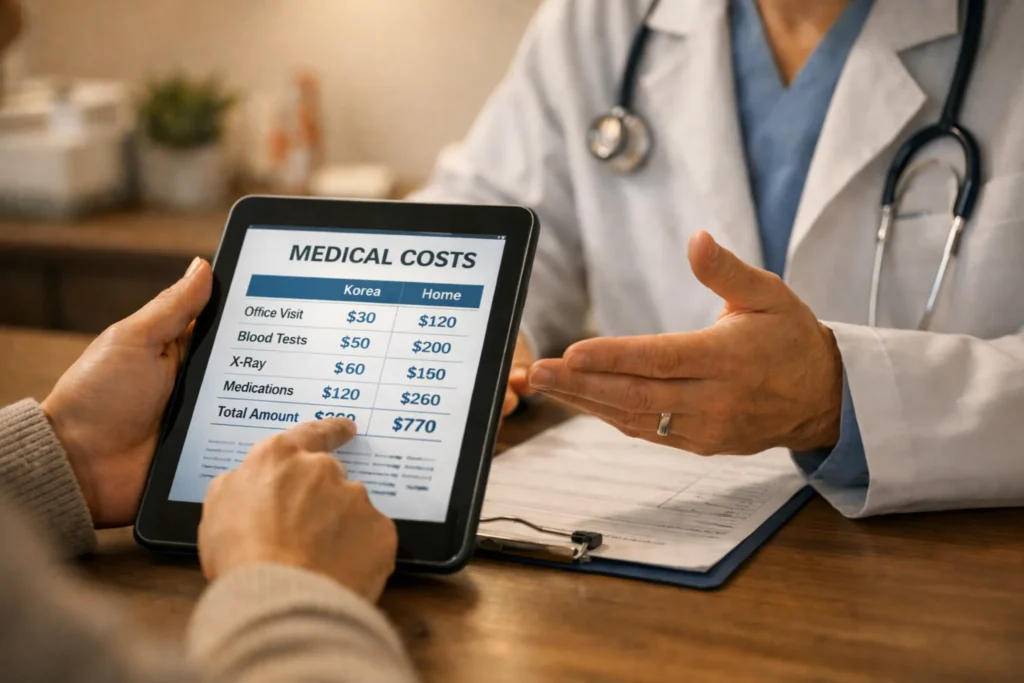
| Treatment | Korea | United States |
|---|---|---|
| Health Checkup | $800–$1,500 | $2,000–$4,000 |
| Dermatology (Laser) | $150–$600 | $800–$2,500 |
| MRI Scan | $300–$700 | $1,000–$3,000 |
| Specialist Visit | $50–$150 | $200–$500 |
Let’s get specific—because “cheaper” doesn’t mean much without numbers.
In the U.S., a comprehensive health screening can easily cost $2,000–$4,000 depending on depth and insurance coverage. In Korea, similar packages typically range between $500–$1,500, often including imaging (CT, MRI), blood panels, and specialist review.
Dermatology treatments show an even sharper gap:
- Laser treatments (e.g., pigmentation, skin tightening) can cost $800–$2,500 per session in the U.S.
- In Korea, similar procedures often fall between $150–$600, depending on the clinic and device used.
What surprises most visitors isn’t just the price—it’s the transparency. Many clinics provide pre-set packages with clear inclusions, so you’re not navigating surprise billing after the fact.
Key takeaway: You’re not trading quality for cost—you’re accessing a system optimized for efficiency.
The Treatment Journey: Faster Than You Expect
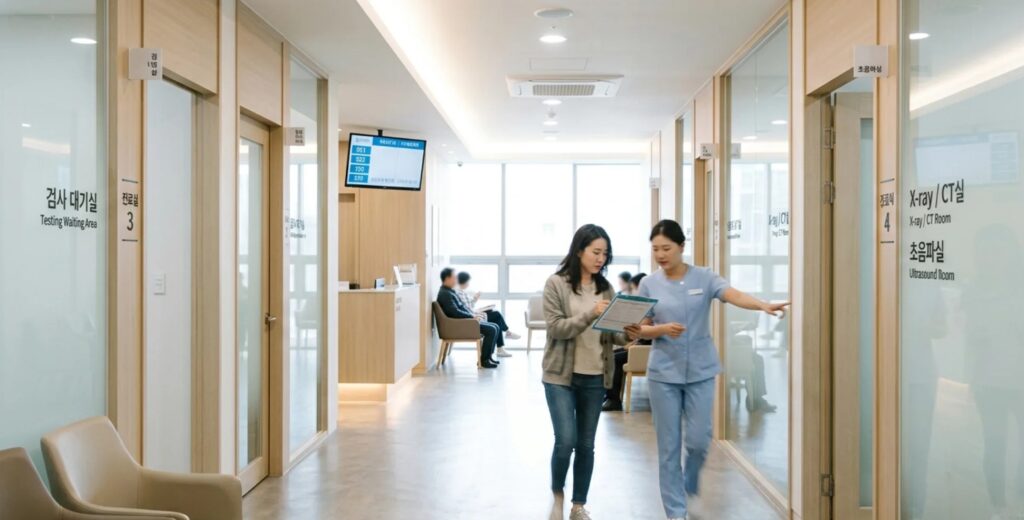
Here’s how the typical experience actually unfolds:
You start with a pre-consultation—often online. This can include sharing symptoms, goals (especially for dermatology), and medical history.
Once you arrive in Korea:
- Day 1: Consultation + diagnostics
- Day 2–3: Treatment or procedure
- Follow-up: Either in-person or remote
Compare that to many home-country systems where diagnosis alone can take weeks.
If you’re curious what that looks like in detail, here’s a breakdown of [what a Korean health screening includes](INTERNAL_LINK: Korea health checkup guide).
Speed is the biggest hidden advantage. It’s not just convenience—it can impact outcomes, especially for early detection.
Safety & Trust: Is This Actually Legit?
This is the question most people don’t ask out loud—but definitely think.
Here’s what builds trust in Korea’s system:
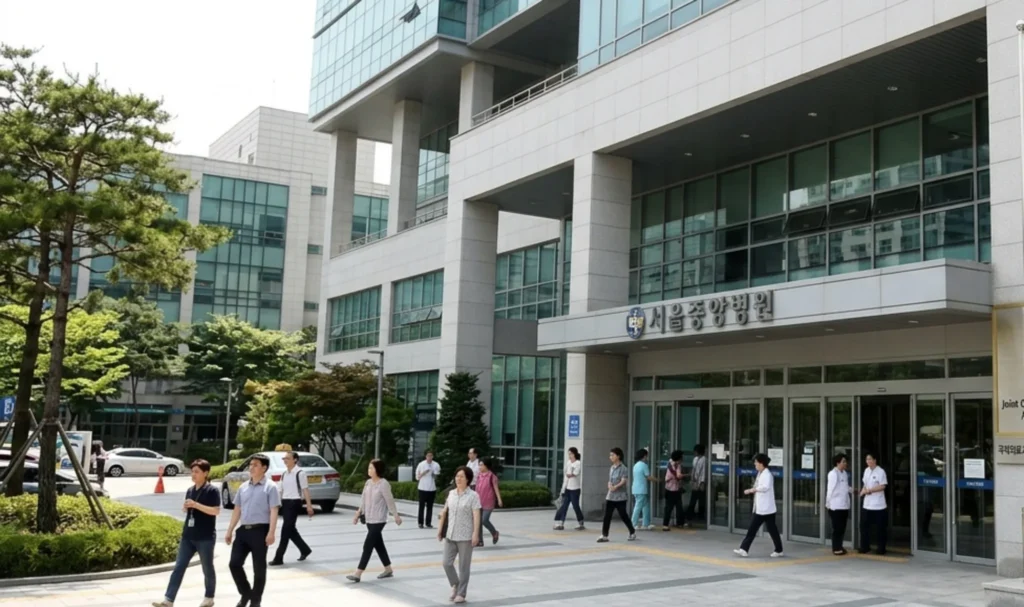
First, many major hospitals and clinics hold JCI (Joint Commission International) accreditation, which aligns with global patient safety standards.
Second, Korea handles a high volume of international patients annually, particularly in Seoul. This isn’t a niche—it’s an established system with dedicated international departments.
Third, some leading hospitals, such as Samsung Medical Center, have advanced digital healthcare systems that support efficient diagnostics, secure patient data management, and streamlined care coordination.
In simpler terms:
You’re not navigating an unfamiliar system—you’re stepping into one that’s already been optimized for global patients.
Getting Around: The Logistics Are Easier Than You Think
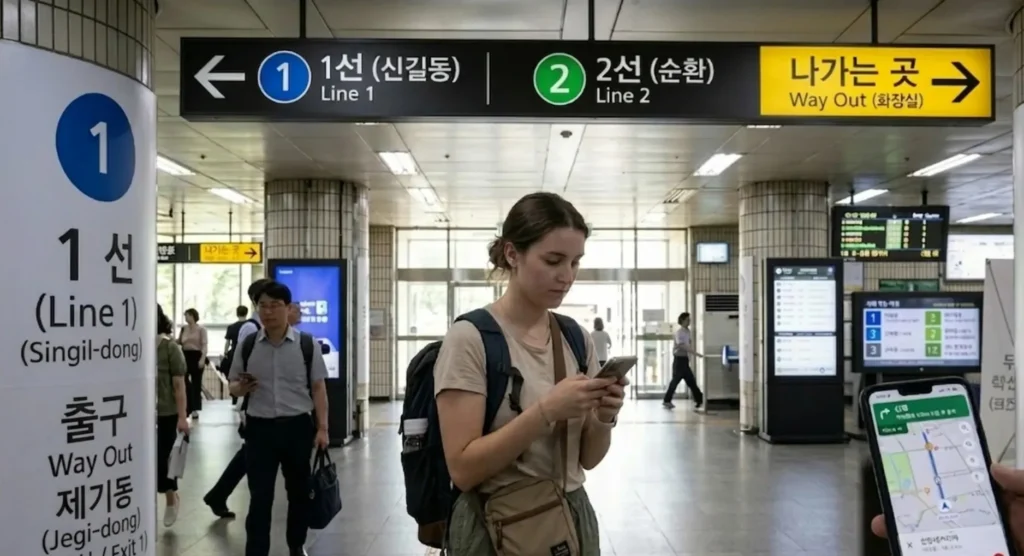
This is where most first-time visitors overestimate the difficulty.
Seoul is one of the easiest cities to navigate, even if you don’t speak Korean. Apps like Naver Map provide reliable English navigation, including subway routes and walking directions.
Medical districts like Gangnam cluster clinics, pharmacies, and accommodations within walking distance. That means:
- Less commuting stress
- Easier follow-up visits
- More flexibility in your schedule
Accommodation ranges from standard hotels to medical-stay apartments designed for recovery.
And safety? Korea consistently ranks among the safest countries globally, with low violent crime rates—even late at night.
“On the Ground”: What No One Tells You (But You’ll Notice Immediately)
Real talk from actual patient experiences:
- Clinics run on time. If your appointment is 10:00 AM, you’re seen at 10:00 AM—not 10:45.
- Everything feels… efficient. You might go from blood test → imaging → consultation within the same building, in under two hours.
- Staff may seem less “chatty” than back home—but the trade-off is precision and speed.
- Payment is straightforward. You often know your total before treatment—not after.
It can feel fast at first—but most patients walk away thinking:
“Why isn’t healthcare like this everywhere?”
Real Patient Outcomes: Why People Recommend Korea

Across different types of care—health screenings, dermatology, even oncology—patients consistently highlight the same themes:
They got answers faster.
They paid less than expected.
They felt guided, not lost.
One commonly shared story involves a breast cancer patient who completed diagnostics and began radiation planning within days—something that might take weeks elsewhere.
Dermatology patients often mention visible results after just one or two sessions, combined with structured aftercare guidance.
And importantly, many say they would return—not just for treatment, but for ongoing care.
So… Is It Worth It?
If you’re weighing the idea of traveling for care, it usually comes down to three things:
Time, cost, and confidence.
Korea stands out because it improves all three at once.
You’re not just saving money—you’re gaining access to faster timelines, structured care, and a system built for efficiency.
Ready to Explore Your Options?
If you’re curious what your treatment could look like in Korea, start simple.
Compare 2–3 clinics. Ask for a pre-consultation. See how they respond.
Or, if you want a faster path, KRACE helps you match with trusted providers, handle booking and payments, and coordinate everything—from your first consult to aftercare.
No pressure—just clarity.
FAQs About Medical Treatment in Korea
Can foreigners receive medical treatment in Korea?
Yes. Many clinics and hospitals in Korea actively treat international patients and offer English support, making the process accessible and straightforward.
How much can I save on treatment in Korea?
Most patients save between 30% and 70% compared to costs in countries like the U.S., Canada, or Australia, depending on the procedure.
Do doctors in Korea speak English?
Many international clinics provide English-speaking coordinators, and some doctors speak English directly. Translation support is commonly available.
How long do I need to stay in Korea for treatment?
For checkups or dermatology, 3–7 days is often enough. More complex procedures may require 1–3 weeks, including follow-up care.

Medical Tourism · Korea
Planning a visit to Korea?
- ✓ Trusted Korean clinics
- ✓ English consultation support
- ✓ Guidance for international patients


