
The hardest part of having a procedure abroad is usually not the procedure. It is the week afterward, when you are away from the clinic and not sure whether what you are looking at is ordinary.
Most of it is. But the two procedures I am asked about most often — a facelift and a thread lift — recover so differently that the comparison people make beforehand tends to fall apart afterward. One of them has you back to ordinary activity the next day. The other reorganizes your week around a suture line and a return visit.
If you are traveling for treatment, that difference matters more than almost anything else you will weigh.
What I need to know before, not after
Before scheduling, tell us about diabetes, high blood pressure, and any other ongoing condition, along with a full list of current medications and supplements.
This is not a formality. Several common medications and supplements affect bleeding and healing directly, and knowing about them changes how a procedure is timed and how the recovery is managed. Disclosing them afterward, when something has already happened, is considerably less useful.
The first days
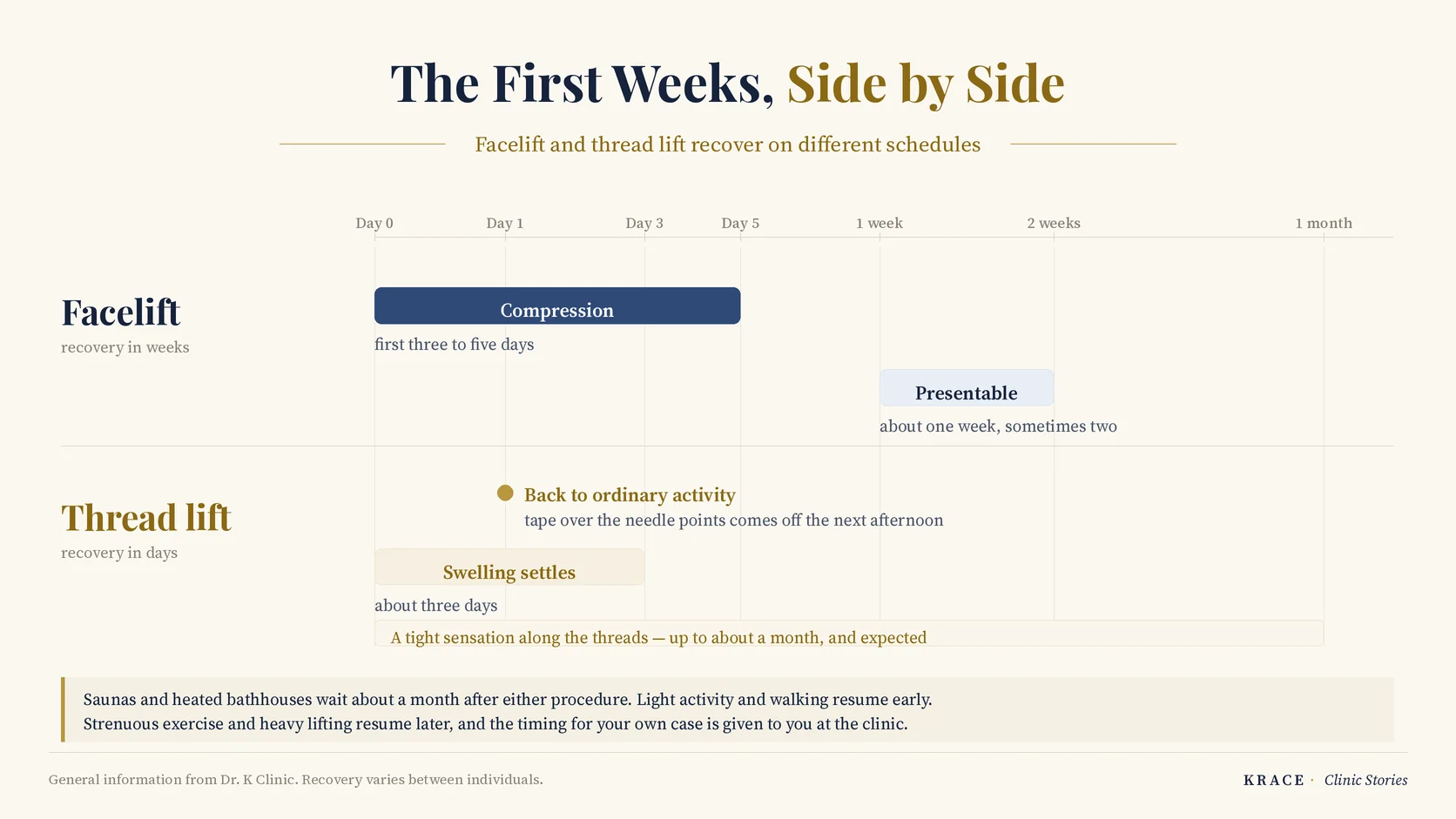
After a facelift, recovery to a presentable appearance is generally around one week, sometimes extending to two depending on the individual and the extent of surgery.
After a thread lift, most patients are back to ordinary activity the following day. Swelling is the main visible effect and generally settles within about three days. A tight sensation along the threads can persist for around a month, and that is expected rather than a sign that something has gone wrong.
Washing
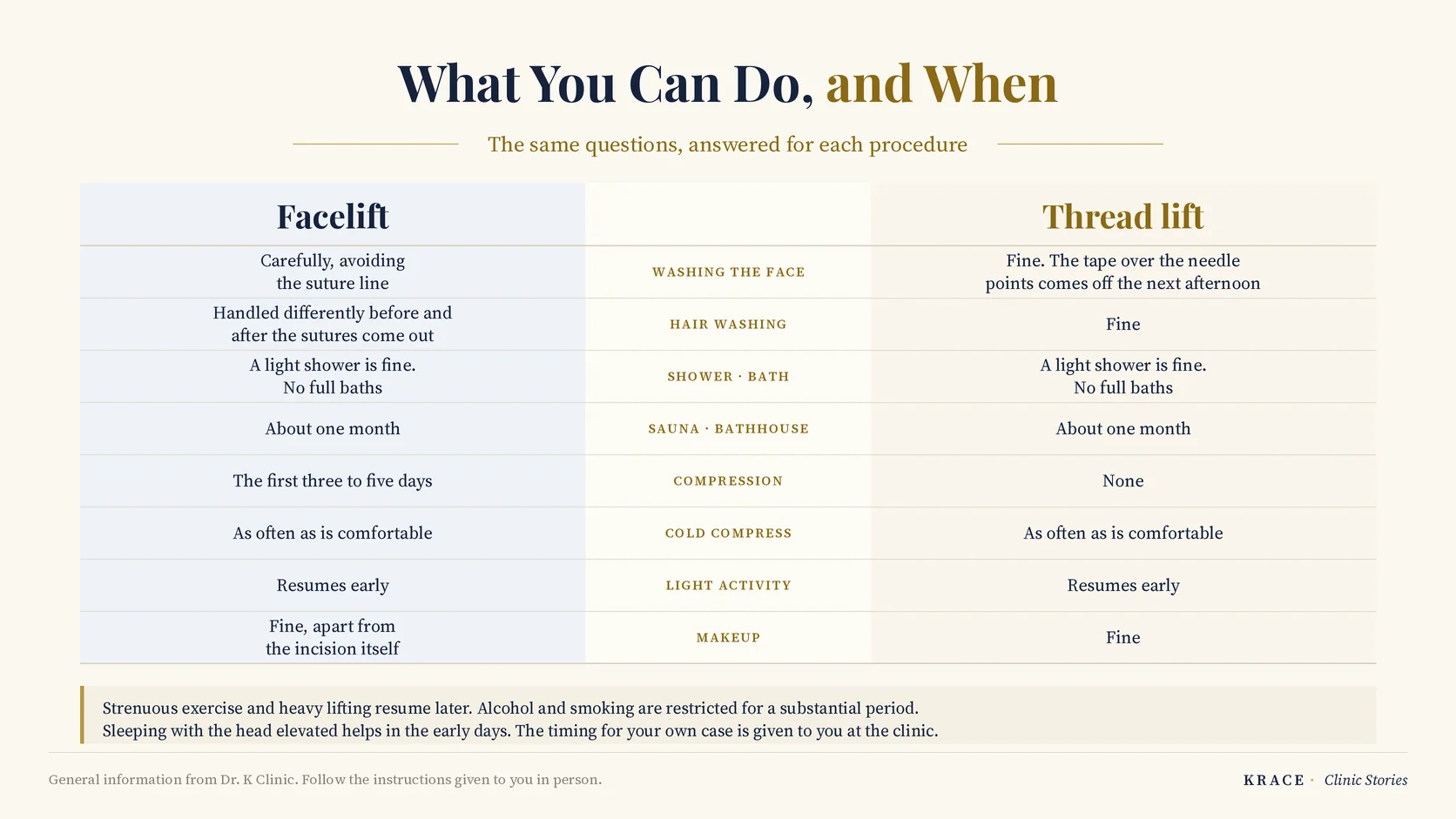
After a facelift, the face can be washed carefully, avoiding the suture line. Hair washing is handled differently before and after the sutures come out, and the instruction for each stage is given to you before you leave the clinic.
After a thread lift, washing the face is fine. Small pieces of tape cover the needle points; they stay on and come off the following afternoon.
For both, full baths are avoided and a light shower is fine. Saunas and heated bathhouses wait about a month.
Getting back to ordinary activity
Light activity and walking resume early, for both procedures.
Strenuous exercise and heavy lifting resume later, because both affect bleeding and swelling. The timing for your own case is given to you at the clinic rather than taken from a general rule.
Alcohol and smoking are restricted for a substantial period. Makeup is fine apart from the incision itself. Sleeping with the head elevated helps in the early days.
Compression and cold
After a facelift, the area is kept under compression for the first three to five days.
After a thread lift, no compression is used.
Cold compresses can be applied as often as is comfortable, for both.
The follow-up visit, and your flight home
This is the part international patients most often plan around incorrectly.
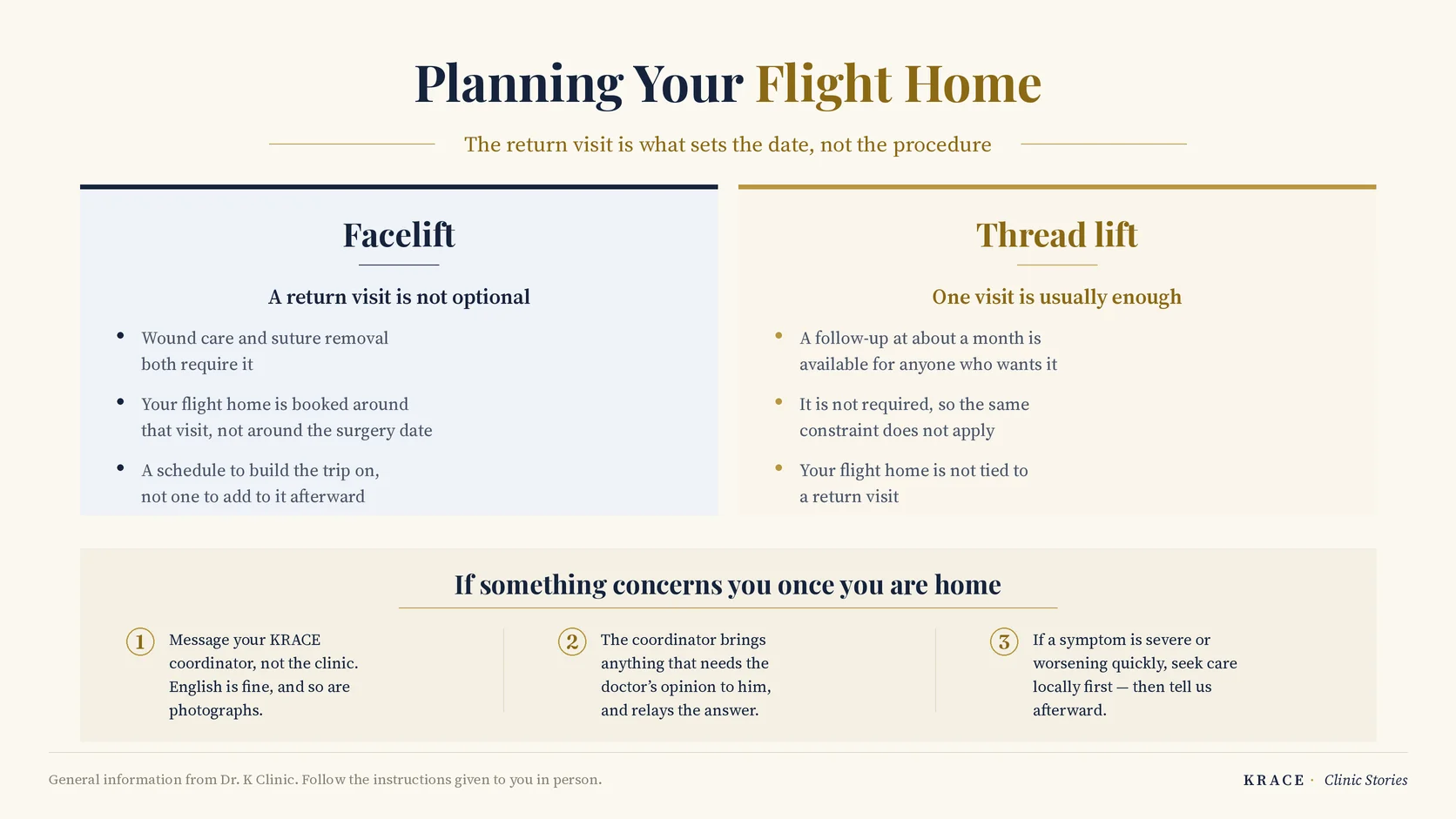
After a facelift, a return visit is not optional. Wound care and suture removal both require it, and your flight home is therefore booked around that visit rather than around the surgery date. It is a schedule to build the trip on, not one to add to the trip afterward.
After a thread lift, one visit is usually enough. A follow-up at about a month is available for anyone who wants it, but it is not required, so the same constraint does not apply.
For someone traveling from abroad, that is the practical difference between the two procedures — more so, in my experience, than anything in the procedures themselves.
If something concerns you once you are home
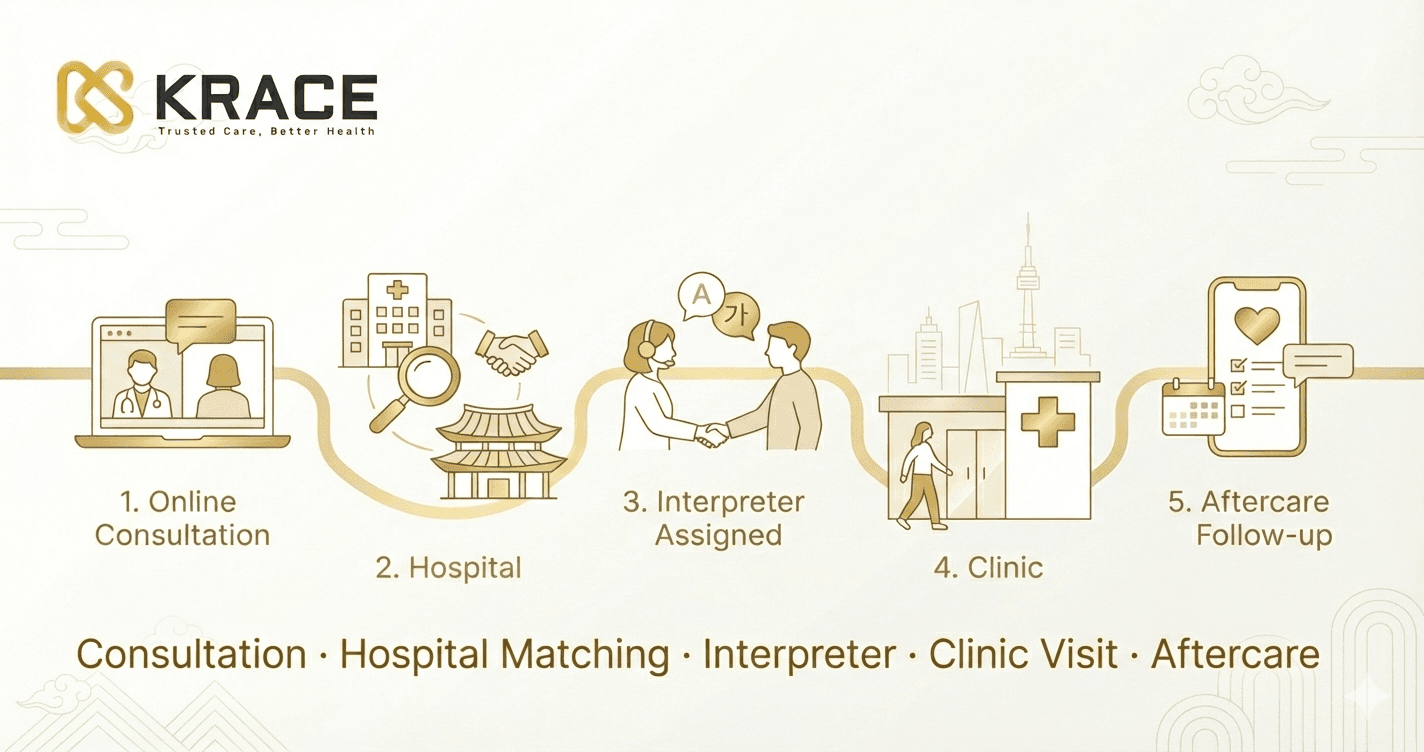
Patients who came through KRACE should contact their coordinator rather than the clinic directly. Messages reach us in English, photographs can be sent the same way, and the coordinator brings anything that needs my opinion to me. That route is faster than it sounds, and it removes the language barrier at the moment it matters most.
Send it rather than wait. I would rather look at a photograph of something that turns out to be ordinary than hear about it three weeks later.
If a symptom is severe or getting worse quickly, do not wait for a reply from another time zone. Seek care locally first, and tell us afterward.
Before you decide
Every surgical and procedural treatment carries risk, and those risks differ by procedure and by patient. Outcomes vary between individuals.
The guidance above is general. The instructions that apply to you are the ones given to you in person by the physician who performed your procedure, and where the two differ, follow theirs.