

So what’s actually behind that “glass skin” look—and how do you access it without getting overwhelmed?
Why K-beauty Treatments in Korea Feel Different
Korean skincare isn’t just about products—it’s a system. And that system starts in clinics, not stores.
Unlike many countries where dermatology is treated as a medical necessity only, Korean dermatology blends medical care with beauty optimization. That means you don’t wait months for treatment—you walk in, get assessed, and often start treatment the same day.
What makes it different:
Preventive care > reactive treatment
Layered treatments (laser + hydration + regeneration)
Frequent, affordable maintenance instead of one-time expensive procedures
This is how “glass skin Korea” isn’t a trend—it’s a routine.
Most locals don’t wait for skin problems. They treat skin monthly—like going to the gym.
And because clinics are everywhere—especially in areas like Gangnam—you’re not limited to a few providers. You have options.
What Treatments Are Most Popular (And Worth It)
If you're visiting Korea for skincare, these are the treatments you’ll hear about the most—and for good reason.
Laser Toning
Best for pigmentation, uneven tone, dull skin
Quick (20–30 minutes)
Minimal downtime
Often done in a series
Hydrafacial / Aqua Peel
Best for hydration and deep cleansing
Immediate glow
No recovery time
Ideal before events or travel
PRP Therapy (Vampire Facial)
Best for skin regeneration
Uses your own blood plasma
Boosts collagen
Slight downtime but strong long-term results
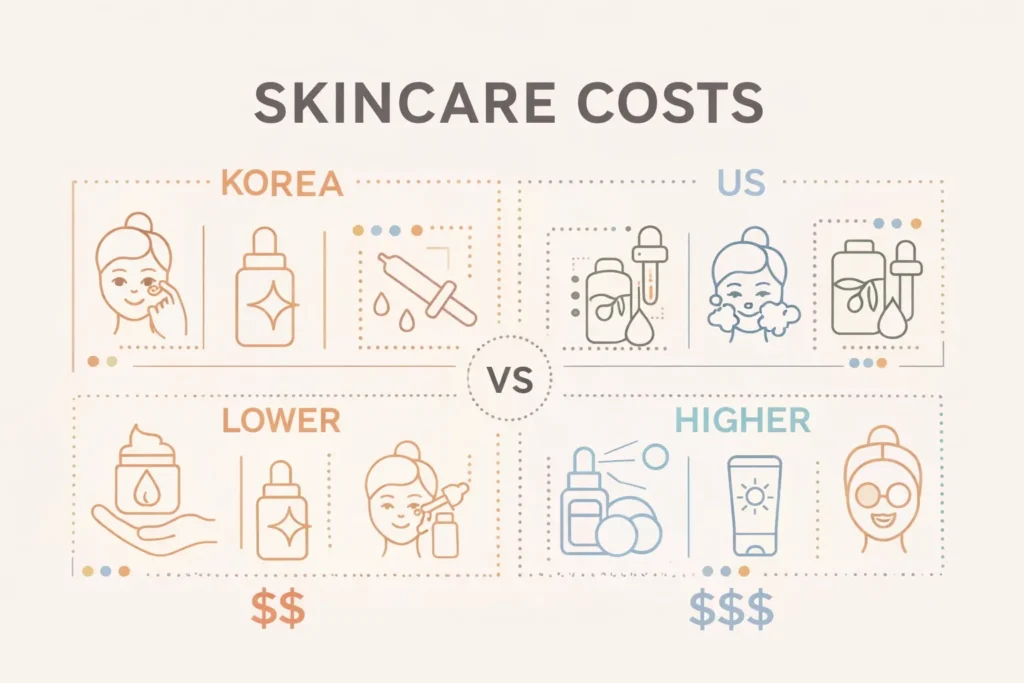
Cost Comparison: Korea vs. Your Home Country
Here’s where things get interesting—because this is often the real reason people book.
Treatment | Korea (USD) | US (USD) | UK / CA / AU (USD) | Duration |
|---|---|---|---|---|
Glass Skin | $200–400 | $600–1200 | $500–1000 | 60–90 min |
Acne & Pore Care | $150–300 | $300–800 | $250–700 | 60 min |
Brightening Laser (Toning) | $120–250 | $350–800 | $300–700 | 30 min |
Anti-Aging | $100–300 | $400–900 | $350–800 | 20–60 min |
Hydration Facial (Aqua Peel) | $150–300 | $200–400 | $180–350 | 60 min |
Even compared to places like Australia, Canada, or the UK, Korea tends to be 30–70% more affordable—with shorter wait times.
According to the Korea Tourism Organization, medical tourism has been steadily growing, with skincare and dermatology among the top categories for international visitors.
And it’s not just cost.
Same-day appointments are common
Multi-step treatments are bundled efficiently
Clinics operate like high-volume specialists
The “Glass Skin” Formula: What Clinics Actually Do
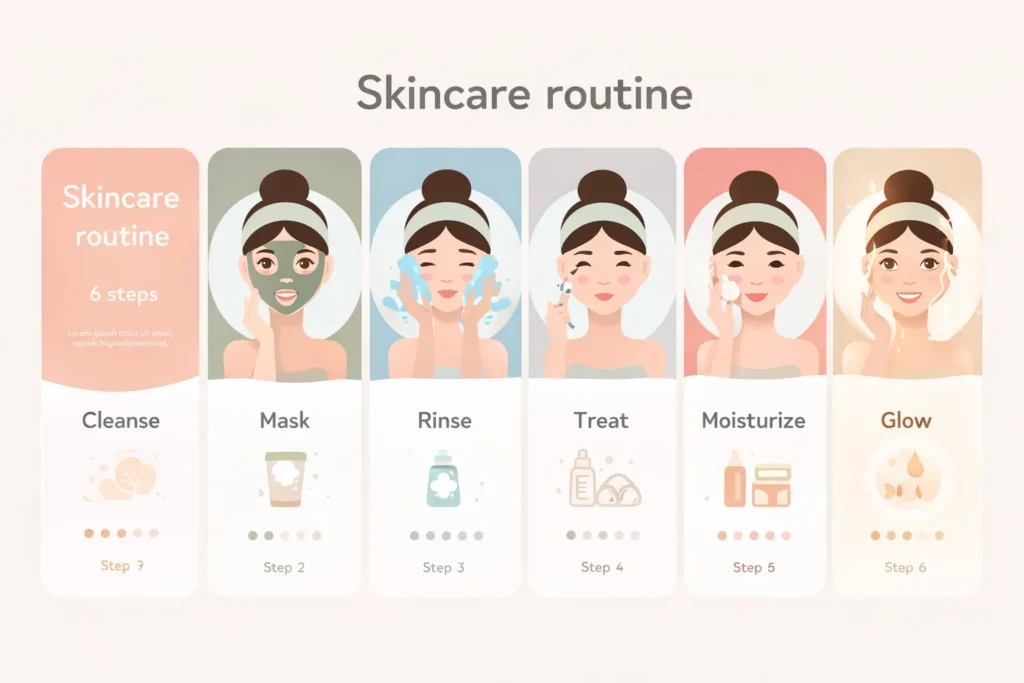
“Glass skin Korea” isn’t one treatment—it’s a combination.
A typical clinic plan might include:
Skin analysis (often with imaging devices)
Laser toning for pigmentation
Hydration treatment (Aqua Peel or similar)
Regenerative step (PRP or skin booster injections)
The key is layering treatments strategically, not relying on one miracle solution.
This is why results in Korea often look faster—they’re treating multiple skin issues at once.
On the Ground: What No One Tells You
You might walk into a clinic expecting a quiet, spa-like experience—and instead find a fast-paced, highly efficient system.
Consultations can be quick. Staff may speak basic English, but not always fluently. And you’ll often be recommended multiple treatments at once.
It’s not pushy—it’s just how the system works.
The challenge isn’t quality—it’s knowing what’s right for you.
This is where most foreign visitors get stuck.
How to Choose the Right Clinic (Without Guessing)
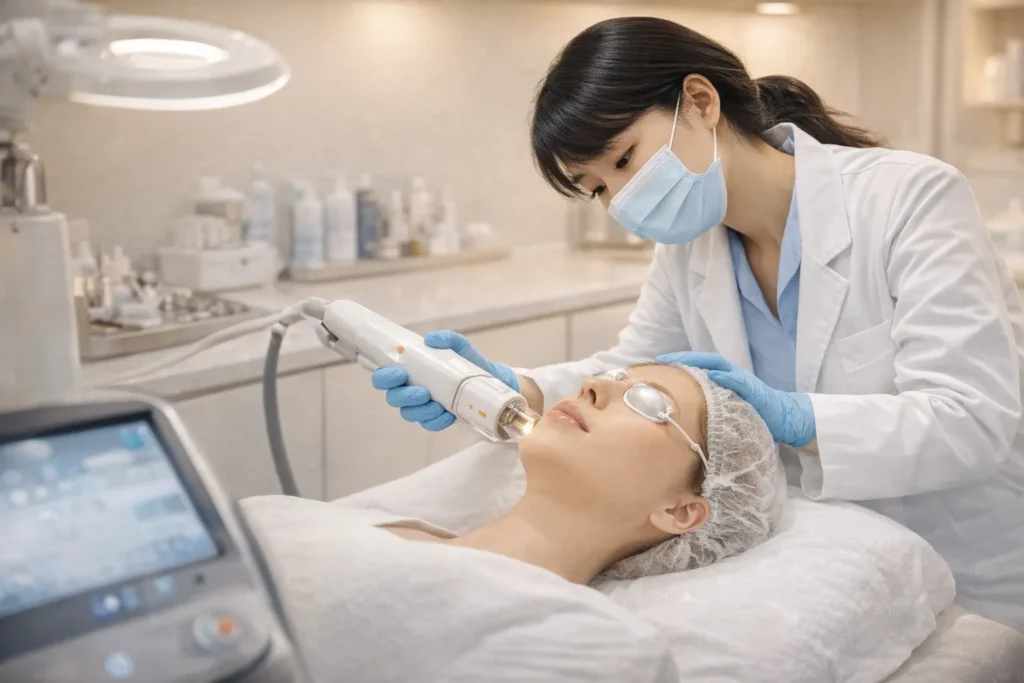
There are hundreds of clinics in Seoul alone. Not all are equal.
Here’s what to look for:
1. Experience with international patients
Clinics used to foreigners will:
Explain procedures clearly
Provide realistic expectations
Offer English support
2. Transparent pricing
Avoid places that:
Don’t list prices
Push package deals without explanation
3. Treatment specialization
Some clinics focus on:
Acne & pigmentation
Anti-aging
Laser treatments
Choose based on your goal—not just popularity.
Why Korea Works So Well for Medical Travel

Let’s zoom out for a second.
Korea isn’t just good at skincare—it’s built for it.
High clinic density → easy access
Safe, clean cities → low stress during recovery
Efficient transport → subway + taxi everywhere
Lifestyle synergy → skincare, food, rest, and shopping all connected
Even the National Health Insurance Service system reflects a broader focus on accessibility and efficiency.
And yes—you can realistically:
Land in Seoul
Visit a clinic the next day
Start treatment immediately
That’s a very different experience compared to waiting weeks back home.
Where KRACE Fits In (And Why It Matters)
This is where most travelers hit friction.
Not because clinics are bad—but because:
Language barriers exist
Too many choices create confusion
Pricing and treatment plans vary widely
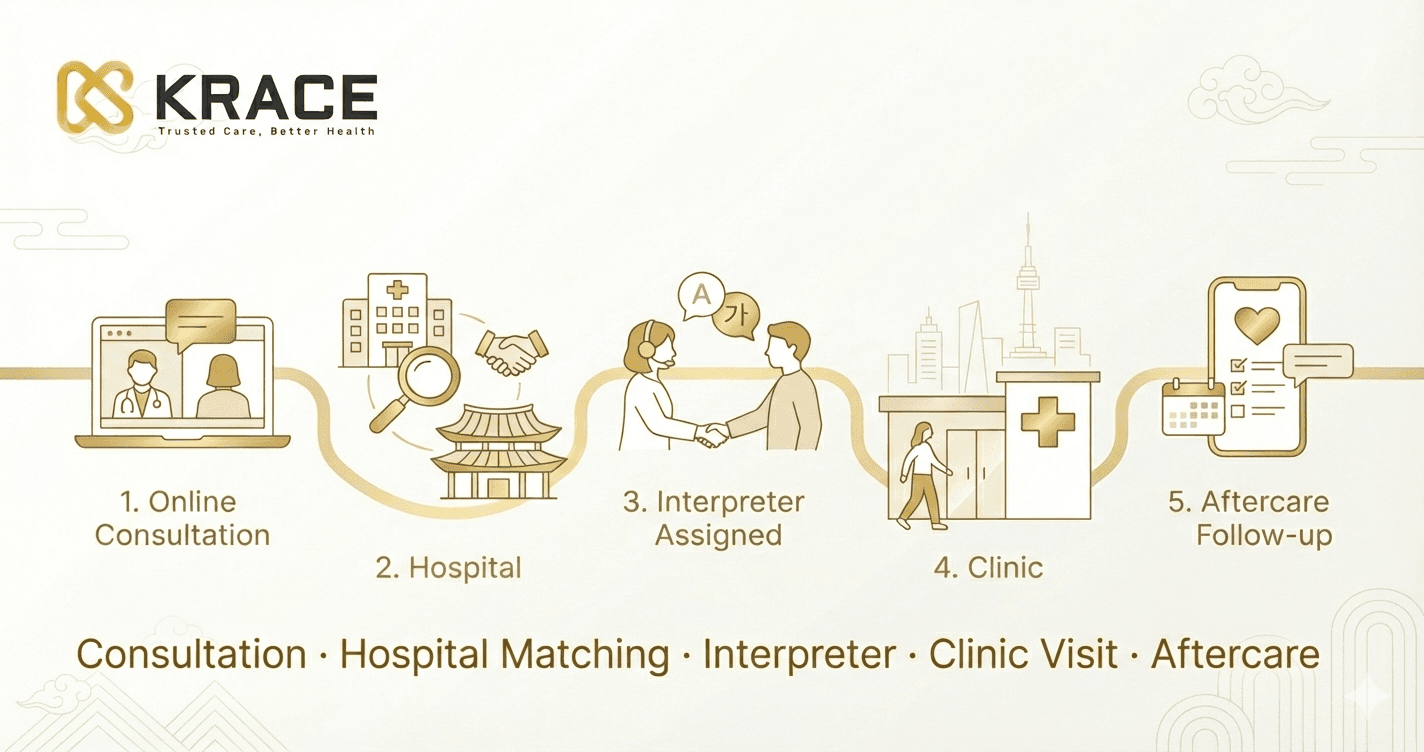
KRACE bridges that gap.
Instead of guessing, you get:
Personalized clinic matching
English-supported booking
Clear treatment recommendations
Post-care support
Final Thoughts: Is It Worth It?
If you’re used to long waits, high costs, and fragmented care back home, Korea feels like a completely different system.
Faster access. Lower cost. More structured treatment plans.
But the real advantage isn’t just the treatments—it’s how everything works together.
And if you do it right, you don’t just visit a clinic.
You leave with a system you understand—and results you can maintain.
You Might Also Like

How to Book a Clinic in Korea as a Foreigner
Imagine this: back home, you wait two to six weeks just to see a doctor—longer for anything specialized. Now picture landing in Seoul and getting a consultation, diagnosis, and treatment plan within a single day. That’s not a travel hack. It’s how the Korean medical system works. But here’s the catch: while care is fast and accessible, figuring out how to actually book a clinic in Korea as a foreigner isn’t always straightforward. Different systems, language gaps, and unclear pricing can make it
blog.kracecare.com
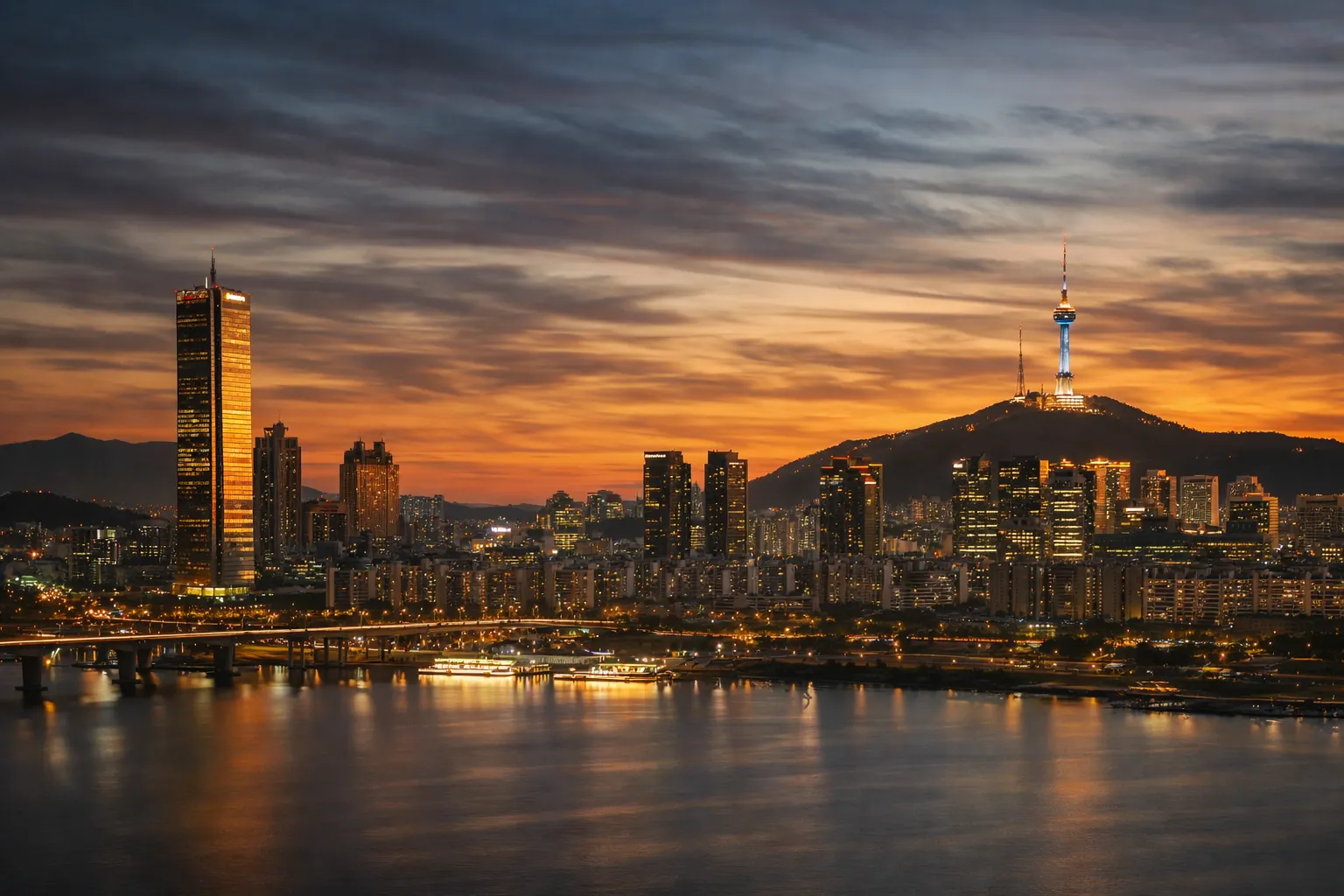
Why Seoul Should Be on Your 2026 Travel List (And Why Smart Travelers Are Adding Healthcare to the Plan)
Most people plan a trip around food, culture, and places to explore. But what if your trip could also take care of something you’ve been putting off—without slowing you down? That’s exactly why Seoul is showing up on global “best cities” lists in 2026. Not just because it’s exciting—but because it’s one of the few places where daily life, infrastructure, and even healthcare feel seamlessly connected. And once you experience how the city works, you start to see why more travelers are quietly addi
blog.kracecare.com

Why More Travelers Are Choosing Korea for Primary Care (And What It’s Really Like)
Imagine needing a health checkup but facing a three-month wait back home. Now picture landing in Seoul, booking a clinic visit within days, completing lab tests the same morning, and getting results before the week ends. For many international visitors, that’s not hypothetical — it’s exactly how healthcare works in Korea, especially for those seeking primary care Korea. Across North America, Europe, and Australia, rising costs and long wait times are pushing travelers to look abroad for care. Ko
blog.kracecare.com
Ready to Start?
Start your Korean medical journey with KRACE. Book a free consultation today.
Frequently Asked Questions
Common questions about K-beauty treatment in Korea, including costs, safety, English support, and booking.
How much does K-beauty treatment cost in Korea?
Most international visitors typically spend about $150–400 per visit in Korea, depending on the clinic, location, and treatment plan. Entry-level treatments can cost less, while combined glass skin or lifting treatments can cost more.
What is the best K-beauty treatment in Korea for international visitors?
The most popular options are glass skin treatments, acne and pore care, brightening laser toning, hydration facials, and anti-aging treatments such as Botox or lifting procedures. The right choice depends on your skin goal, downtime, and consultation results.
Do Korean dermatology clinics speak English?
Many clinics in Seoul, especially in areas like Gangnam, offer at least basic English support. However, communication quality can vary, so many visitors prefer using a coordination service for English-supported booking and clinic communication.
Is K-beauty treatment in Korea safe?
Korea has a strong dermatology and aesthetic treatment market, but safety still depends on choosing the right clinic, understanding the treatment plan, and confirming aftercare instructions before booking. KRACE helps with clinic matching and communication support, but medical care is provided by independent licensed providers.
How do international visitors book a skin treatment in Korea?
You can contact clinics directly, but many international visitors use a medical coordination platform to compare clinics, understand pricing, book appointments in English, and get support before and after treatment.
How long do skin treatments in Korea usually take?
Many popular skin treatments in Korea take about 30 to 90 minutes. Some treatments can be done on the same day as consultation, depending on clinic availability, skin condition, and the type of treatment selected.