
You may have seen “salmon DNA,” “PDRN,” or “Rejuran” on TikTok, Reddit, or a clinic ad that made the whole thing sound simple. Book a session, get glowing skin, fly home happy.
Real life is not always that neat.
PDRN and Rejuran are popular skin-booster treatments in Korea, but they are still medical procedures. Before you plan a trip around them, it helps to understand what they are, what they are not, how pricing works, and which questions to ask before anyone touches your face.
PDRN vs. PN vs. Rejuran: What Is the Difference?
PDRN stands for polydeoxyribonucleotide. PN stands for polynucleotide. PDRN and PN are related DNA-derived materials, but they are not necessarily identical in molecular size, formulation, intended use, or product classification. Rejuran is a brand name used for specific polynucleotide-based injectable products.
Rejuran is a brand name. It is one of the best-known Korean polynucleotide skin boosters, so people often use “Rejuran,” “PDRN,” and “salmon DNA injection” as if they are the same thing. They are related, but not identical.
The simplest way to think about it is this: a filler is usually used to add volume. The simplest way to think about it is this: fillers are generally used to add or restore volume, while skin boosters are marketed and studied for concerns such as skin texture, hydration, elasticity, and overall skin quality. Current reviews describe polynucleotides as promising in aesthetic medicine, but they also stress that stronger clinical evidence and clearer protocols are still needed.
That matters because the internet often turns “promising” into “guaranteed.” Those are not the same.
On the Ground
Many international visitors arrive in Korea thinking PDRN is a quick skincare upgrade, like buying a serum at Olive Young. In clinic settings, it is treated differently. You may need a consultation, skin assessment, numbing time, injection time, aftercare instructions, and a plan for what happens if you have swelling, bumps, bruising, or questions after you leave Seoul.
Quick answer: Rejuran treatments in Seoul commonly range from about ₩180,000 to ₩400,000 for a standard session, depending on the product, volume, clinic, and injection method. Many clinics recommend a series rather than a single treatment. PDRN, PN, and Rejuran are related terms, but they are not completely interchangeable.
Is Rejuran Available in the United States?
The bigger question is not simply whether Rejuran is available. It is whether the product, injector, dosage, and follow-up are appropriate for you.
There is a reason this topic keeps coming up among US-based readers.
In the United States, topical PDRN skincare can be sold as cosmetic skincare, but cosmetic products are regulated differently from drugs and medical devices. FDA explains that cosmetic products and ingredients generally do not need FDA premarket approval, except color additives.
Rejuran in Korea at a Glance
Typical standard-session budget: ₩180,000–₩400,000
Common volume: 1cc–2cc, depending on the area and product
Downtime: temporary bumps, redness, swelling, or bruising may occur
Trip planning: one session may fit a short trip, but a full series may not
Before booking: confirm the exact product, volume, injector, total price, and follow-up plan
Injectable treatments are a different conversation. FDA guidance on dermal fillers advises patients to work with licensed health care providers, understand the product being injected, and avoid purchasing injectable products online, as they may be counterfeit, contaminated, or not approved for use in the United States.
As of July 2026, no injectable PN or PDRN skin-booster product appears to be FDA-approved specifically for cosmetic skin-rejuvenation use in the United States. Patients should verify the regulatory status and source of the product, as well as the credentials of any US provider offering the treatment.
Although this FDA guidance addresses dermal fillers rather than Rejuran specifically, its general precautions—working with an appropriately licensed and qualified provider, verifying the product, and understanding the potential risks—are also relevant when considering other injectable aesthetic procedures.
The regulatory and clinical landscape in Korea is different. Polynucleotide-based skin boosters have been used in Korean dermatology and aesthetic clinics for years. However, widespread use does not remove the need to verify the clinic, the exact product and volume, who performs the procedure, and what aftercare is provided.
Korea’s broader international-patient market has also grown sharply. According to Korea’s Ministry of Health and Welfare, approximately 2.01 million international patients from 201 countries received medical care in Korea in 2025, up from 1.17 million in 2024. Dermatology accounted for 62.9% of foreign patients by medical specialty.
How Much Does Rejuran Cost in Korea?
Prices vary by clinic, product, volume, number of sessions, injection method, doctor involvement, and package structure. Request a direct written quote before booking.
Budget Type | What It Usually Means | Approx. USD | Approx. KRW | Notes |
|---|---|---|---|---|
Entry / event pricing | Often 1cc, first-visit, small area, or promotional pricing | approx. $70–$180 | approx. ₩99,000–₩250,000 | Good for comparing entry points, but not enough for a full-face plan |
Standard session | Often 2cc or one regular session | approx. $170–$300 | approx. ₩180,000–₩400,000 | Check whether doctor consultation, numbing, VAT, and aftercare are included |
Premium / package | Full-face, eye area, HB+, device combination, or multi-treatment package | approx. $800–$1,000+ | approx. ₩1,125,000–₩1,390,000+ | Package value depends heavily on what is actually included |
This table is a budgeting guide, not a quote. Recent Seoul clinic price pages show Rejuran Healer around ₩300,000–₩400,000 for one session at one Myeongdong clinic, 2cc benchmark pricing around ₩180,000–₩330,000 across lower-cost and higher-end Seoul clinic models, and selected first-visit or package prices ranging from ₩99,000 for a 1cc trial to more than ₩1,125,000 for larger face-and-eye packages.
Be careful when comparing prices. A $75 listing and a $300 listing may not be the same thing. One may be 1cc, another may be 2cc. One may be hand-injected by a doctor, another may involve a different technique or high-volume clinic model. One may include VAT and aftercare; another may not.
How Many Rejuran Sessions Do You Need?
A common first-time plan is not always one appointment.
Many Korean clinic guides describe Rejuran or PN/PDRN skin boosters as a series, often three to four sessions spaced two to four weeks apart. Some clinics describe small bumps or papules after injection that may settle within one to two days, while bruising or redness can last longer depending on the person and technique.
This is where travel planning becomes important.
If you are visiting Korea for five days, a full multi-session course may not fit. You may be able to do one session, but that is different from completing a full plan. If a clinic recommends three sessions, ask whether those sessions need to happen in Korea, whether they can be spaced across trips, and what follow-up looks like once you are back home.
8 Questions to Ask Before Booking Rejuran in Korea
You do not need to sound like a doctor. You just need to ask practical questions.
Start with product identity. Ask what exact product will be used, whether it is PN, PDRN, Rejuran Healer, Rejuran I, Rejuran HB Plus, or another formulation. Ask how many cc are included in the quoted price.
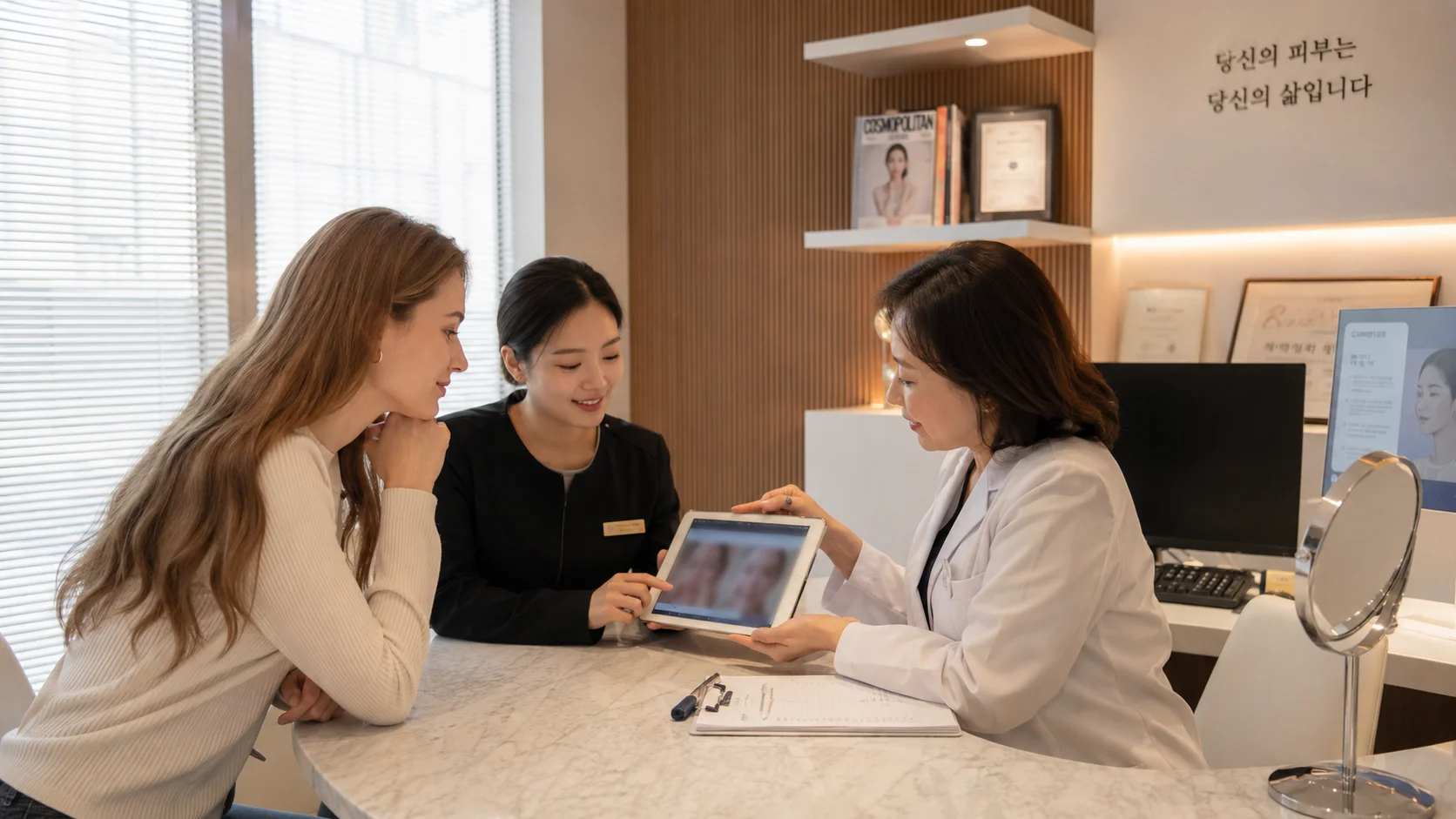
Then ask who performs the injection. Is it a doctor? Is it a nurse under supervision? Is there a physician consultation before treatment? In aesthetic medicine, technique matters.
Ask what is included. Consultation, numbing cream, VAT, soothing care, follow-up messaging, and post-care instructions can change the real cost and experience.
Ask what could go wrong. Mild redness, swelling, tenderness, bumps, and bruising are common after many injectable treatments. Although Rejuran and PN/PDRN skin boosters are not the same as conventional dermal fillers, FDA’s broader safety guidance for cosmetic injectables reinforces the importance of trained licensed providers, verified products, and appropriate clinical evaluation.
Finally, ask what happens after you leave Korea. Who answers if you have a reaction? How do you share photos? How are your records provided in English?
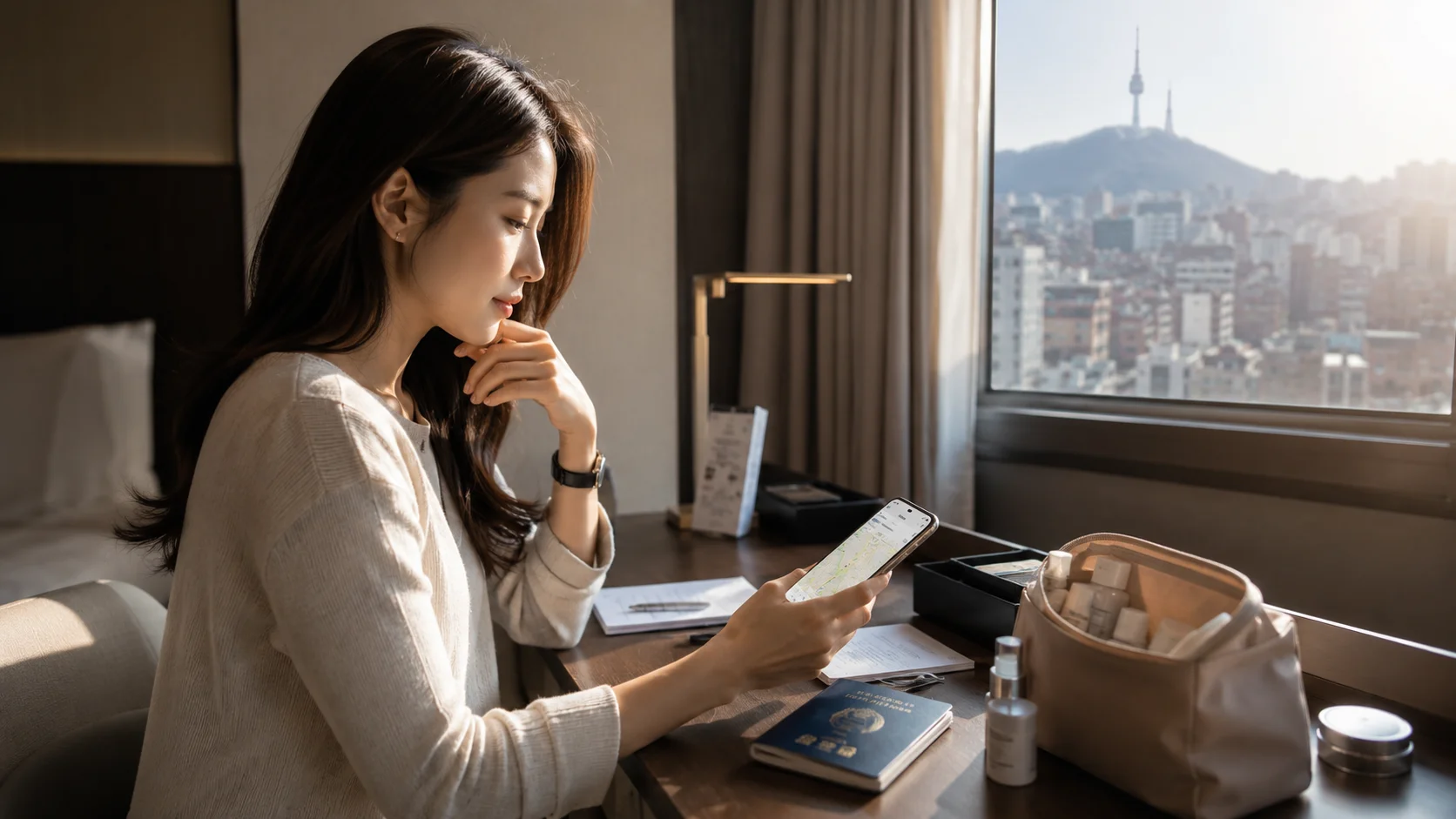
How to Plan Rejuran Treatment During a Korea Trip
A clinic appointment is not only a clinic appointment when you are traveling.
You need to get from Incheon Airport to your hotel, find the clinic, arrive early enough for forms and consultation, understand the aftercare, and avoid scheduling anything that conflicts with recovery. Visit Seoul notes that express trains from Incheon International Airport to Seoul run roughly every 20 to 40 minutes and take about 40 minutes, while all-stop trains run more frequently and take longer.
For navigation, many visitors find Naver Map or Kakao Map more useful than relying only on Google Maps in Korea. For a clinic day, save the clinic name in Korean, the building floor, the nearest subway exit, and the clinic’s phone or messenger contact.
The CDC also maintains a South Korea traveler health page, which is worth checking before your trip, especially if you are combining medical appointments with travel outside Seoul.
Is Rejuran Safe? Clinic and Product Checks in Korea
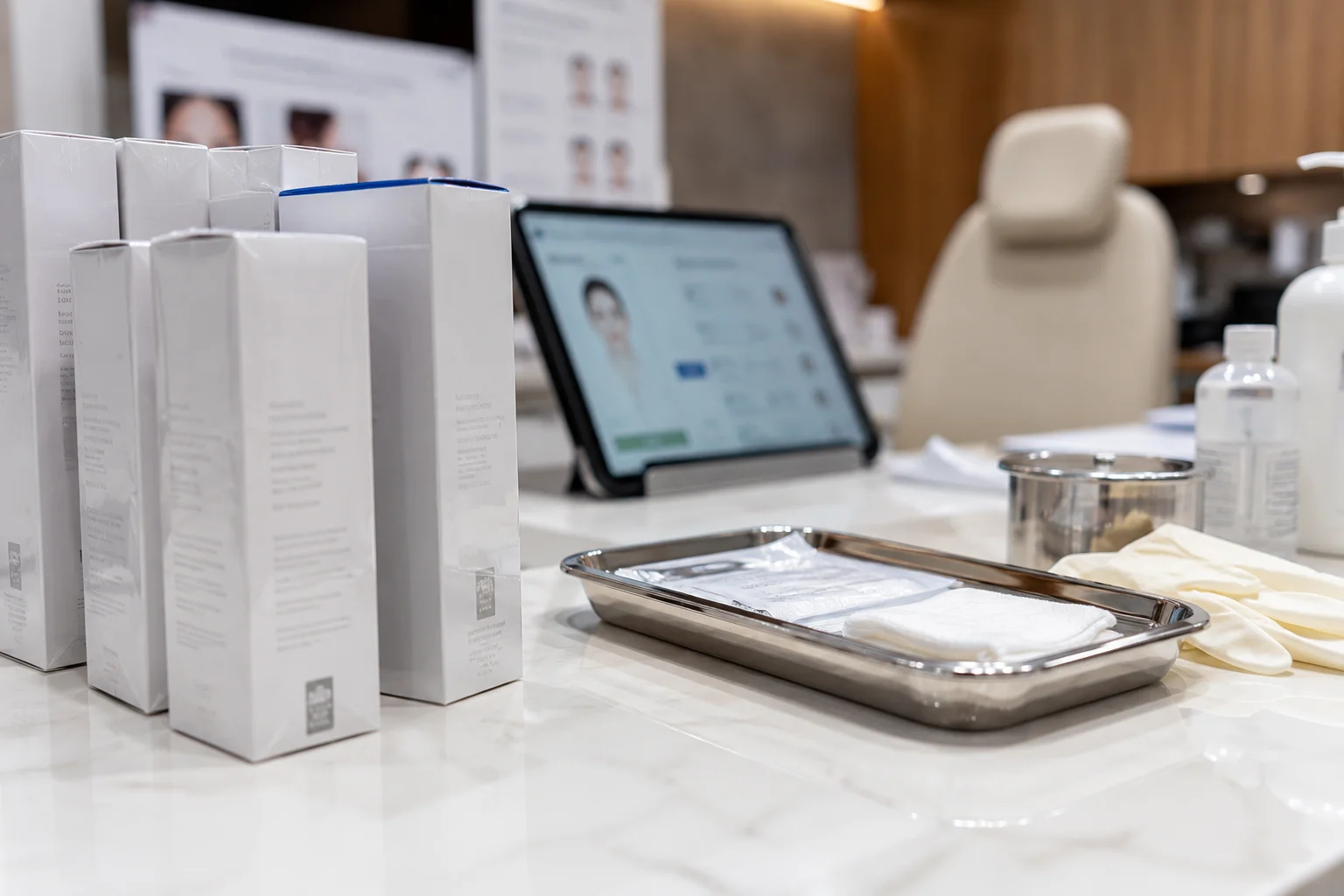
Korea has a formal system for foreign-patient attraction. Under Korea’s overseas medical expansion and foreign patient attraction framework, registered medical institutions and agencies have duties around registration, patient information, estimated treatment cost, and dispute procedures.
That does not mean every clinic ad is equally reliable.
Before booking, check whether the clinic is licensed, whether it is registered to attract international patients when relevant, whether the doctor’s credentials are clear, and whether pricing is written before payment. For injectables, ask whether the product will be opened or verified in front of you.
Avoid any provider that guarantees a result, refuses to explain the product, pressures you to pay immediately, or treats your medical history as a formality.
Your history matters. Allergies, pregnancy, autoimmune conditions, skin infections, recent dental work, anticoagulants, active acne, and recent procedures can all change what is appropriate. Only a licensed clinician who evaluates you can tell you whether this treatment makes sense.
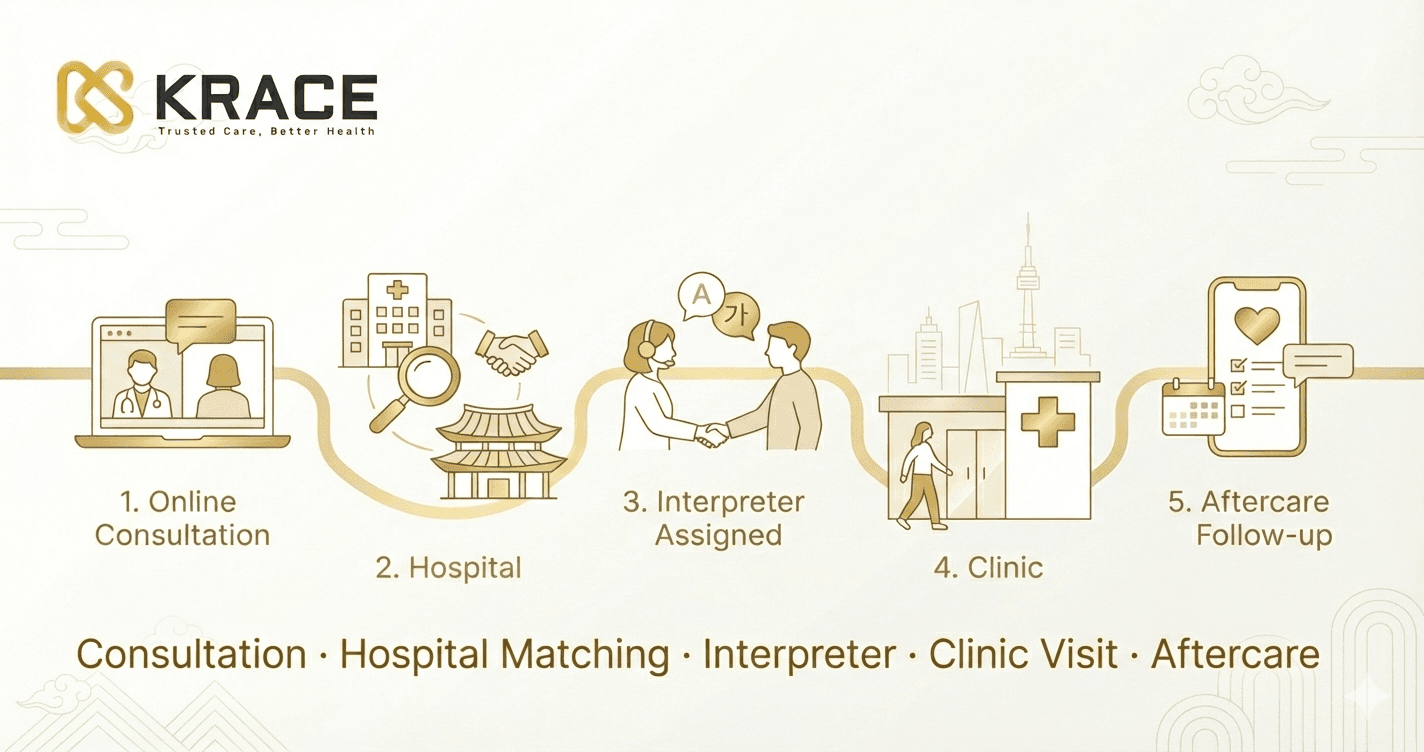
How KRACE Helps International Patients
KRACE is not a clinic, hospital, or medical provider. We do not diagnose, prescribe, inject, or decide your treatment.
Our role is coordination.
For international visitors, the hard part is often not only finding a clinic. It is understanding whether a clinic fits your goals, how the quote is structured, how to communicate your history, what to ask during consultation, and what happens after you fly home.
KRACE helps with clinic matching, booking support, communication, and post-care coordination with independent licensed providers. The goal is not to push you toward one treatment. The goal is to make the process clearer before you spend money or board a plane.

Rejuran Korea Travel Planning Timeline
Four to six weeks before travel, gather your skin goals, medical history, medication list, allergies, prior procedures, and photos taken in normal lighting.
Three to four weeks before travel, request clinic options and written estimates. Ask what product, volume, session count, injection method, and aftercare are included.
One to two weeks before travel, confirm appointment time, address in Korean, cancellation terms, payment method, and whether you should avoid certain skincare actives or procedures before treatment.
During the visit, do not rush the consultation. Ask the clinician what they recommend, why they recommend it, what alternatives exist, and what signs after treatment should prompt medical attention.
After the visit, keep your product name, volume, date, clinic contact, doctor name, aftercare instructions, and receipt. If you are planning future sessions, ask for a written plan you can understand back home.
Bottom Line
PDRN and Rejuran in Korea can be worth researching if your goal is skin quality rather than volume, and if you are comfortable treating it as a medical procedure rather than a beauty purchase.
The smartest travelers do not chase the cheapest listing. They compare product, volume, injector, consultation quality, aftercare, and follow-up. They ask for a written quote. They leave room in the itinerary for recovery. They understand that a single session and a full course are different things.
KRACE can help you compare licensed clinic options, understand written estimates, coordinate booking and communication, and prepare for follow-up after you return home.
Start with a free consultation →
You Might Also Like

Korean Skin Treatment Guide: What Foreign Visitors Should Know Before Booking in Korea
If you have ever looked at before-and-after photos from Seoul and wondered whether glass skin Korea is just marketing, here is the honest answer: the glow is usually not coming from a 10-step bathroom shelf alone. In Korea, skincare is often a mix of daily habits, clinic-based maintenance, and fast access to dermatology-led treatments that many visitors find easier to book, faster to receive, and more affordable than back home. Korea’s medical-wellness ecosystem has also scaled quickly: in 2024,
blog.kracecare.com

How to Book a Clinic in Korea as a Foreigner
Imagine this: back home, you wait two to six weeks just to see a doctor—longer for anything specialized. Now picture landing in Seoul and getting a consultation, diagnosis, and treatment plan within a single day. That’s not a travel hack. It’s how the Korean medical system works. But here’s the catch: while care is fast and accessible, figuring out how to actually book a clinic in Korea as a foreigner isn’t always straightforward. Different systems, language gaps, and unclear pricing can make it
blog.kracecare.com
Frequently Asked Questions
These answers cover common questions about PDRN treatment in Korea, Rejuran cost, session timing, and safety checks for international visitors.