Imagine booking a full health checkup and finishing everything—blood tests, imaging, specialist consultations—in a single morning. In many countries, the same process might take weeks of appointments and referrals. That’s one reason international visitors increasingly consider Korea for preventive screenings. With modern facilities, faster diagnostics, and comparatively lower costs, a Korean health checkup can turn a stressful medical process into a surprisingly efficient experience.
But knowing how the process works—and how to prepare—makes all the difference.
Why Travelers Are Choosing Korea for Preventive Health Checkups
Korea’s healthcare system has quietly become one of the most efficient in the world for preventive screenings. Comprehensive health checkups (often called “health screenings” or comprehensive medical exams) are a routine part of healthcare culture.
Unlike many countries where tests are ordered gradually over time, Korean health centers often bundle diagnostics into structured packages that can be completed in hours rather than weeks.
A typical package may include:
Blood and urine analysis
Chest X-ray and abdominal ultrasound
ECG and cardiovascular screening
Endoscopy or colonoscopy (optional)
Dermatology or lifestyle consultation
This approach reflects a broader focus on preventive medicine. Clinics aim to detect conditions early—long before symptoms appear.
The experience also tends to be streamlined. Dedicated international patient coordinators, digital medical records, and highly organized testing sequences mean patients move efficiently between departments.
What many visitors notice immediately: the pace. Tests that might require separate referrals in your home country often happen back-to-back on the same day.
For travelers already planning a trip to Seoul, combining sightseeing with a proactive health check has become a practical option.
Cost Comparison: Korea vs. the US (and Other Countries)

One of the biggest surprises for international patients is the cost difference.
A comprehensive health checkup in Seoul typically costs:
$800–$1,200 USD for a full screening package
$1,500–$2,500 USD for premium packages with advanced imaging
By comparison, similar diagnostics in the United States often exceed $3,000–$5,000 USD, depending on insurance coverage and provider pricing.
For visitors from Canada, the UK, or Australia, the issue is often wait times rather than price. Non-urgent screenings may take weeks—or even months—to schedule through public healthcare systems.
Korea’s private health centers operate differently:
Appointments are typically available within 1–3 weeks
Testing is consolidated into a single visit
Results are often delivered within a few days
Even after accounting for airfare and accommodation, some travelers find the overall cost comparable—especially when factoring in the speed and convenience.
If you want a detailed overview of test packages, see our guide to [what a Korean health screening includes](INTERNAL_LINK: Korea health checkup guide).
Step-by-Step: What Your Health Checkup Day Looks Like
Most international patients are surprised by how structured the process is.
Here’s what a typical checkup day looks like.
1. Book Your Appointment
Start by scheduling two to three weeks in advance. Many clinics provide online booking or international patient coordinators who assist with scheduling.
You’ll usually complete a short questionnaire about your health history and current concerns.
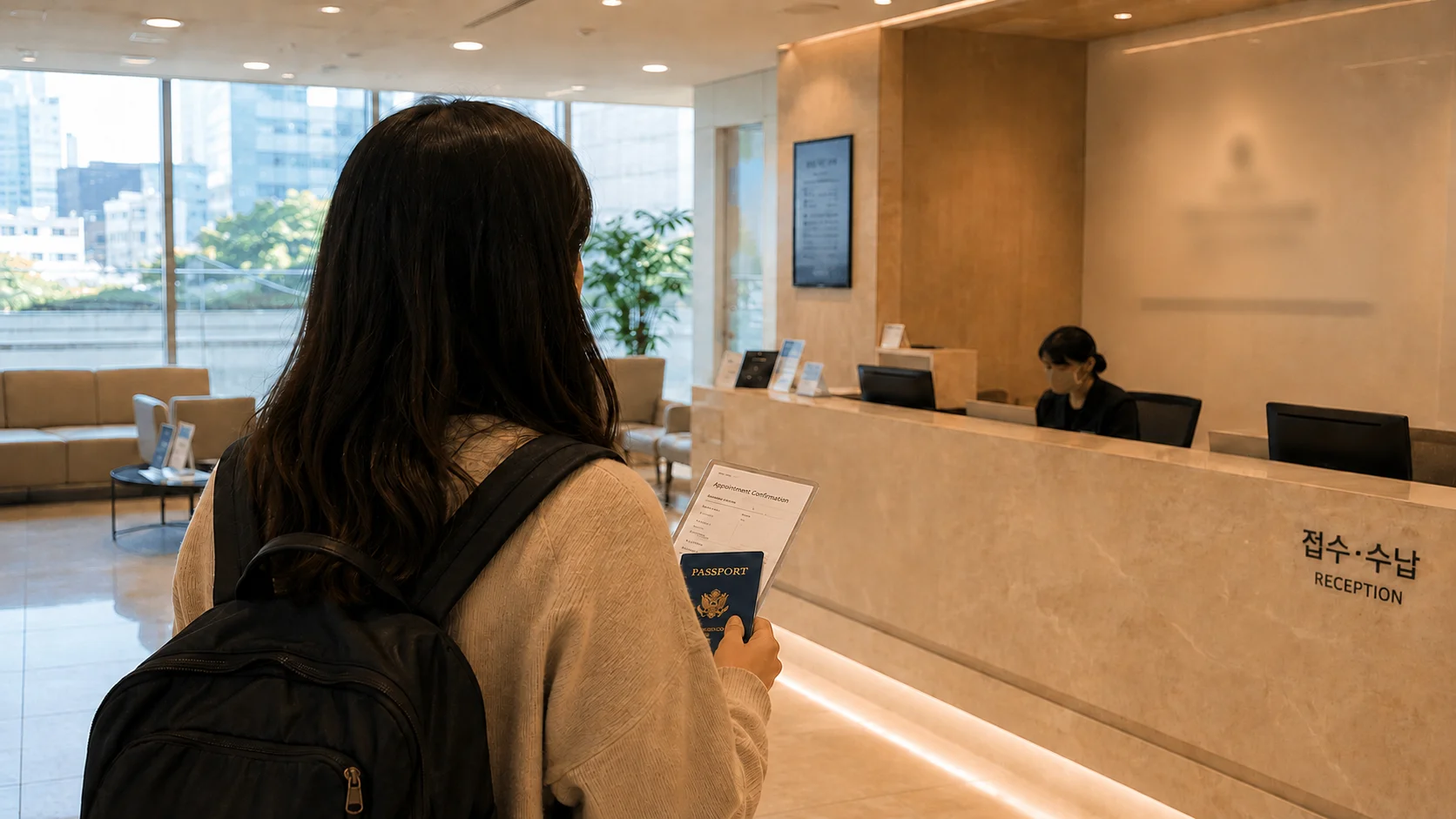
2. Prepare Documents
Bring the following:
Passport
Previous medical records (if relevant)
Medication list
Insurance information (if applicable)
Some clinics ask patients to fast for 8–12 hours before the checkup.
3. Test Sequence
Once you arrive, the clinic typically guides you through a series of tests in a pre-planned sequence. This may include imaging, lab tests, and specialist consultations.
The process usually takes 2–4 hours depending on the package.
4. Doctor Consultation
After testing, many clinics provide a preliminary consultation with a physician. They’ll review immediate findings and recommend next steps if anything needs further evaluation.
5. Receive Your Report
Detailed reports—often in English—are typically delivered within 3–7 days.
Some clinics provide digital dashboards or teleconsultation follow-ups so you can review results after returning home.
Ensuring Safety and Credentials

Healthcare quality is a top concern for international patients, and it should be.
Many major hospitals and medical centers in Korea hold JCI accreditation, a global healthcare quality standard recognized in over 100 countries.
When choosing a clinic, consider asking:
Are doctors board-certified specialists?
Does the clinic treat international patients regularly?
Are reports available in English?
Is there an international patient department?
Large health screening centers in Seoul often serve tens of thousands of international patients annually, particularly from Japan, China, Southeast Asia, and North America.
Checking reviews from expats and previous visitors can also provide practical insights.
Navigating Practical Logistics in Seoul

For most travelers, the logistics of navigating Seoul are surprisingly simple.
Medical districts such as Gangnam, Apgujeong, and Jongno are well connected by subway and taxis. Public transportation is efficient, affordable, and safe.
Many travelers rely on apps like
Naver Map to navigate the city in English.
Accommodation is widely available near medical districts, ranging from serviced apartments to boutique hotels.
On the Ground:
One thing many first-time visitors don’t expect is how close medical centers are to everyday city life. It’s common to finish a morning health screening and find yourself walking five minutes to a café, park, or shopping street while waiting for results.
This makes it easier to combine your checkup with a relaxed travel itinerary.
Next Steps: Planning Your Health Checkup Trip

If you’re considering a health checkup in Korea, a little planning goes a long way.
Start by comparing two or three clinics to understand package options and pricing. Screening packages vary widely depending on imaging, specialist consultations, and optional procedures.
Before booking, confirm:
The exact tests included in the package
Language support for international patients
Expected timeline for results
Follow-up consultation options
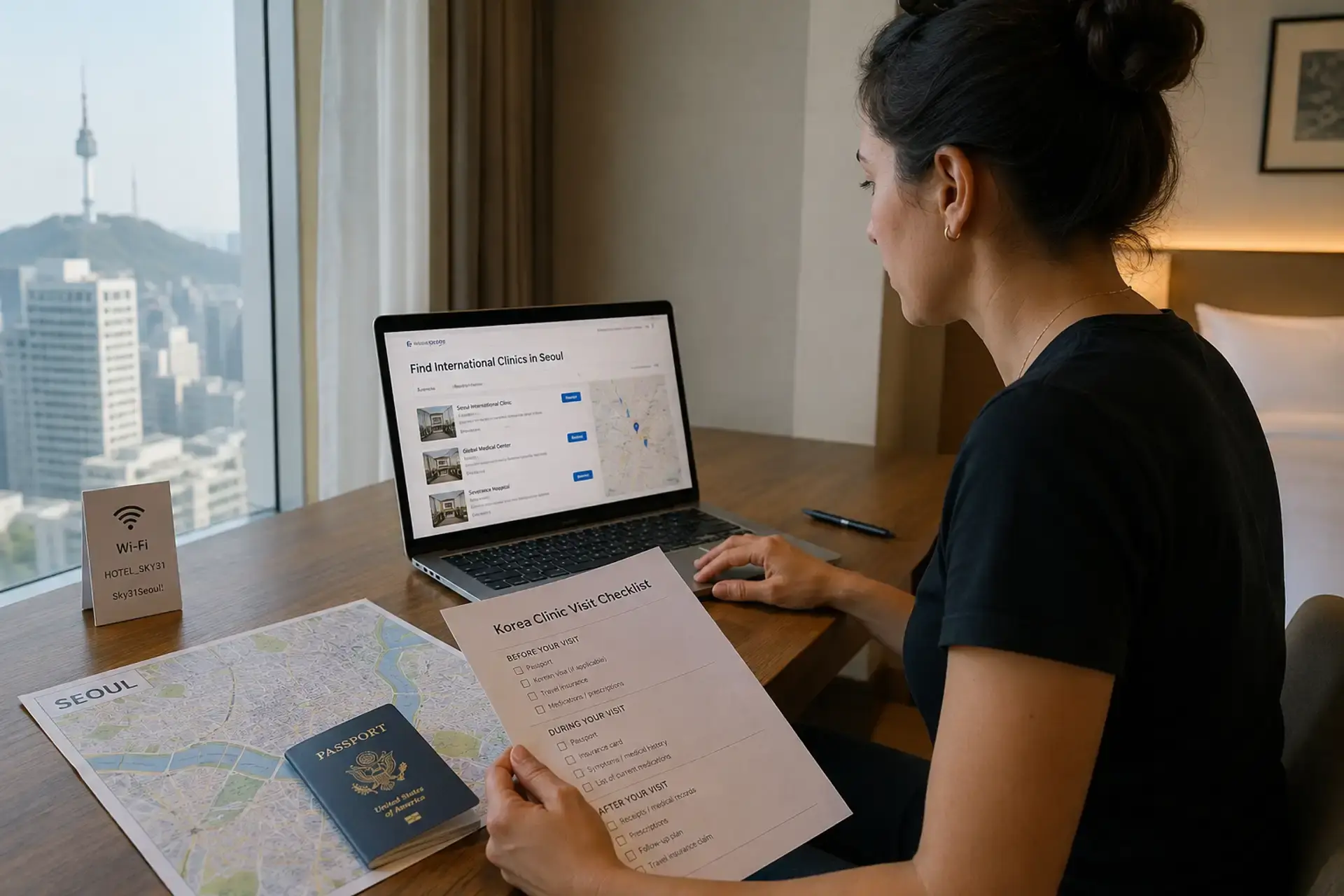
A simple checklist can help keep everything organized—from booking appointments to arranging accommodation.
Ready to Plan Your Checkup?
Planning medical care in another country can feel overwhelming—but it doesn’t have to be.
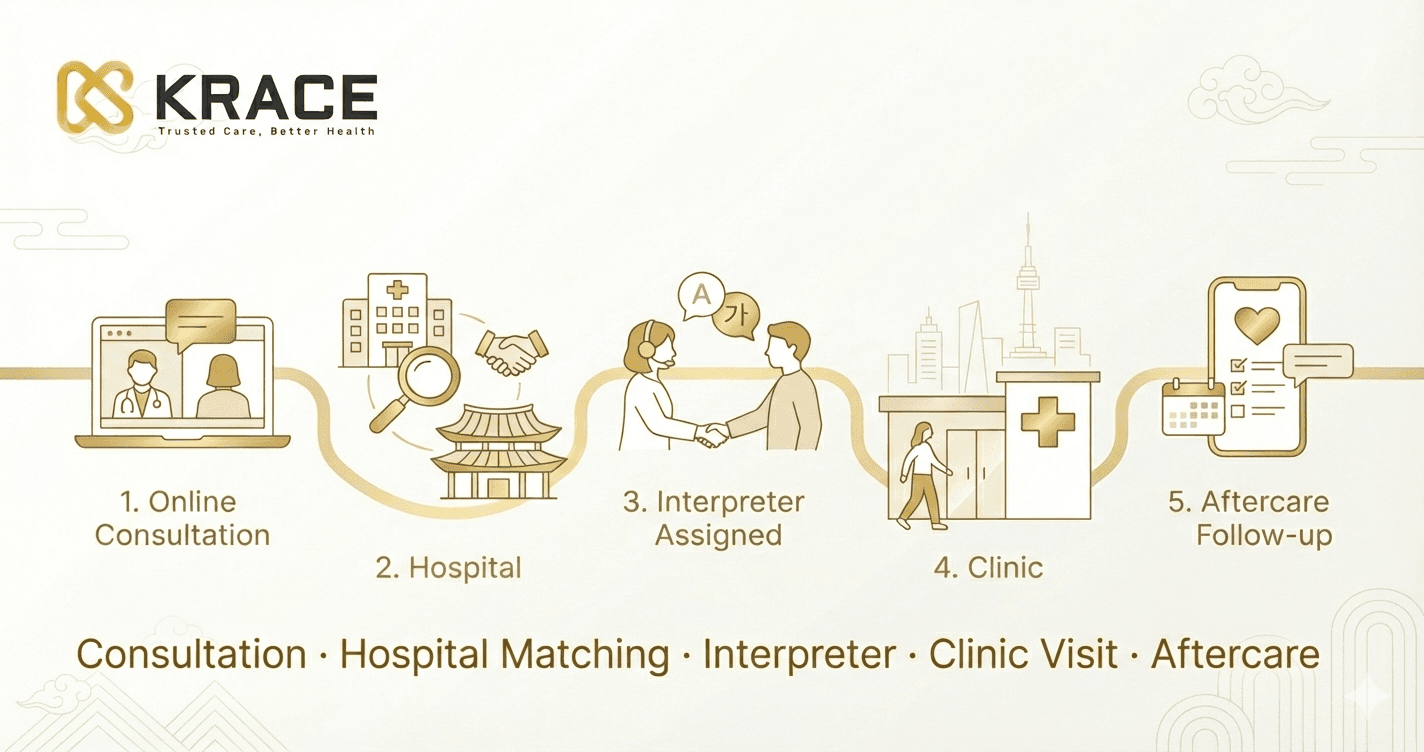
KRACE helps international visitors find trusted clinics, compare screening packages, and schedule appointments in English, with support before and after your visit.
Start with a consultation and see which health checkup option fits your needs.
Frequently Asked Questions
Here are common questions travelers ask when considering primary care Korea, including clinic access, costs, language support, and follow-up.