

Key Takeaways
Korean health checkups may take from two hours to a full day.
Complete results often take several days to two weeks.
Package names are not standardized—compare the itemized test list.
Sedation, pathology, English reports, and follow-up may cost extra.
Schedule the checkup early in your Seoul trip, not before departure.
Search for a health checkup in Korea and you will find plenty of pages promising thorough testing, quick appointments, and lower prices. What is harder to find is the information that matters when planning a real trip: exactly what the package includes, how long you will be at the center, when the final report arrives, and what happens if a result needs follow-up after you fly home.
This guide covers those practical questions.
A Korean health checkup is a pre-booked screening program that may combine laboratory tests, imaging, endoscopy, and a physician review in one coordinated visit. Package contents, sedation rules, appointment length, prices, English reporting, and result delivery vary by institution, so request an itemized test list and written timeline before booking.
Why International Visitors Choose Korea for Health Checkups
Korea’s international medical sector is still strongly associated with dermatology and plastic surgery, but international patients do not come for cosmetic services alone.
Korea’s Ministry of Health and Welfare reported that approximately 2.01 million international patients visited the country in 2025. U.S. patient numbers reached about 173,000, an increase of 70.4% from 2024. Dermatology remained the largest category for U.S. patients, followed by integrated internal medicine and plastic surgery.
The official data does not show that health screenings overtook plastic surgery among Americans in 2025. However, the previous year’s breakdown placed screening centers third among U.S. patients, accounting for 9.7% of their reported medical visits in Korea. That suggests meaningful interest without supporting the claim that checkups have become the leading reason Americans travel for care.
For many visitors, the attraction is not simply “cheap healthcare.” It is the opportunity to coordinate laboratory testing, imaging, endoscopy, and selected consultations within a defined schedule rather than arranging each service separately.
What to Know Before Arriving at the Screening Center
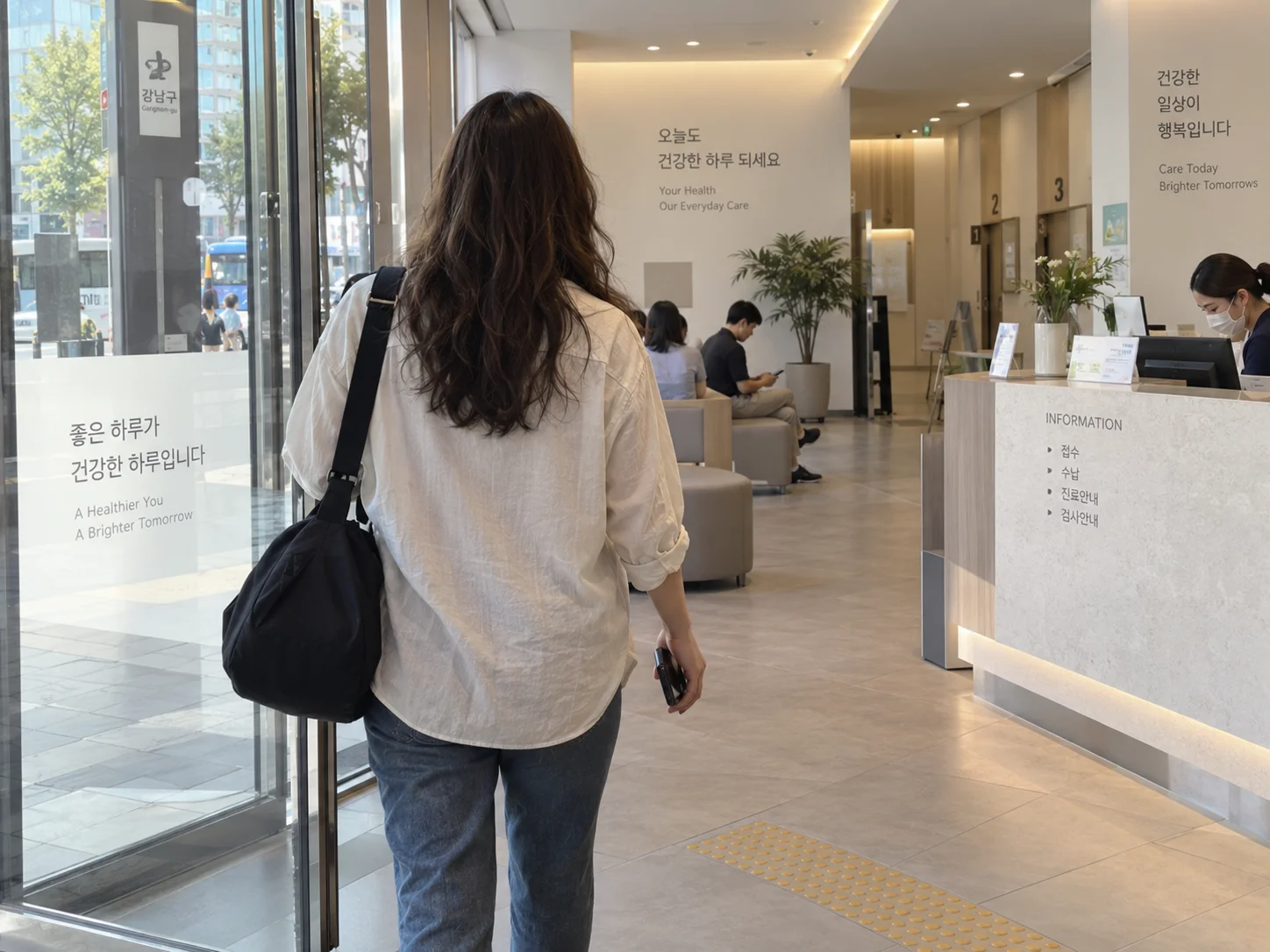
Most screening appointments begin early, often while you are fasting. Save the center’s Korean name, street address, building entrance, and floor number before leaving your hotel. Screening centers can be inside large hospital complexes, and the main outpatient entrance may not be the correct check-in point. Keep the entire afternoon flexible if sedation is included.
What Is a Comprehensive Health Checkup in Korea?
The Korean term jonghap geomjin (종합검진) generally refers to a pre-booked preventive screening program. You move through a planned sequence of tests at a health promotion or screening center rather than attending a symptom-led appointment and waiting for separate referrals.
A Korean health checkup may combine laboratory testing, imaging, endoscopy, physical measurements, and a physician review in one coordinated visit. There is no national standard package, however. The included tests, appointment length, sedation rules, pricing, English support, and report-delivery process vary by institution.
A common package structure—not a national standard
Package type | Tests that may be included | Approximate appointment length |
|---|---|---|
Core screening | Blood and urine tests, blood pressure, body measurements, ECG, chest X-ray, abdominal ultrasound, selected vision or hearing tests | 2–4 hours |
Expanded screening | Core tests plus gastroscopy, colonoscopy, thyroid ultrasound, bone density, or selected CT imaging | Half day to full day |
Advanced hospital program | Selected MRI or MRA, cardiac imaging, expanded ultrasound, or PET-CT in certain programs | 4–8 hours or longer |
Appointment length depends on the institution and package. For example, Samsung Medical Center publicly lists programs ranging from three hours for its primary package to seven or eight hours for its premium program.
Laboratory testing
A package may include:
Complete blood count
Blood glucose and diabetes-related testing
Liver and kidney function
Cholesterol and triglycerides
Thyroid function
Urinalysis
Hepatitis or other infection-related tests
Selected vitamin or hormone tests
“Full blood panel” is not a standardized term. Ask for the exact laboratory list rather than relying on the package name.
Imaging and physical tests
Depending on the program, imaging and physical testing may include:
Chest X-ray
Abdominal ultrasound
Thyroid ultrasound
Electrocardiogram
Bone-density testing
Vision, eye-pressure, or hearing tests
Mammography or breast ultrasound
Pelvic or transvaginal ultrasound
Low-dose chest CT for selected patients
Women’s-health modules may also include cervical screening, HPV testing, breast imaging, or pelvic examination. The provider should determine whether each test is medically appropriate based on age, history, prior screening, symptoms, and risk factors.
Endoscopy
Gastroscopy is common in many Korean health-screening programs. Colonoscopy may be included in a larger package, offered as an add-on, or limited according to age and medical history.
Do not assume that sedation is automatically included. Severance Hospital, for example, currently lists a separate KRW 156,000 charge for sedation with gastroscopy on its international checkup request page.
More Testing Is Not Automatically Better
Some advanced packages advertise CT, MRI, PET-CT, cardiac imaging, and multiple tumor-marker tests. A larger test list does not automatically make a package more suitable.
The U.S. Food and Drug Administration notes that whole-body CT screening has not been shown to meet generally accepted standards for an effective screening procedure in people without symptoms. CT also involves radiation exposure and can reveal incidental findings that lead to more testing.
Screening recommendations also vary by age and risk. For example, U.S. guidance recommends low-dose lung CT only for defined higher-risk groups based on age and smoking history—not as a routine test for every healthy adult.
Ask the medical provider:
Why is this test included for someone with my history?
Does it involve radiation or contrast?
What could an unclear or incidental result lead to?
Would this test duplicate a recent screening I already completed?
KRACE can help communicate these questions to a provider, but the provider—not KRACE—decides which examinations are medically appropriate.
The Most Useful Thing to Know About Sedation
If you choose sedated gastroscopy or colonoscopy, do not treat the appointment like an ordinary morning activity.
Sedation policies vary. Some institutions require an accompanying adult, and patients should not drive or operate machinery afterward. Samsung Medical Center states that a guardian is required for its sedated endoscopy, while Seoul National University Bundang Hospital advises patients to arrange for someone to remain with them and pick them up.
Plan the rest of the day as recovery time. Do not schedule an airport transfer, major business meeting, complicated shopping trip, or another procedure immediately afterward.
Before booking, confirm:
Whether sedation is included or billed separately
Whether an accompanying adult is required
How long recovery normally takes
Whether you may take a taxi alone
What food and medication instructions apply afterward
A Realistic Health Checkup Timeline
Two to four weeks before the appointment
Select the provider-defined package, submit the required history, and confirm the test list in writing.
Share current medications, allergies, prior procedures, pregnancy possibility, implanted medical devices, and recent imaging. Do not stop prescription medication unless the prescribing clinician or screening provider gives specific instructions.
For a step-by-step preparation overview, read Essential Steps for a Smooth Health Checkup in Korea.
Three to five days before a colonoscopy
Colonoscopy preparation may begin earlier than visitors expect. Some centers restrict seeds, high-fiber foods, seaweed, vegetables, and certain grains for several days before the procedure.
Samsung Medical Center begins dietary restrictions three days before a colonoscopy, while Seoul National University Bundang Hospital publishes restrictions beginning five days before. Follow the instructions from the institution performing your examination rather than a generic online checklist.
The day before
Most programs require fasting from the previous evening. Water and medication rules vary, so do not assume that “fasting” only means avoiding food.
If colonoscopy is included, bowel preparation can occupy much of the afternoon or evening. Do not plan a long tour, restaurant reservation, intercity train trip, or hotel change on preparation day.
Checkup day
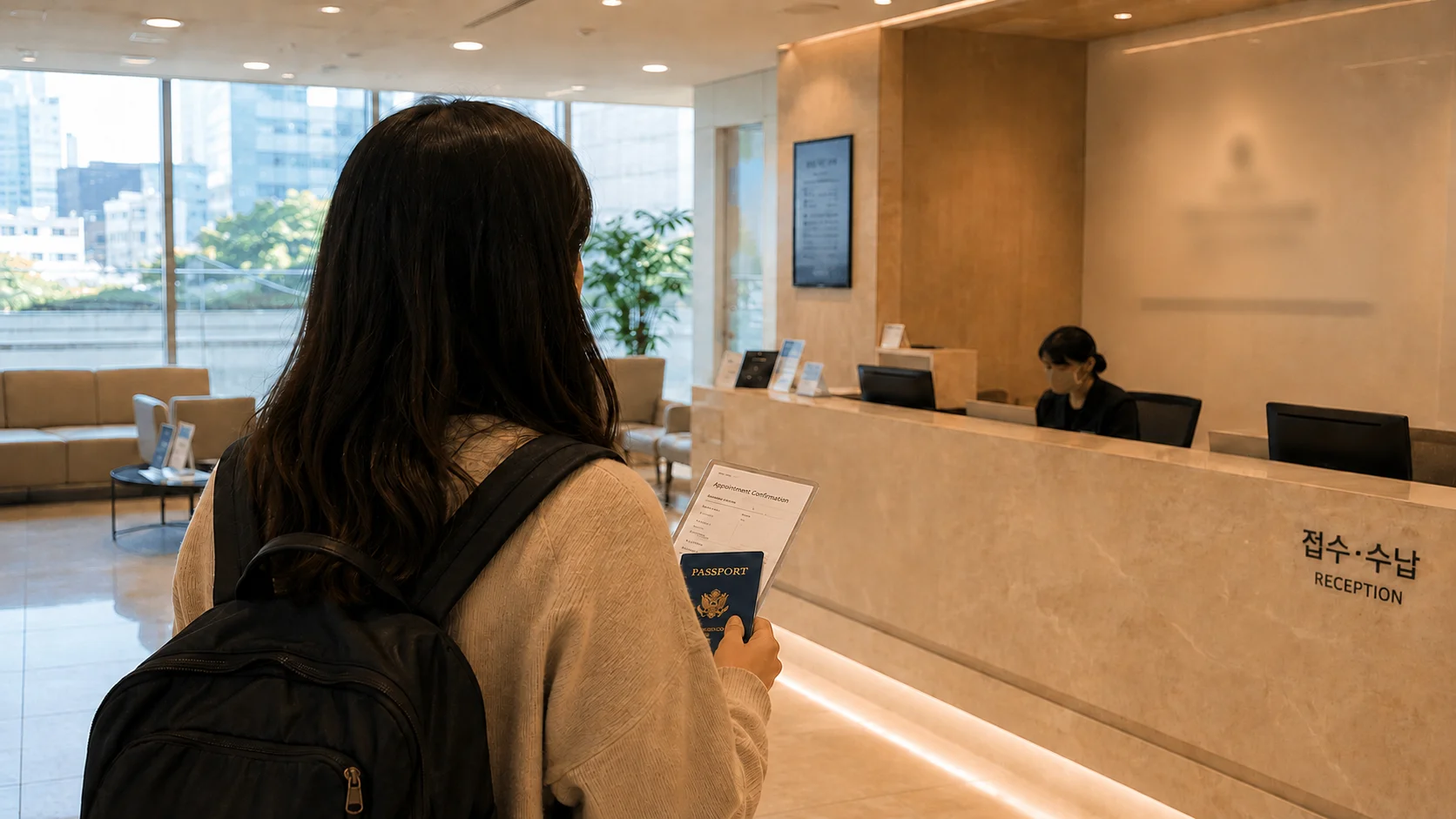
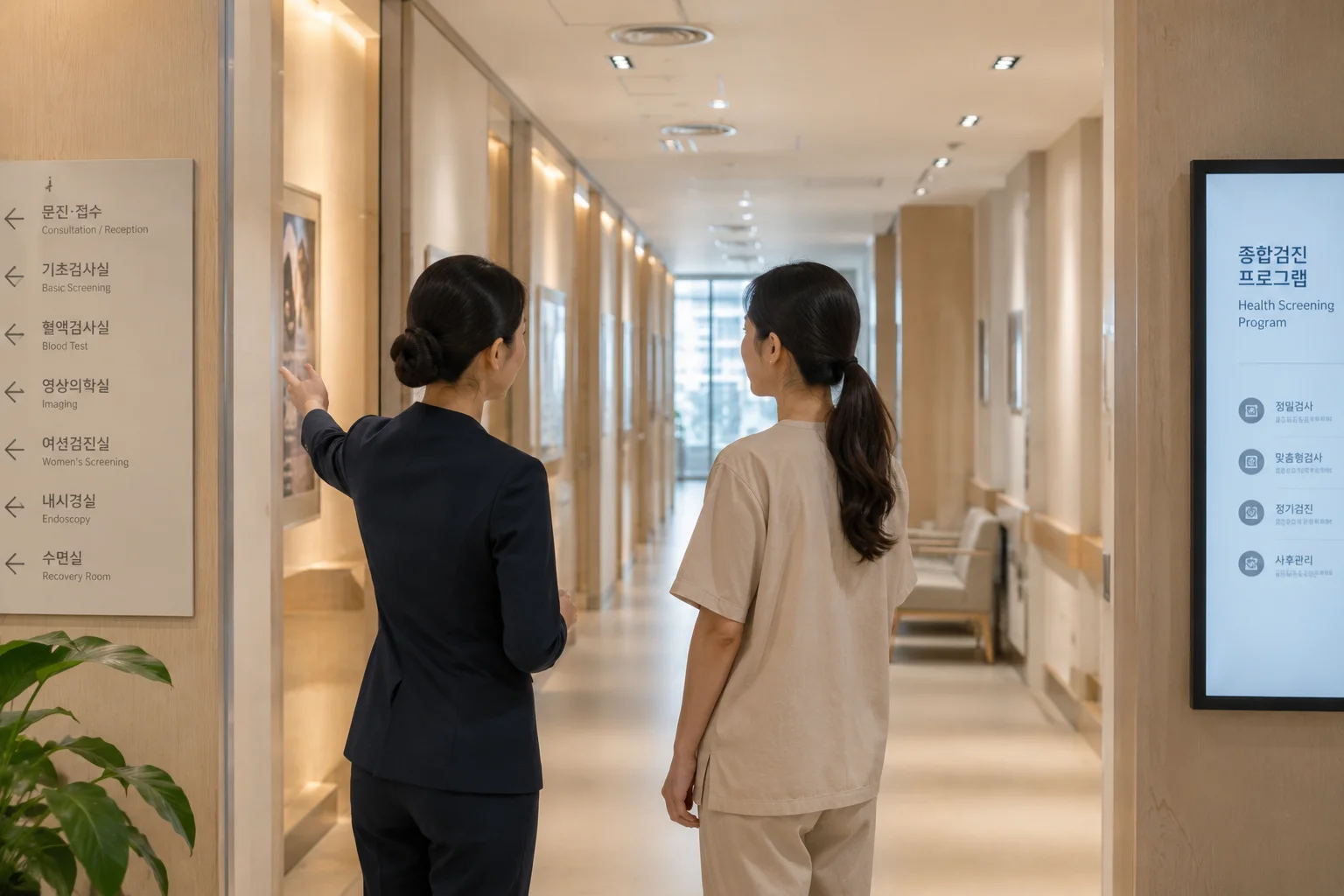
You will usually check in, complete payment and consent forms, change into examination clothing, and move through scheduled testing stations.
Endoscopy is often positioned later in the sequence because eating, drinking, and travel are restricted afterward. Your actual order may change depending on equipment availability and medical considerations.
Preliminary and final results
Do not assume that a full physician-reviewed report will be ready before lunch.
Some immediately available findings may be discussed early, but complete results can take one to two weeks. Samsung Medical Center states that result consultations are typically available 7–14 days after screening. Seoul National University Bundang Hospital says many results can be discussed within three days, while some tests require about ten days and comprehensive results are generally available within one or two weeks.
Ask for two dates before booking:
When can preliminary concerns be communicated?
When will the complete report and any pathology results be delivered?
What Does a Health Checkup in Korea Cost?

Prices vary by clinic and package—request a direct quote for accuracy.
There is no reliable single price for a health checkup in Korea. A limited screening with laboratory tests and ultrasound is not directly comparable with a tertiary-hospital program that includes endoscopy, CT, MRI, cardiac imaging, or PET-CT.
Publicly listed prices can also be misleading for international visitors. Some apply only to Korean residents, selected overseas-Korean programs, promotional periods, or specific hospital packages. International-patient pricing and English-support arrangements may be quoted separately.
Before booking, request an itemized written estimate showing:
Every test included in the package
Sedation and recovery charges
Contrast material
Biopsy and pathology
Polyp removal
Additional imaging prompted by a finding
English reporting or translation
Physician result consultation
Raw imaging files
Document delivery and follow-up fees
Price note: KRACE requests provider-specific estimates based on the selected package, travel dates, and communication needs. The independent medical provider determines the appropriate examinations and confirms the final medical fees.
What Happens If Something Abnormal Appears?
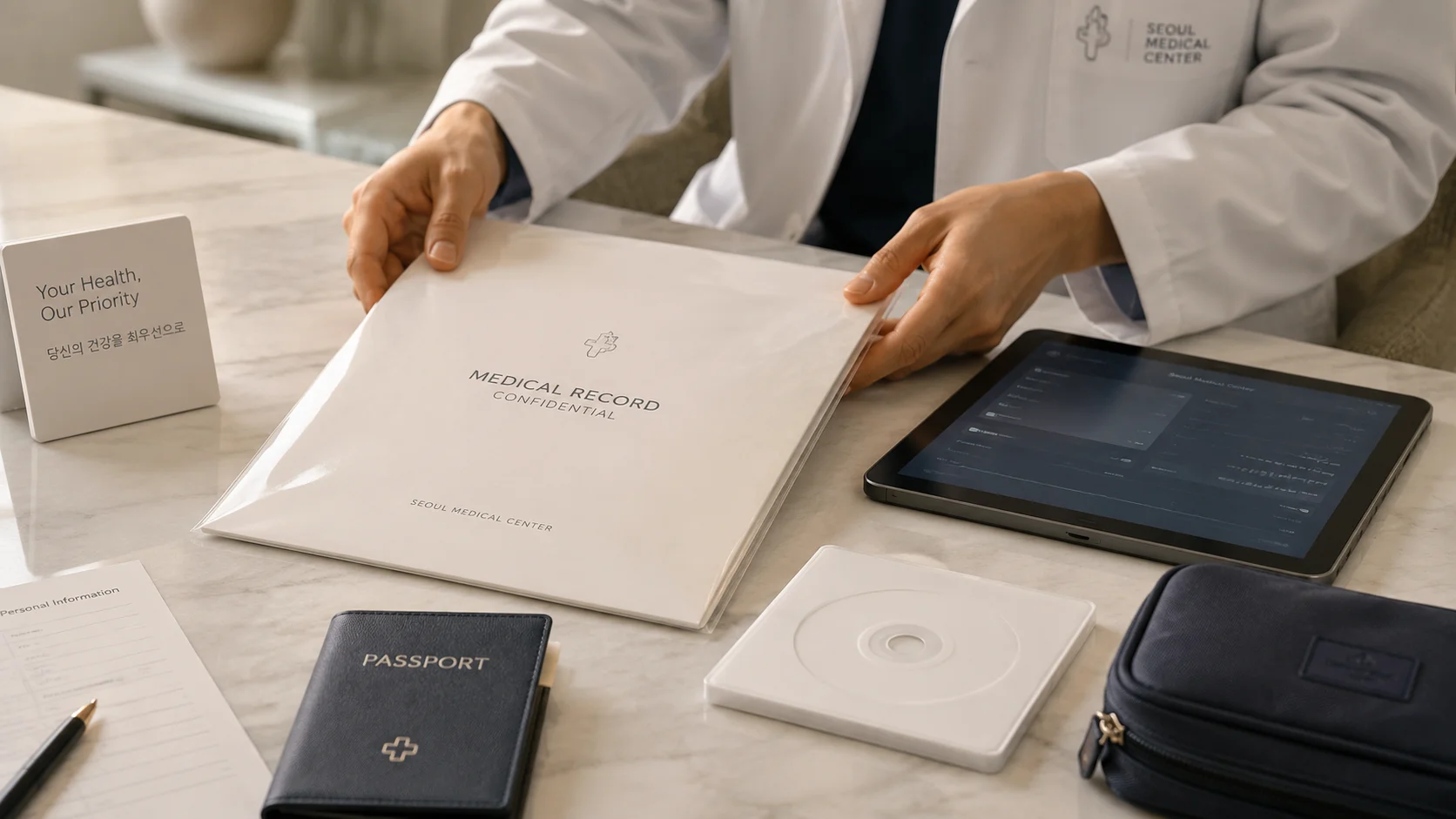
This is the question that should influence both your provider choice and your travel schedule.
Minor or non-urgent finding
Examples could include a laboratory value or imaging observation that the provider considers suitable for routine follow-up. You may receive the report and instructions to discuss it with your clinician back home.
Additional testing is advised while you are in Korea
The provider may suggest another scan, repeat laboratory testing, or a specialist consultation. Whether this is possible depends on appointment availability and how many working days remain before departure.
Pathology or longer-term care is needed
A biopsy result may not be ready until after you leave. Further diagnosis or treatment could require an extended stay, a return visit, or transfer of records to your existing care team.
Seoul National University Bundang Hospital specifically advises that some abnormal results may require additional evaluation and that an international patient might need to extend a stay or return after departure.
Before leaving Korea, confirm how you will obtain:
The full report in English, or a translation acceptable to your clinician at home
Raw imaging files in DICOM or another transferable format
The radiology report
Pathology results if tissue was taken
A written explanation of the provider’s recommended next step
An itemized receipt and procedure list
A named contact for questions about missing records or delivery
A screening result is not useful if your clinician back home cannot review the source images, identify the test method, or contact the institution when something is unclear.
Who Is a Korean Health Checkup Best For?
A packaged checkup may be worth considering when:
You are already visiting Korea and can reserve a full day
You want preventive screening rather than evaluation of an urgent symptom
You understand that some results may arrive after your trip
You are prepared to share the report with a clinician who knows your broader history
You can leave extra working days for possible follow-up
It may be a poor fit when:
You have a new or severe symptom that requires medical evaluation now
You need continuous management of a complex chronic condition
You are expecting the package to replace a primary-care relationship
Your itinerary leaves no time for preparation, recovery, or follow-up
You want every available test without discussing whether it is appropriate
A screening package generates information. It does not replace ongoing care or the clinical context provided by a physician who follows your health over time. Learn more in Why Travelers Choose Korea for Primary Care.
Planning the Appointment Around a Seoul Trip

Reserve the checkup for the first half of your trip rather than your final morning. A practical schedule is:
Arrival day: Hotel check-in and light activity
Next day: Recovery from jet lag and confirmation of instructions
Preparation day: Required diet or bowel preparation
Checkup day: Testing and recovery
Following two working days: Buffer for records, questions, or additional appointments
Do not schedule sedated endoscopy immediately before a flight. Even when the screening itself is completed in a few hours, results, recovery, additional payment, and document requests may take longer.
Before choosing an institution, confirm its international-patient registration and review the practical checks in How to Choose the Right Korean Clinic. Korea’s official Medical Korea website also provides a searchable list of registered hospitals.
For general travel-health preparation, review the CDC’s South Korea traveler information before departure.
Before You Book: View All 8 Questions
Get written answers to these questions before paying a deposit or finalizing your itinerary.
- Is the institution registered to serve international patients?
- Which tests are included, item by item?
- Is sedation included, optional, or billed separately?
- What additional biopsy, pathology, or polyp-removal fees could apply?
- When will preliminary and complete results be available?
- Will the complete report be issued in English?
- How will I receive imaging and pathology records?
- Who can I contact after returning home?
How KRACE Supports the Process
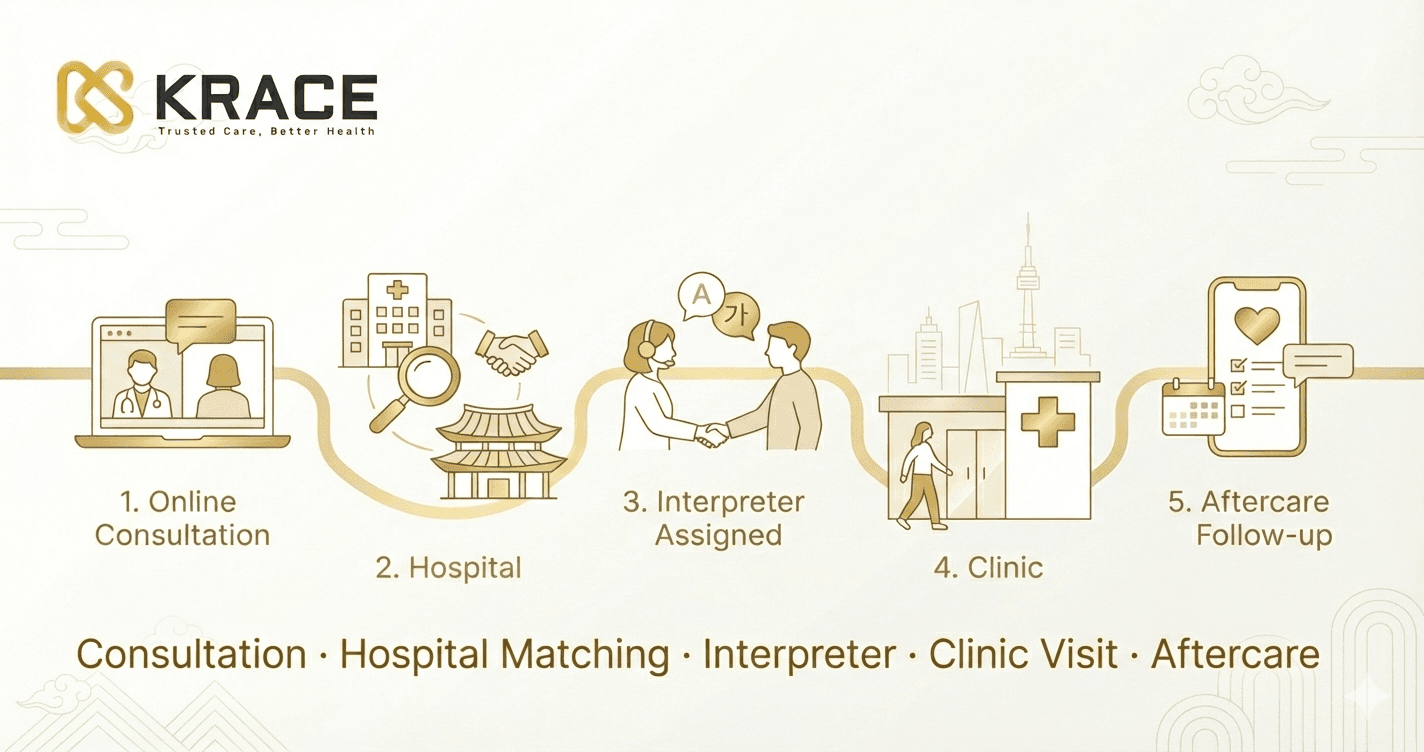
KRACE helps international visitors compare provider-defined screening packages, coordinate booking and communication, obtain a written estimate, and confirm how reports and imaging records will be delivered.
We can also help communicate your travel dates, screening preferences, existing records, language needs, and logistical constraints to independent licensed medical providers.
The medical provider decides which tests are appropriate, performs the examination, explains the findings, and recommends any medical follow-up. KRACE does not diagnose, select medical tests, interpret results, or recommend treatment.
Frequently Asked Questions
These answers cover the package contents, timing, cost, results, and follow-up questions international visitors commonly ask before booking a Korean health checkup.
What does a health checkup in Korea usually include?
A Korean health checkup may include blood and urine testing, body measurements, ECG, chest imaging, abdominal ultrasound, and selected vision or hearing tests. Larger programs may add gastroscopy, colonoscopy, thyroid or women’s-health imaging, CT, MRI, or cardiac testing. There is no standard national package, so ask for the complete itemized test list before booking.
How long does a Korean health checkup take?
Many coordinated screenings take approximately two to five hours, while advanced hospital programs can take most of a day. Appointment length depends on the number of tests, endoscopy, sedation recovery, imaging availability, and whether consultations occur on the same date. Keep the afternoon flexible and confirm the provider’s expected check-in and discharge times in writing.
How soon will I receive my health checkup results?
Some immediately available findings may be discussed within a few days, but a complete physician-reviewed report commonly takes one to two weeks at major screening centers. Pathology and specialized testing may take longer. Confirm separate dates for preliminary communication, the full English report, imaging delivery, pathology results, and any remote result consultation before you finalize your travel schedule.
How much does a health checkup in Korea cost?
Prices vary substantially because screening packages do not include the same tests, and some institutions apply separate pricing or service arrangements for international patients. Request an itemized written estimate that identifies sedation, contrast, biopsy, pathology, polyp removal, English reporting, imaging files, and follow-up fees. Compare the included tests rather than relying only on the package name or headline price.
What happens if an abnormal result appears after I return home?
The provider may recommend routine follow-up at home, additional testing in Korea, or a specialist evaluation depending on the finding. Before leaving, confirm that you can receive the English report, radiology report, raw imaging files, pathology results, procedure list, and a provider contact. A physician who knows your history should review the records and determine the appropriate next step.
You Might Also Like

Essential Steps for a Smooth Health Checkup in Korea
[IMAGE 1: Korean Health Checkup Center] Imagine booking a full health checkup and finishing everything—blood tests, imaging, specialist consultations—in a single morning. In many countries, the same process might take weeks of appointments and referrals. That’s one reason international visitors increasingly consider Korea for preventive screenings. With modern facilities, faster diagnostics, and comparatively lower costs, a Korean health checkup can turn a stressful medical process into a surpri
blog.kracecare.com

How to Choose the Right Korean Clinic: A Practical Guide
Imagine this: back home, you wait weeks—sometimes months—for a specialist appointment, only to spend 10 minutes in the consultation room. Now imagine landing in Seoul and getting a full consultation, diagnostics, and a treatment plan within 24–48 hours. That’s not an exception. It’s the norm in Korea. But here’s the reality most guides skip: while Korea is fast and affordable, choosing the right clinic as a foreigner can feel overwhelming. Different systems, unclear pricing, and language gaps ca
blog.kracecare.com

Why Seoul Should Be on Your 2026 Travel List (And Why Smart Travelers Are Adding Healthcare to the Plan)
Most people plan a trip around food, culture, and places to explore. But what if your trip could also take care of something you’ve been putting off—without slowing you down? That’s exactly why Seoul is showing up on global “best cities” lists in 2026. Not just because it’s exciting—but because it’s one of the few places where daily life, infrastructure, and even healthcare feel seamlessly connected. And once you experience how the city works, you start to see why more travelers are quietly addi
blog.kracecare.com