
You may want a Korean doctor’s opinion without committing to treatment that day. But once a clinic asks for your travel dates, photos, and budget, it can feel as though the decision has already been made. It has not. A consultation should help you understand the proposed care, alternatives, limits, cost, recovery, and next steps before you decide.
Can You Visit a Korean Clinic for a Consultation Only?
In many cases, yes. Korean clinics may accept an appointment for consultation, examination, or diagnostic review without requiring you to receive treatment that day.
However, consultation-only availability, fees, appointment length, and same-day treatment policies vary by clinic. State your intention clearly before the appointment and ask whether the clinic is reserving consultation time, treatment time, or both.
On the Ground
Ask the coordinator to write “consultation only” in your appointment confirmation when that is your intention. A common source of confusion is not the appointment itself—it is discovering that the clinic reserved treatment time because it assumed the visitor wanted same-day care.
Korea received approximately 2.01 million international patients from 201 countries in 2025, according to the Ministry of Health and Welfare. International care is no longer unusual, but the consultation process still differs by clinic, specialty, and level of English support.
If you are still choosing a provider, begin with our guide to choosing the right Korean clinic. This article begins at the next stage: you have a clinic or shortlist, and you are ready to meet the medical team.
What Usually Happens During a Korean Clinic Consultation?
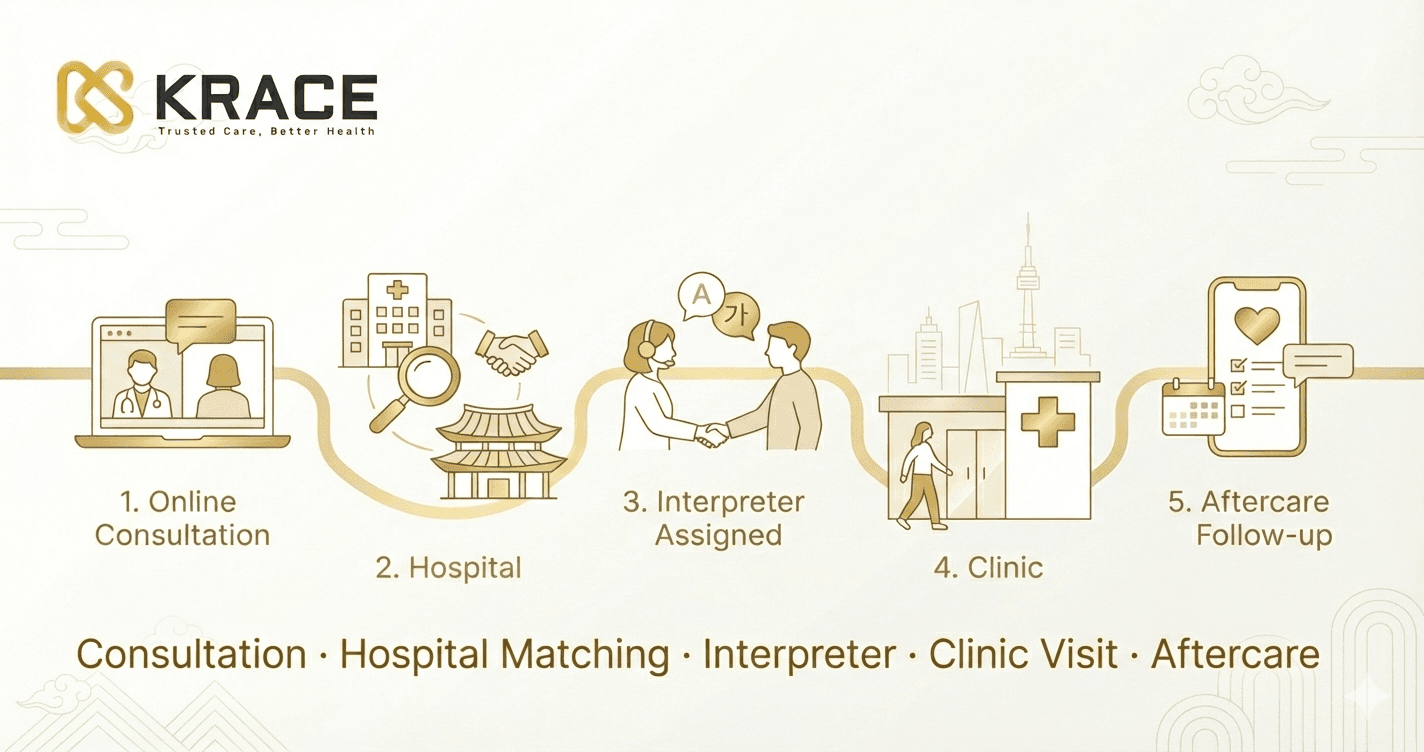
The direct answer is that most consultations move through five practical stages: registration, intake, coordinator communication, medical evaluation, and a discussion of the proposed plan.
The exact order depends on whether you are visiting a dermatology clinic, dental office, health screening center, eye clinic, orthopedic clinic, or another provider.
Stage | What may happen | What you should confirm |
|---|---|---|
Arrival | Registration and identity check | Correct clinic, doctor, and appointment type |
Intake | Health questionnaire and goals | Information is complete and understood |
Coordinator discussion | Schedule, communication, and estimated cost | Coordinator’s role versus doctor’s role |
Medical consultation | Examination, assessment, and options | Medical reasoning, limits, and alternatives |
Decision stage | Written estimate and possible next steps | Treatment should not begin until you understand the proposed plan and provide any required consent. |
This sequence can feel faster than a visit back home. Speed can be convenient, but it also means you should arrive knowing which decisions you are—and are not—prepared to make.
Before You Leave Your Hotel
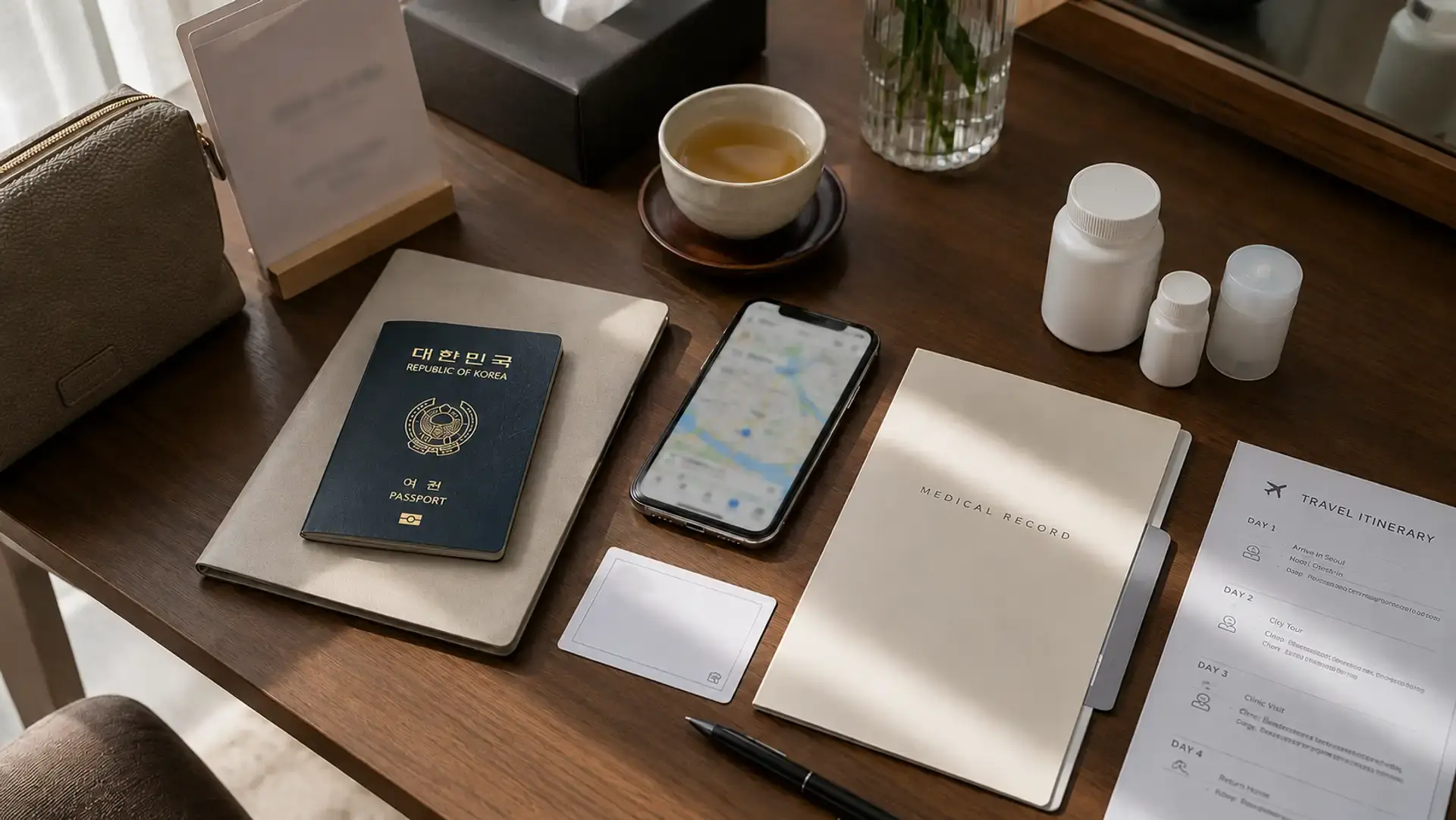
Bring or securely store the information most relevant to your visit:
Appointment confirmation
Passport or another form of identification
Current medication and supplement list
Known allergies
Relevant diagnoses or previous procedures
Recent test results, imaging, or treatment records
Your arrival and departure dates
The clinic’s Korean name, building name, and floor
Your coordinator or language-support contact
You do not need to send every medical document you have. Start with information reasonably related to the consultation and ask how sensitive records will be received, stored, and shared.
Where appropriate, KRACE may first provide a potential clinic with a de-identified summary of a visitor’s request. Where appropriate, KRACE may first provide a potential clinic with a de-identified summary of the visitor’s request. Identifying or medical information is shared only when necessary for coordination or clinical review and with the patient’s consent.
For booking logistics, see our step-by-step guide to booking a clinic in Korea.
Step 1: Finding the Clinic Is Sometimes the First Challenge
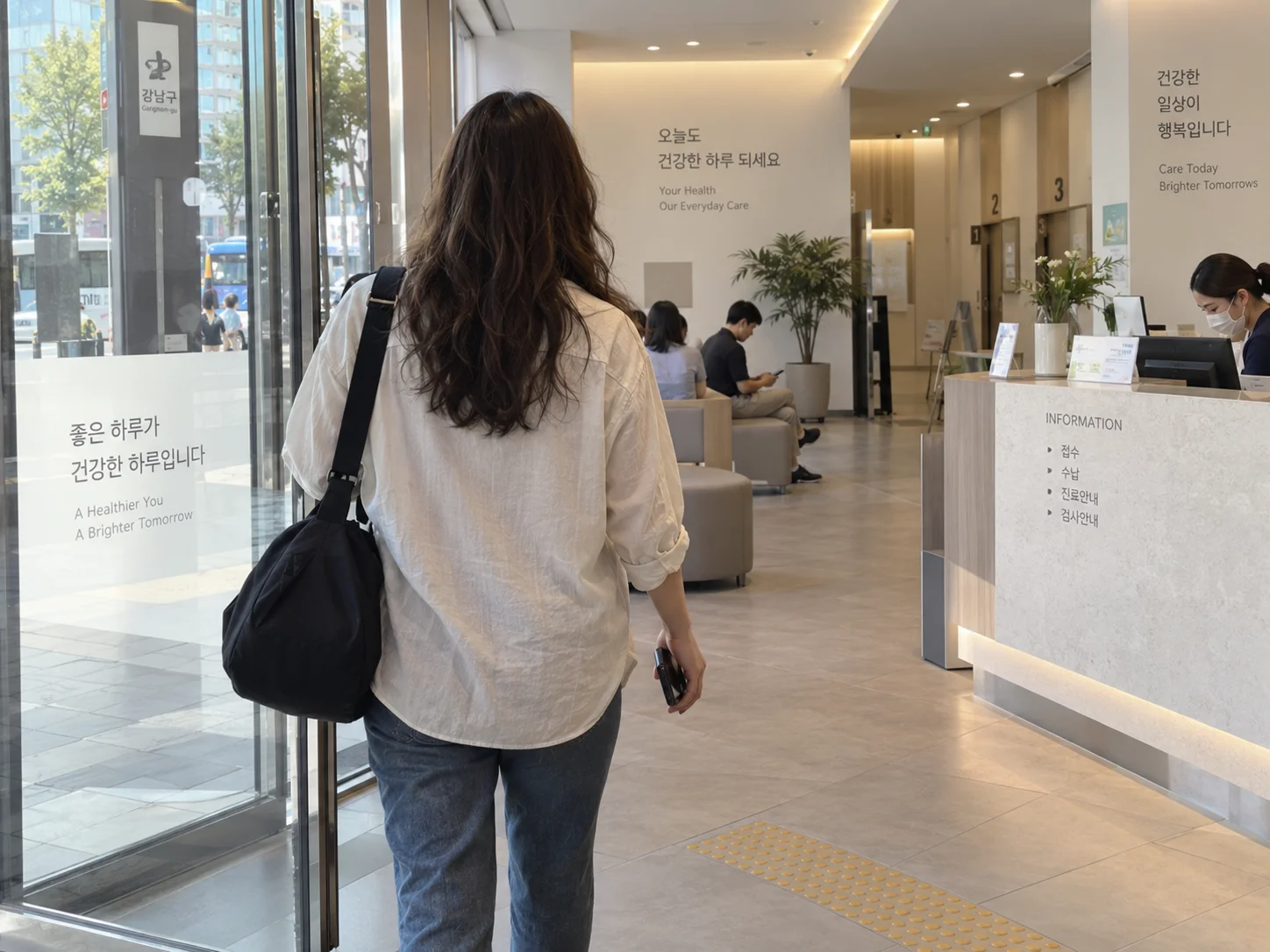
A clinic may occupy one floor of a large commercial or medical building. The English brand name on its website may not appear prominently at street level.
Save the following before leaving:
Korean clinic name
Building name
Street address
Floor number
Nearest subway exit
A screenshot of the entrance
The clinic’s phone or messaging contact
Do not rely only on a pin dropped into a map. Check whether the pin identifies the correct entrance, especially in Gangnam, Seocho, Jamsil, or central Seoul, where several medical businesses may share one building.
Arrive about 10–15 minutes early when possible. That gives you time to find the floor, complete registration, and resolve language questions without shortening the medical consultation.
Step 2: Reception and Patient Intake
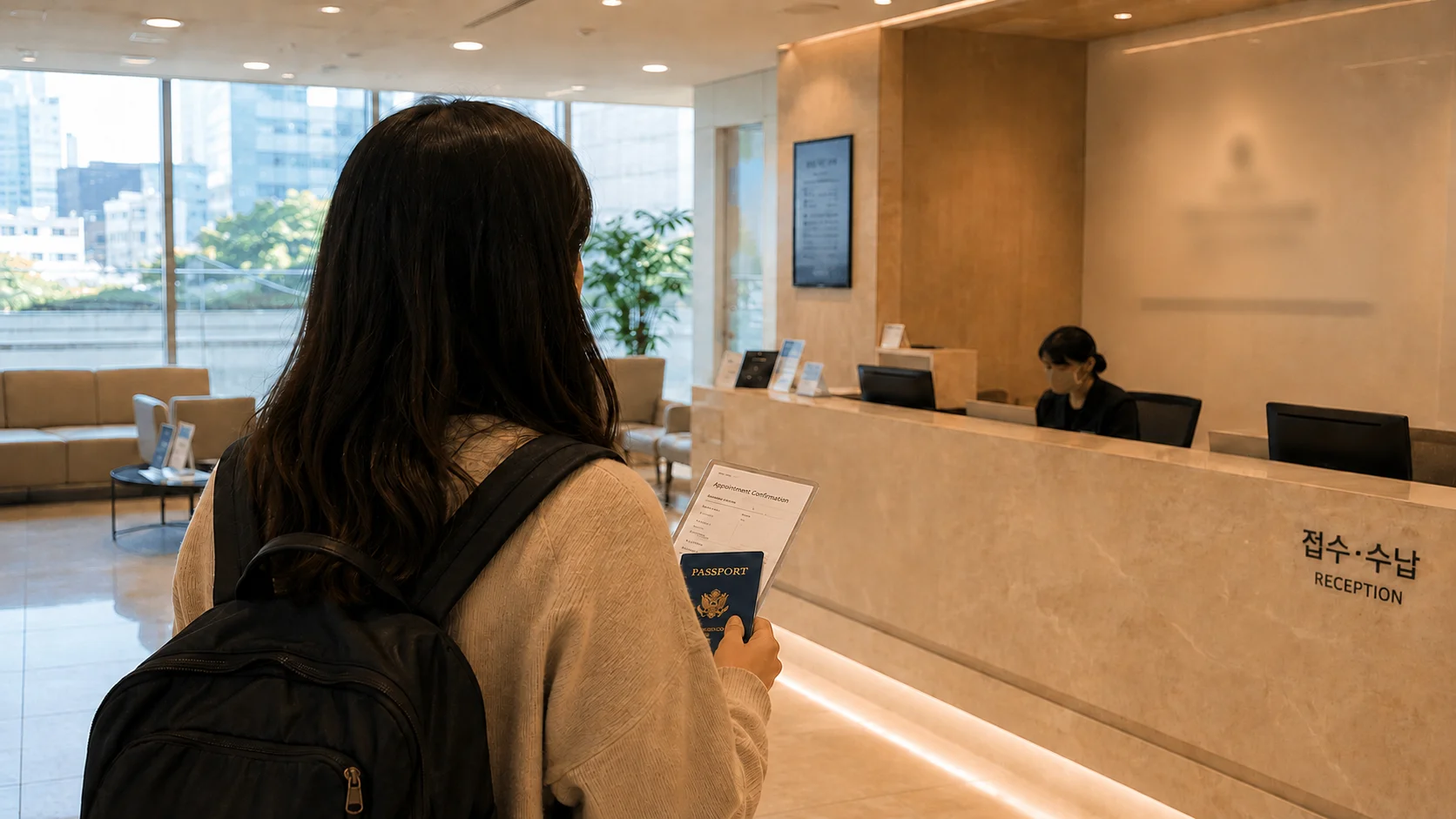
At reception, staff may confirm your name, birth date, appointment type, and contact information. International visitors may also be asked for identification, depending on the clinic and documentation required.
You may receive a digital or paper questionnaire covering:
Main concern or treatment goal
Relevant medical history
Current medications
Allergies
Previous surgery or procedures
Pregnancy or possible pregnancy when relevant
Recent treatment in another country
Travel and return-flight schedule
Do not rush through this section simply because the clinic is busy. If a question is unclear, ask for an explanation before answering.
A translated form can help, but it does not replace a conversation when the answer is medically important.
Step 3: You May Speak With a Coordinator Before the Doctor
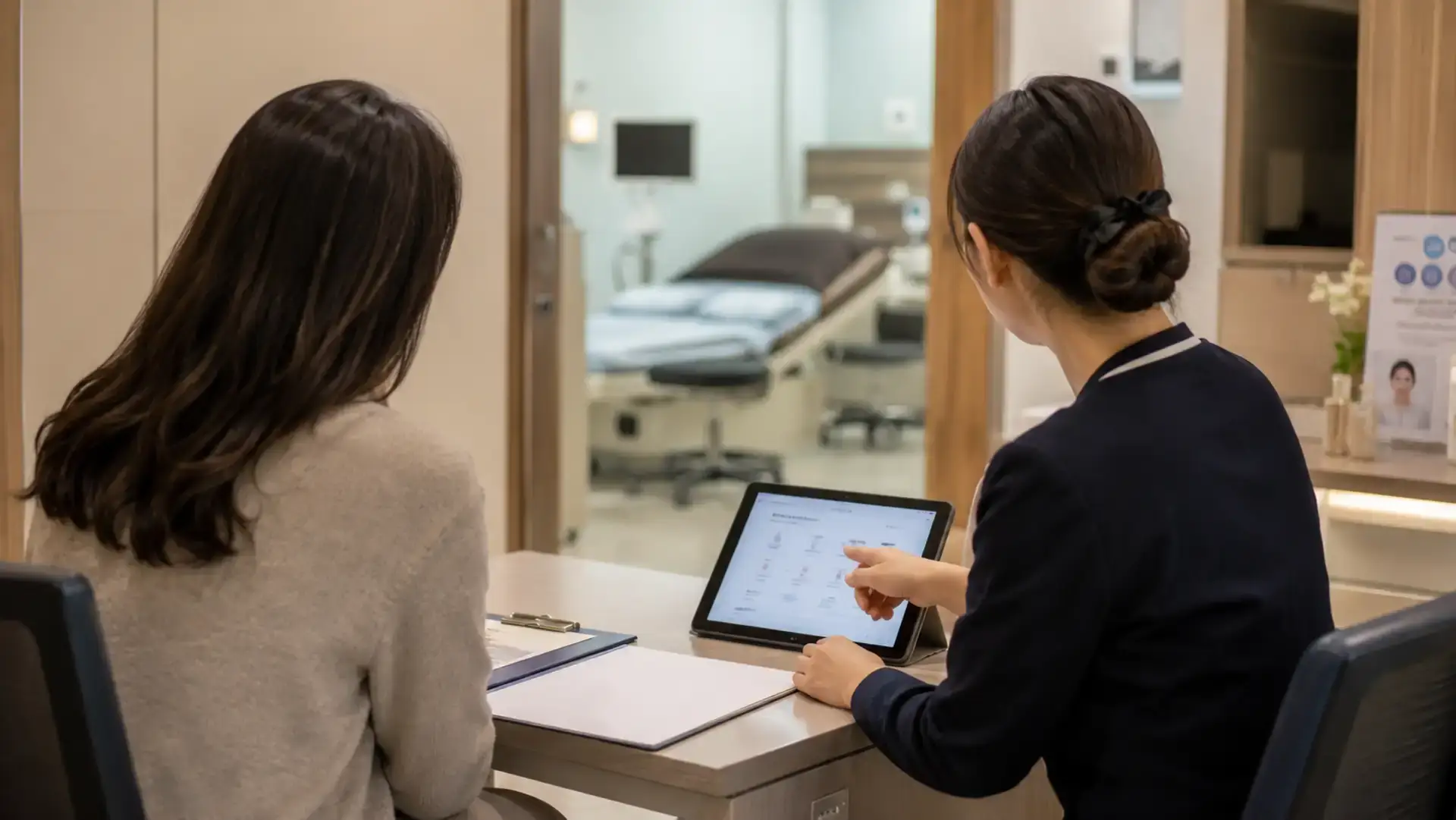
This is where many visitors become confused.
A coordinator may discuss your goals, appointment flow, estimated fees, timing, payment, and communication support. This person can make the visit easier, but a coordinator is not the person who should determine whether a treatment is medically appropriate.
A useful distinction is:
The coordinator may explain
Appointment timing
Clinic process
Available communication support
Estimated price structure
Payment and cancellation policies
Travel and follow-up logistics
The treating clinician should explain
Clinical findings
Whether further examination is needed
Whether the proposed treatment is appropriate
Available alternatives, including no treatment
Relevant side effects and limitations
Recovery and follow-up requirements
When a coordinator describes a treatment before you meet the treating clinician, treat it as preliminary process information—not a confirmed medical recommendation.
A simple question can clarify the handoff:
“Which parts of this plan will the doctor assess and confirm during the consultation?”
Step 4: The Doctor Needs to Assess More Than Your Desired Treatment
An international visitor may arrive asking for one specific laser, injection, dental procedure, screening package, or operation. A responsible consultation may lead to a different conclusion.
The doctor may:
Ask what bothers you and what result you expect.
Review your health and treatment history.
Examine the relevant area.
Request images, scans, laboratory work, or another test.
Explain whether the service you requested is appropriate.
Offer alternatives—or advise against treatment.
Discuss what cannot be determined during that visit.
This is not a failure of the consultation. “No treatment,” “more information first,” and “a different provider is more appropriate” can all be legitimate outcomes.
A consultation is most useful when it tests your original assumption rather than simply confirming the treatment name you found online.
Step 5: Tests, Photos, or Scans May Come Before a Final Plan

The clinic may need more information before confirming the plan. Depending on the specialty, this could involve clinical photography, skin analysis, dental imaging, blood testing, ultrasound, visual testing, or another examination.
Ask three practical questions before agreeing:
Is this test necessary to assess my case?
Is the test included in the consultation or charged separately?
Will I receive the result or image file afterward?
Do not assume a quick test is automatically included in the quoted consultation fee. Ask whether the result will be explained by the doctor and whether a copy can be provided in English or another usable format.
Step 6: When Is the Final Price Confirmed?
The direct answer is that an online or messaging estimate may remain preliminary until the doctor assesses you.
A price can change because the required scope, number of areas, materials, medication, anesthesia, tests, or follow-up plan differs from the original assumption. This does not automatically indicate a problem, but the clinic should explain the reason for the change.
Prices vary by clinic and package—request a direct quote for accuracy.
Before paying, ask for a written summary showing:
Consultation fee
Tests or imaging
Proposed treatment
Medication or supplies
Anesthesia or sedation when applicable
Follow-up visits
Language or document fees, if any
Deposit already paid
Cancellation and refund conditions
Optional additions versus necessary items
When the final amount differs from the preliminary estimate, ask:
“Could you show me what changed from the earlier estimate and why?”
A clear explanation is more important than whether the amount stayed exactly the same.
Do You Have to Decide the Same Day?
A consultation does not mean you must agree to elective treatment immediately. You may ask for time to review the information, compare another clinic, speak with someone back home, or reconsider whether treatment fits your trip.
At the same time, clinic policies vary. Some reserve same-day treatment time, some charge a separate consultation fee, and some may require a new appointment if you decide later.
Before attending, confirm:
Whether the appointment is consultation only
Whether same-day treatment is optional
Whether the quoted price expires
Whether a deposit is transferable
Whether another consultation is needed later
How long the clinic will hold a treatment slot
Pressure and efficiency can feel similar when the process moves quickly. The difference is whether you understand the choice and feel free to say, “I need time to decide.”
What Should Happen Before You Consent to Treatment?
For certain higher-risk medical practices—specifically surgery, blood transfusion, or general anesthesia that may cause serious harm to life or health—Article 24-2 of Korea’s Medical Service Act requires the clinician to explain specified information and obtain written consent, subject to limited exceptions. The required explanation includes the diagnosis, necessity and details of the procedure, the principal clinician involved, typical side effects or sequelae, and instructions before and after care. A patient may also request a copy of the consent document.
The exact legal requirements depend on the procedure and circumstances. As a practical matter, do not sign a document you cannot understand.
Before proceeding, confirm:
What is being performed
Who will perform it
What area or number of units is included
Expected benefits and realistic limitations
Possible side effects and downtime
Alternatives, including no treatment
Relevant pre- and post-care instructions
What happens if the plan changes
How to contact the clinic afterward
Language support should cover consent and medical explanation—not only scheduling and payment.
Three Normal Outcomes After a Consultation
A useful consultation does not always end with treatment.
1. Proceed that day
You understand the plan, the doctor considers it appropriate, consent is complete, and your travel schedule allows it.
2. Schedule treatment later
You want time to decide, the clinic needs additional information, or a separate appointment is more appropriate.
3. Do not proceed
The treatment does not fit your goals, health circumstances, budget, timing, or comfort level.
The third outcome is not wasted time. Learning that a proposed service is not right for you may be the most valuable result of the visit.
What Should You Leave the Consultation With?
Even when you do not receive treatment, record the information you were given.
Ask what the clinic can provide after the consultation, and when it will be available.
Treating doctor’s name
Doctor’s specialty or role
Preliminary assessment or consultation summary
Proposed treatment or testing options
Written estimated cost
Expected number of visits
Recovery or downtime estimate
Recommended length of stay in Korea
Decision deadline, if one exists
Next appointment process
Clinic contact channel
Whether documents can be provided in English
Whether a document or translation fee applies
If treatment or a prescription is provided, also ask about receipts, medication instructions, and records. The Korea Tourism Organization maintains a practical pharmacy guide for visitors, including multilingual travel-help information.
For multi-step screenings, our health checkup preparation guide explains how testing and result review may be organized.
How KRACE Supports the Consultation Process
KRACE supports clinic matching, booking, communication, and post-care coordination.
Before the visit, that may include:
Organizing your main request
Confirming the appropriate appointment type
Sharing relevant information with consent
Coordinating dates and language support
Asking whether consultation-only booking is available
Clarifying preliminary estimates
During and after the consultation, KRACE may help organize the information provided, communicate logistical questions, coordinate the next appointment, and support practical follow-up.
KRACE does not diagnose, prescribe, recommend a medical treatment, or provide medical care. Medical evaluation, treatment recommendations, consent, and services are handled by independent licensed healthcare providers.
You remain the decision-maker.
A Consultation Should Give You Clarity, Not Momentum
A fast appointment can be valuable. So can a same-day treatment option.
But the purpose of a Korean clinic consultation is not simply to move you from reception to payment as quickly as possible. It is to help you understand what the provider found, what is being proposed, what it may involve, and whether you are ready to proceed.
Before you leave the consultation room, you should know:
Who assessed you
What was proposed
Why it was proposed
What remains uncertain
What it costs
What happens next
Whether you are free to decide later
That is what turns an efficient clinic visit into an informed one.

Start with a free consultation →
You Might Also Like

How to Choose the Right Korean Clinic: A Practical Guide
Imagine this: back home, you wait weeks—sometimes months—for a specialist appointment, only to spend 10 minutes in the consultation room. Now imagine landing in Seoul and getting a full consultation, diagnostics, and a treatment plan within 24–48 hours. That’s not an exception. It’s the norm in Korea. But here’s the reality most guides skip: while Korea is fast and affordable, choosing the right clinic as a foreigner can feel overwhelming. Different systems, unclear pricing, and language gaps ca
blog.kracecare.com

How to Book a Clinic in Korea as a Foreigner
Imagine this: back home, you wait two to six weeks just to see a doctor—longer for anything specialized. Now picture landing in Seoul and getting a consultation, diagnosis, and treatment plan within a single day. That’s not a travel hack. It’s how the Korean medical system works. But here’s the catch: while care is fast and accessible, figuring out how to actually book a clinic in Korea as a foreigner isn’t always straightforward. Different systems, language gaps, and unclear pricing can make it
blog.kracecare.com

Essential Steps for a Smooth Health Checkup in Korea
[IMAGE 1: Korean Health Checkup Center] Imagine booking a full health checkup and finishing everything—blood tests, imaging, specialist consultations—in a single morning. In many countries, the same process might take weeks of appointments and referrals. That’s one reason international visitors increasingly consider Korea for preventive screenings. With modern facilities, faster diagnostics, and comparatively lower costs, a Korean health checkup can turn a stressful medical process into a surpri
blog.kracecare.com
Frequently Asked Questions
These answers explain what to expect during a Korean clinic consultation, including consultation-only appointments, same-day decisions, preliminary estimates, medical explanations, and what to take home.
Can I book a consultation-only appointment at a Korean clinic?
In many cases, yes, but consultation-only availability and fees vary by clinic. Tell the clinic before booking that you want an assessment and explanation before deciding on treatment. Confirm whether the clinic is reserving consultation time only, what the consultation fee includes, and whether you would need a separate appointment if you choose treatment later.
Do I have to decide on treatment the same day?
Not necessarily. Same-day treatment may be available when the doctor considers it appropriate and the clinic has reserved time, but you can ask to review the plan before deciding. Confirm the deposit and cancellation terms, whether the estimate has an expiration date, and whether the treatment slot will remain available if you choose to return later.
Why can the final price differ from the preliminary estimate?
A preliminary estimate may be based on limited information provided before the doctor examines you. After the consultation, the required scope, number of areas, tests, materials, medication, anesthesia, or follow-up may differ. Ask for an updated written estimate showing what changed, why it changed, and which items are necessary versus optional before paying.
Who should explain the treatment during the consultation?
A coordinator may explain scheduling, payment, language support, and clinic logistics. The treating doctor should explain the medical findings, whether the proposed treatment is appropriate, available alternatives, relevant side effects, and recovery expectations. Ask which parts of the preliminary plan still require the doctor’s assessment and confirmation before you agree.
What should I receive after a consultation?
Ask for the treating doctor’s name, a summary of the proposed plan, an itemized estimated cost, expected recovery or follow-up, the number of visits, and the clinic’s contact channel. Document availability varies, so confirm what can be provided in English, whether any document fee applies, and when the records, results, images, prescriptions, or written instructions will be ready.