

Costs, Top Hospitals & What North Americans Should Know
⚠️ This article is for informational purposes only and does not constitute medical advice. Always consult a qualified healthcare provider to determine which screenings are appropriate for your personal health history.
Why Korea Is on North Americans' Radar for Preventive Care
Imagine completing a full medical screening — blood work, imaging, and specialist consultations — all in one morning.
In Korea, that's not unusual.
Korea's healthcare system places a strong emphasis on prevention and early detection, and hospitals across the country operate dedicated Health Promotion Centers designed to run comprehensive exams in a single coordinated visit.
For international patients, Korea's medical tourism ecosystem has matured rapidly. In 2024, Korea recorded approximately 1.17 million foreign patients seeking medical services, reflecting growing global confidence in its healthcare infrastructure. Korea_Health_Checkup_Blog_2026
What makes Korea especially appealing
Speed
Many full screenings are completed within 3–5 hours depending on the package.Coordination
Lab work, imaging, and specialist consultations happen during one visit.Transparency
Pricing is typically package-based and disclosed upfront.
Planner's tip
If combining a checkup with travel, schedule your screening early in the trip. You'll avoid lingering "what if" anxiety and enjoy the rest of Korea with peace of mind.
What Is a Korean Health Checkup Package?

A Korean health checkup package is a curated set of tests organized by age, risk profile, and health goals.
Instead of booking multiple appointments, patients complete a structured screening program coordinated by a hospital team.
Basic / Essential Package
Includes:
Physician consultation
Blood tests
Cholesterol and glucose screening
Urinalysis
Chest X-ray
ECG
Typical duration: 2–3 hours
Comprehensive Package
Includes everything in the basic tier plus:
Expanded laboratory panels
Abdominal ultrasound
Cancer screening markers
Additional imaging options
Metabolic risk assessment
Premium / Executive Package
Advanced screenings such as:
Gastroscopy or colonoscopy (often with sedation)
Cardiac imaging
Advanced CT or MRI imaging
Detailed specialist consultations
Reality check
More tests are not always better. The right package should match your age, family history, and health concerns.
Costs: Korea vs the U.S. & Canada
One of the biggest advantages of Korean health screenings is predictable pricing.
Instead of billing each test separately, hospitals offer bundled packages.
Typical price range
Major Seoul hospitals publish packages ranging from:
Package Type | Typical Price |
|---|---|
Basic Screening | approx. $300~$700 |
Comprehensive | approx. $800~$1,800 |
Executive Packages | approx. $1,800~$3,000+ |
This usually includes:
physician consultation
lab testing
imaging
final report
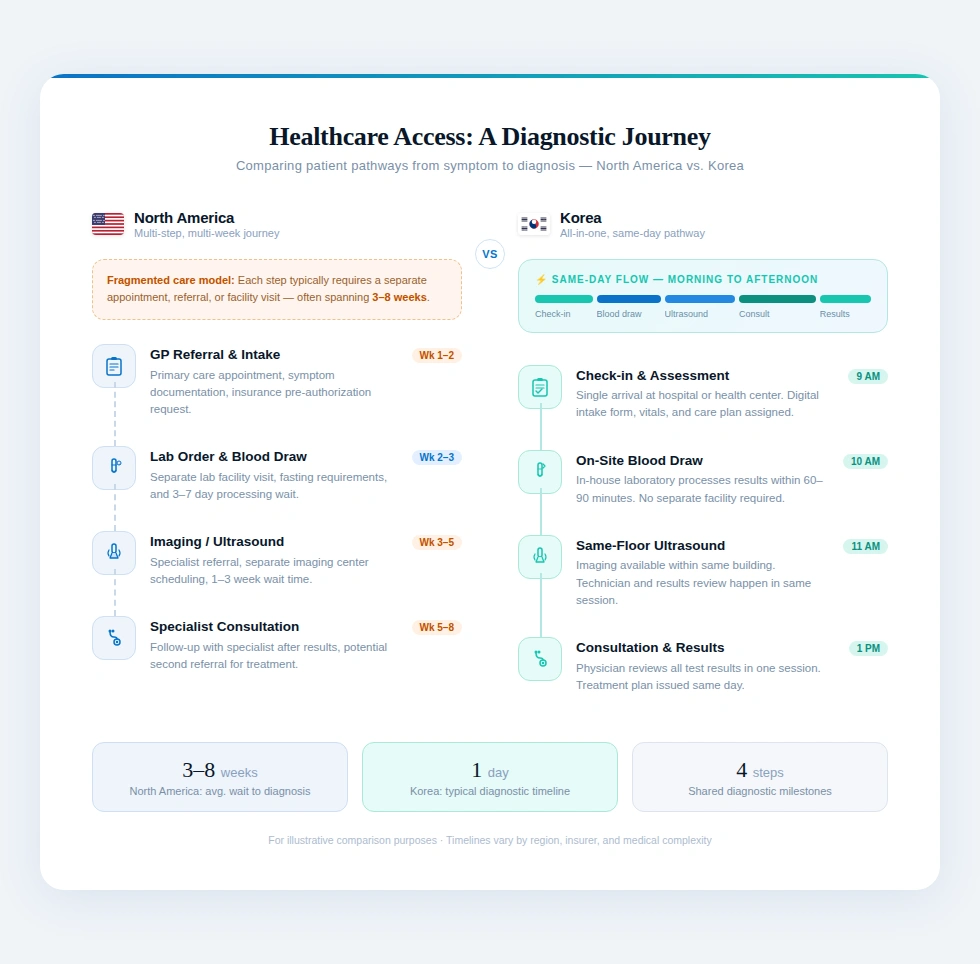
How this compares to North America
In the United States:
screenings are often unbundled
each test is billed separately
final cost can vary significantly.
For example:
A colonoscopy without insurance may cost $1,250–$2,800 depending on location and provider.
The hidden cost: time
In Canada especially, wait times for diagnostic imaging have increased significantly compared to pre-pandemic levels.
By contrast, in Korea many international patients can complete a comprehensive screening within a single travel window.
Where to Go: Top Hospitals and Screening Centers
When selecting a screening center, prioritize:
internationally accredited hospitals
dedicated international clinics
English-speaking staff
transparent package descriptions
Well-known screening hospitals in Seoul
Samsung Medical Center
Large international patient program with structured screening packages.
Asan Medical Center
One of Korea's largest hospitals with strong international reputation.
Severance Hospital (Yonsei University)
Major academic hospital with international services.
Seoul National University Hospital (SNUH)
Flagship national hospital with global patient services.
What a Checkup Day Looks Like
1️⃣ Before your appointment
You will receive preparation instructions such as:
fasting requirements (8–12 hours)
medication guidance
colonoscopy prep (if applicable)
2️⃣ Arrival and intake
Patients complete:
registration
passport verification
medical questionnaire
vital sign check
3️⃣ Core testing sequence
Most packages include:
blood and urine testing
imaging
ECG
vision or hearing checks
4️⃣ Endoscopy / colonoscopy
These procedures are typically scheduled as a dedicated block during the visit.
Sedation is commonly available.
5️⃣ Results and follow-up
Many hospitals provide:
same-day preliminary results
digital report
follow-up consultation
Practical tip
Ask for your results as a PDF with imaging files so you can easily share them with your physician back home.
Practical Planning for North Americans
Timing your trip
Plan at least 2–3 days in Seoul around your screening.
If sedation is involved, keep the following day light.
Payment
Most international screening packages are self-pay.
Major credit cards are widely accepted.
Some insurance plans may offer partial reimbursement.
Language support
Major hospitals operate international clinics with English-speaking coordinators.
Seoul also provides support through the Medical Korea Information Center.
What to bring
Passport
Prior medical records if available
Medication list
Questions for your doctor
Choosing the Right Package
Ages 25–35
Focus on:
metabolic health
liver function
cholesterol
thyroid
Ages 35–45
Consider:
expanded lab testing
cardiovascular screening
targeted cancer screening
Ages 45–55
Discuss colorectal screening options, especially if you have not had a recent colonoscopy.
A Simpler Path to Preventive Care
For many travelers, Korea offers a compelling combination of:
fast scheduling
transparent pricing
coordinated medical care
modern hospital facilities
With over 1.17 million international patients visiting Korea in 2024, medical travel is becoming an increasingly mainstream option.
Planning Your Health Checkup in Korea
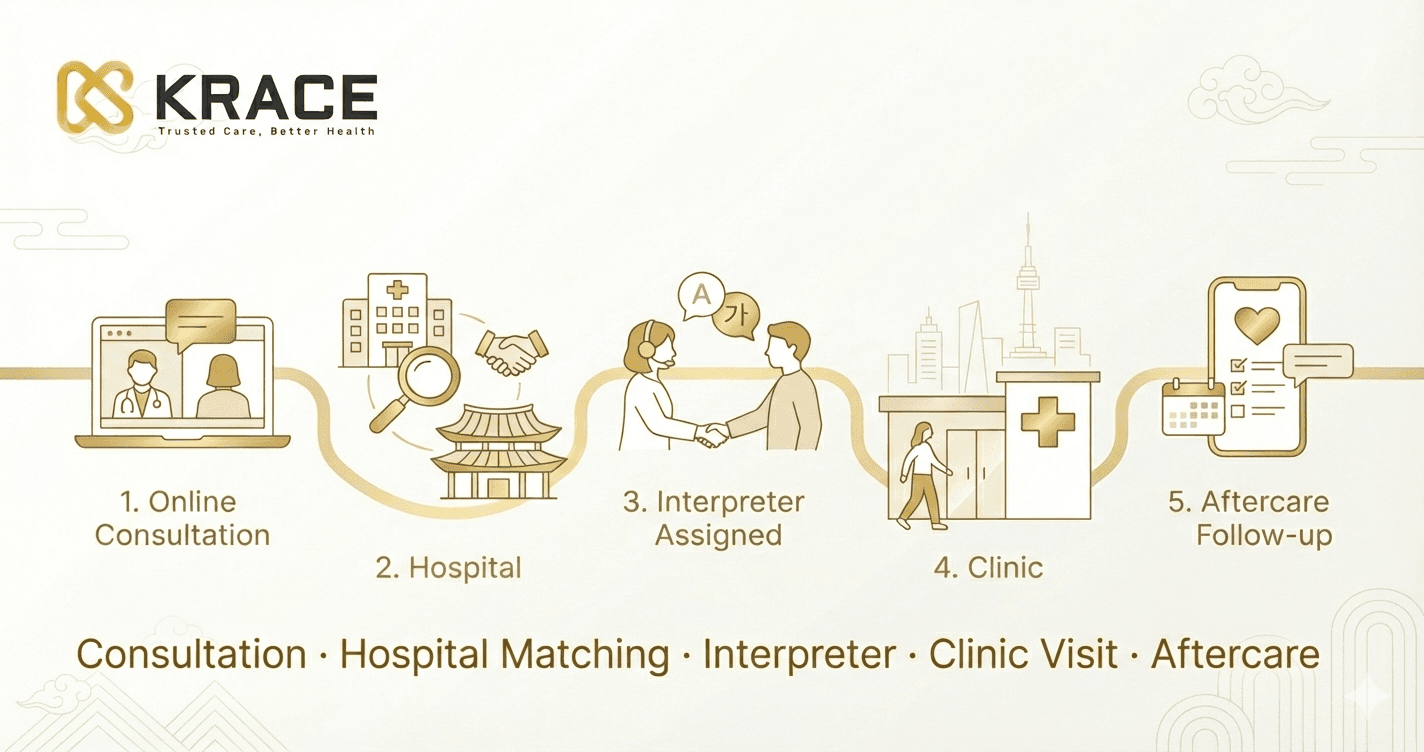
KRACE helps international visitors:
choose the right screening hospital
schedule appointments around travel plans
receive results and follow-up guidance
Request a personalized screening plan from KRACE.
Frequently Asked Questions
Planning a Korean health checkup package in 2026? These FAQs explain package types, costs, timing, hospitals, preparation, and how international visitors can plan preventive care in Korea.