

If you have ever looked at before-and-after photos from Seoul and wondered whether glass skin Korea is just marketing, here is the honest answer: the glow is usually not coming from a 10-step bathroom shelf alone. In Korea, skincare is often a mix of daily habits, clinic-based maintenance, and fast access to dermatology-led treatments that many visitors find easier to book, faster to receive, and more affordable than back home. Korea’s medical-wellness ecosystem has also scaled quickly: in 2024, Korea recorded 1,170,467 foreign patients from 202 countries, the highest since official tracking began.
For travelers, expats, and short-term visitors, a real Korean skin treatment guide should do more than romanticize K-beauty. It should explain what treatments people actually get, what they cost, how clinics differ, and how to avoid overbooking trendy procedures you do not need.
Why Korean skincare feels different in real life
What many people call “Korean skincare” is really two separate worlds working together. The first is home care: gentle cleansing, barrier support, hydration, sunscreen, and long-term maintenance. The second is clinic care: laser toning, skin boosters, peels, facials, acne management, pigmentation care, pore-focused treatments, and dermatologist consultations.
That second piece matters. In Korea, preventive and maintenance-style visits are normalized in a way that feels different from many English-speaking markets, where people often wait until a skin problem becomes expensive, inflamed, or hard to ignore. Korea’s broader medical system is known for speed and convenience, and official medical tourism promotion materials repeatedly highlight short wait times, rapid diagnostics, and relatively reasonable pricing compared with many OECD markets.
That does not mean every clinic is the same. Some are dermatologist-led and medically conservative. Others operate more like high-volume aesthetic clinics built around popular packages. A smart visitor treats Korea as a place for structured, targeted care, not a place to say yes to everything on the menu.
Korea’s healthcare system is regulated by official institutions like HIRA, ensuring standardized pricing and quality control.
What treatments foreign patients usually look for
Most international skincare visitors are not flying in for one miracle treatment. They are usually trying to solve one or two specific concerns:
Pigmentation and uneven tone
This is where laser toning, brightening programs, and careful aftercare often come up. Korea’s emphasis is usually on cumulative improvement rather than one aggressive session.
Acne and post-acne marks
Foreign visitors often choose Korea for acne consultations because treatment plans can combine prescription care, inflammation control, device-based treatment, and scar-focused follow-ups.
Texture, pores, and dullness
Hydration facials, gentle resurfacing, and maintenance lasers are common. In Korea, “glow” often means smoother texture and calmer skin rather than makeup-heavy shine.
Early anti-aging and skin quality
Instead of waiting for deeper lines, many patients book preventive care: collagen-supporting treatments, lifting devices, or skin boosters designed to improve tone and elasticity gradually.
Korea’s aesthetics sector is also a major reason many foreign patients come in the first place. Official Visit Korea reporting notes that in 2023, more than half of international patients were concentrated in dermatology or plastic surgery clinics, and Seoul drew the largest share because these clinics are heavily concentrated in the metropolitan area.
A realistic price snapshot: Korea vs. back home
Here is the part most readers actually want. While exact fees vary by clinic, machine, doctor involvement, and whether your quote includes add-ons, the broad price gap is one reason Korea remains so attractive for skincare travelers.
Treatment | Korea (USD) | US (USD) | Duration |
|---|---|---|---|
Laser Toning | $80–150 | $300–600 | 30 min |
Hydrafacial | $100–200 | $200–400 | 60 min |
PRP Therapy | $200–400 | $500–1,500 | 45 min |
These are planning ranges, not guaranteed rates. But they reflect the bigger pattern: for many aesthetic and maintenance treatments, Korea often lands meaningfully below major US market prices, especially when bundled into multi-session plans.
That cost gap is easier to understand in the context of Korea’s overall healthcare pricing structure. Visit Korea’s medical-wellness materials cite OECD comparisons showing Korea’s medical costs well below the OECD average and far below US levels, while still emphasizing speed and service efficiency.
The more useful comparison, though, is not just price. It is price plus access. A treatment that costs less but takes three months to schedule may not help you much. In Korea, the attraction is often that consultation, treatment planning, and first-session care can happen in a tighter window than many patients are used to. Korea’s health checkup system, for example, is officially promoted around speed, with many results delivered within about a week and comprehensive testing handled in a single center. That same “fast system” mindset is one reason international patients find Korea appealing more broadly.
How to tell a good Korean skin clinic from a trendy one
This is where first-time visitors get tripped up.
A beautiful Instagram page does not tell you whether a treatment is appropriate for your skin tone, whether a doctor will actually see you, or whether the clinic is trying to oversell a package because you are only in town for five days.
Here is what matters more:
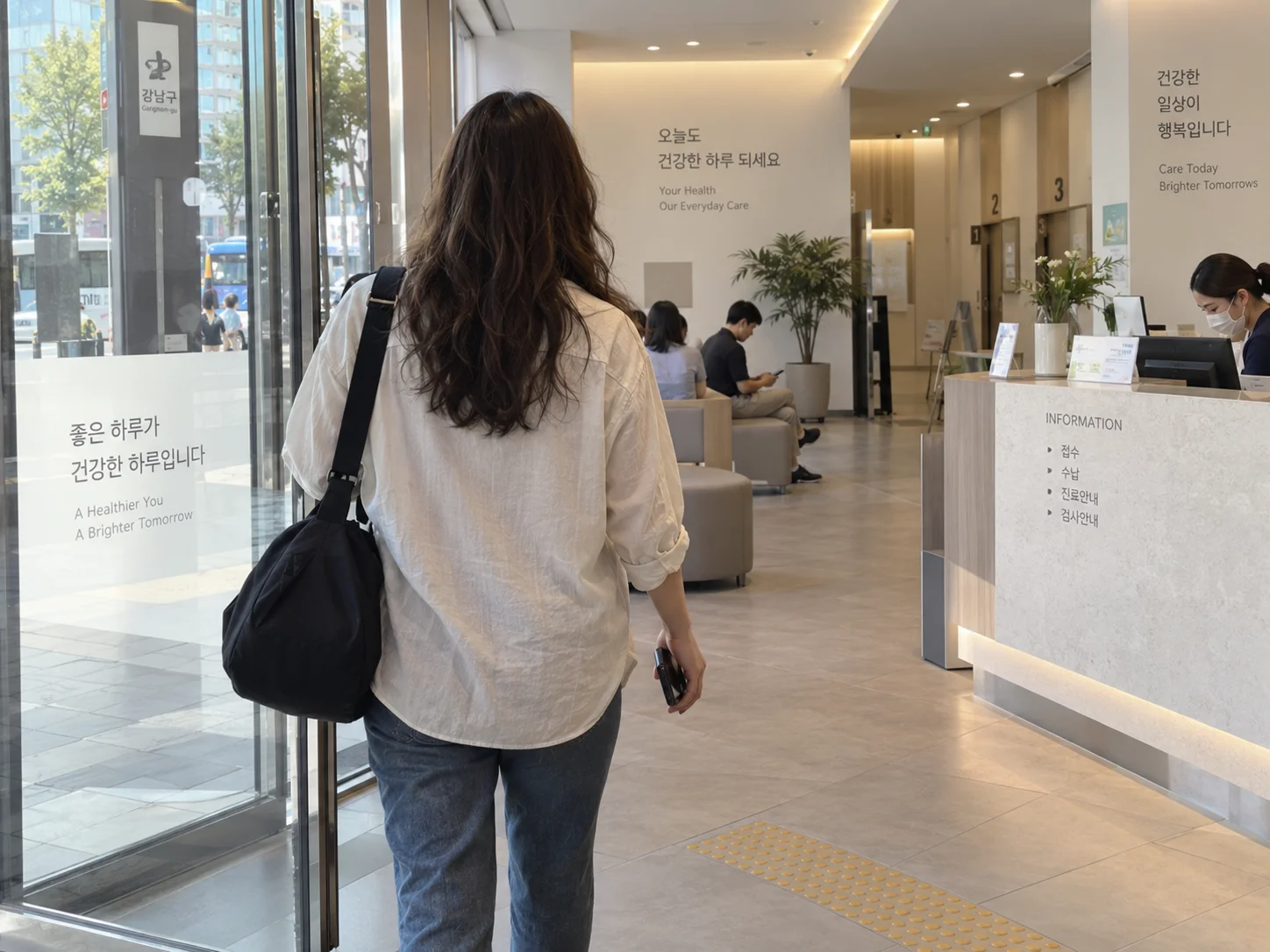
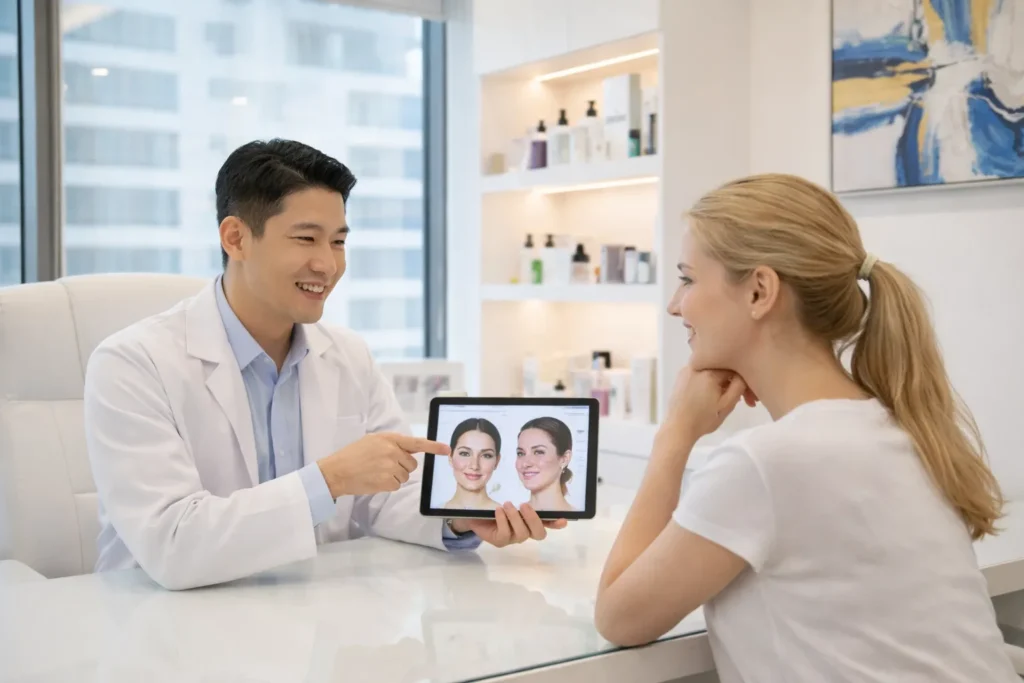
A strong clinic should be clear about who performs the consultation, what the downtime looks like, what results are realistic in one visit, and what should wait until after patch testing or a fuller skin review. For foreign patients, it also helps if the clinic can support English communication, issue written instructions clearly, and explain why one treatment is safer than another for your skin type or travel timeline.
For trust signals, Korea has multiple layers worth checking. Medical Korea notes that Korea has long promoted international quality standards, including JCI-accredited hospitals, and the Medical Korea directory also highlights institutions accredited to serve international patients. On current accredited-hospital listings, many institutions explicitly list English interpretation, international healthcare centers, and services such as English receipts, translated results, hotel or airport pickup, and care support for foreign patients.
You can easily check clinic locations and travel time using Naver Map, which is more accurate than Google Maps in Korea.
What “glass skin” really means in clinic terms

A lot of foreigners search for glass skin Korea expecting one signature procedure. There usually is not one.
In practice, the “glass skin” look is often built from four things working together: calmer inflammation, better hydration, more even pigment, and smoother surface texture. That is why Korean clinics often combine a skin analysis, a conservative treatment choice, and disciplined aftercare rather than promising one dramatic fix.
This is also why sunscreen matters more than trend-chasing. The World Health Organization recommends broad-spectrum sun protection and warns that tanning is not a sign of health but of skin damage. If you invest in brightening, pigmentation care, or resurfacing and then spend the afternoon walking around without proper UV protection, you are working against your own results.
A good rule: if the clinic does not spend time on aftercare, your result may be more marketing than medicine.
On the Ground: One thing people do not always expect in Seoul is how quickly a treatment day can move. You might consult, get a skin analysis, do the procedure, pick up aftercare products, and be back in a café within two hours. The flip side is that high-volume clinics can feel fast in a good way or rushed in a bad way. If you feel pushed into same-day add-ons you did not plan for, pause.
How foreigners should plan treatment timing in Korea
Many visitors combine treatment with travel, and you can plan your itinerary through the Korea Tourism Organization.
The smartest skincare trips are built around recovery, not excitement.
If you are visiting Korea for under a week, focus on low-downtime or moderate-downtime treatments unless you already know the clinic and the protocol. If you are staying 10 to 14 days, you have more room for a consultation on arrival, one treatment session, a skin check, and some flexibility if your skin needs a gentler plan.
You should also think about season, flights, and your itinerary. Dry cabin air, sun exposure, spicy food, alcohol, and poor sleep can all affect skin reactivity. If your trip also includes shopping, photo-heavy sightseeing, or work meetings, do not book an aggressive procedure the day before.
You Might Also Like

How to Book a Clinic in Korea as a Foreigner
Imagine this: back home, you wait two to six weeks just to see a doctor—longer for anything specialized. Now picture landing in Seoul and getting a consultation, diagnosis, and treatment plan within a single day. That’s not a travel hack. It’s how the Korean medical system works. But here’s the catch: while care is fast and accessible, figuring out how to actually book a clinic in Korea as a foreigner isn’t always straightforward. Different systems, language gaps, and unclear pricing can make it
blog.kracecare.com

Patient Success Stories in Korea: What Actually Happens (And Why People Keep Coming Back)
Imagine booking a specialist appointment back home and being told the next available slot is in three months—then discovering you could be seen, diagnosed, and treated within a week in Korea, often at half the cost. That’s not a marketing claim—it’s the reason thousands of international patients quietly choose Korea each year. Why Korea Keeps Showing Up in Real Patient Stories There’s a reason Korea keeps coming up in Reddit threads, YouTube vlogs, and expat forums. It’s not just about K-beauty
blog.kracecare.com

K-beauty Treatment Korea: What Actually Works 2026 Guide for Foreigners
So what’s actually behind that “glass skin” look—and how do you access it without getting overwhelmed? Why K-beauty Treatments in Korea Feel Different Korean skincare isn’t just about products—it’s a system. And that system starts in clinics, not stores. Unlike many countries where dermatology is treated as a medical necessity only, Korean dermatology blends medical care with beauty optimization. That means you don’t wait months for treatment—you walk in, get assessed, and often start treatment
blog.kracecare.com
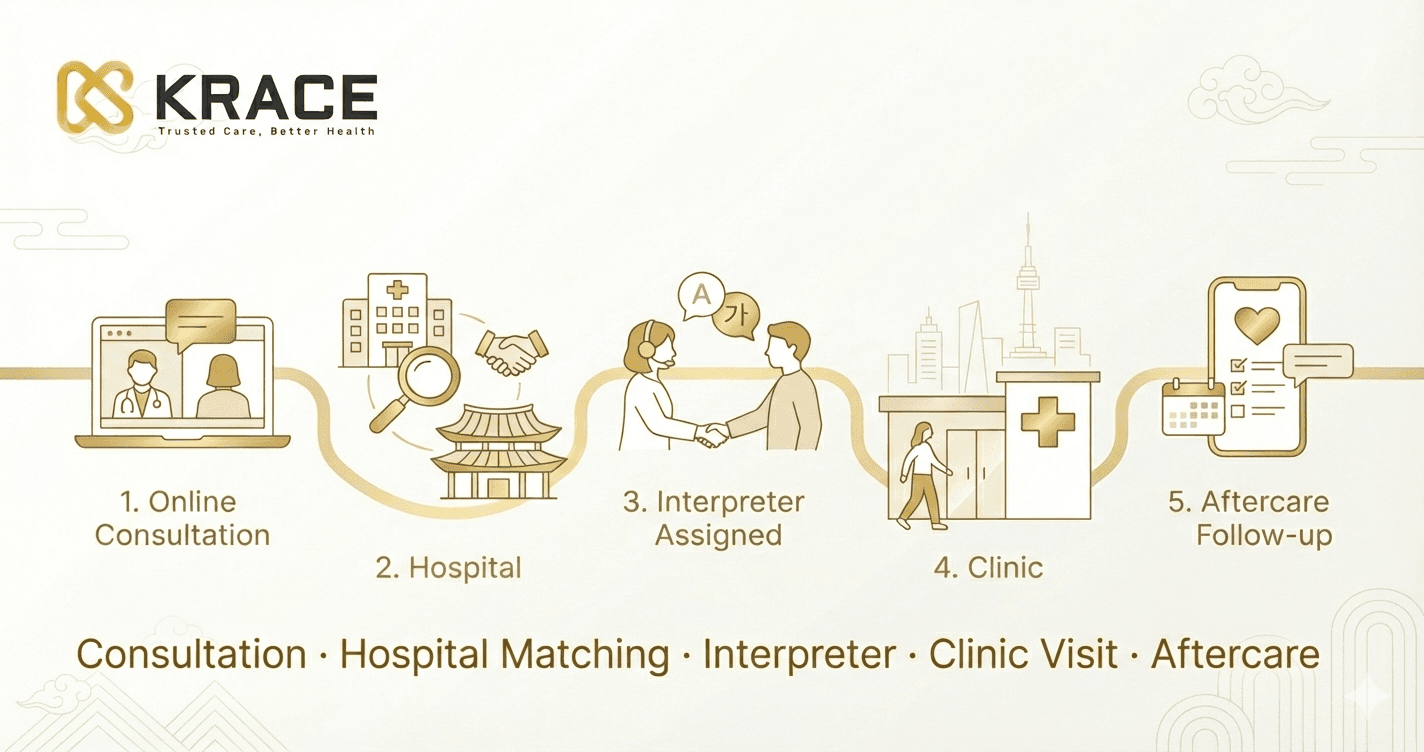
Where KRACE fits into the process
Foreign patients usually do not struggle because Korea lacks options. They struggle because there are too many options, too much mixed information, and not enough clarity about what is appropriate.
KRACE helps narrow that down. Instead of treating skincare in Korea like a beauty trend, we frame it like a travel-health decision: what concern are you trying to fix, what is your timeline, what support do you need in English, and which clinic type actually fits that need?
That matters because Korea’s medical tourism boom is real, but not every foreign patient wants the same thing. Some want a gentle K-beauty treatment before a longer stay. Others want a dermatology-led plan for acne, melasma, or texture while traveling. Korea’s rapid growth in international patient volume shows the demand is there; the real challenge is making the experience feel trustworthy and manageable for someone who does not know the local system yet.