

When someone has lost a significant amount of weight, especially over a short time, the face often changes along with the body. Patients describe it in different ways: the face looks hollow, or tired, or older than it did before.
What I look at first is what, exactly, has changed. The treatment depends on that, not on how much weight was lost.
Three different changes
When weight comes off the face, three things can change, and each is treated differently.
Volume. Fat that filled the cheeks or the area beneath the eyes is gone, and the face looks hollow. That is a problem of filling.
Sagging. Skin that once held more volume now hangs lower. Filling does not lift it; for sagging I turn to lifting.
The skin itself. Skin can become thinner and lose elasticity. For that I use skin boosters.
In the faces I see after weight loss, the most common of the three is volume. The face has hollowed.

When the face has hollowed
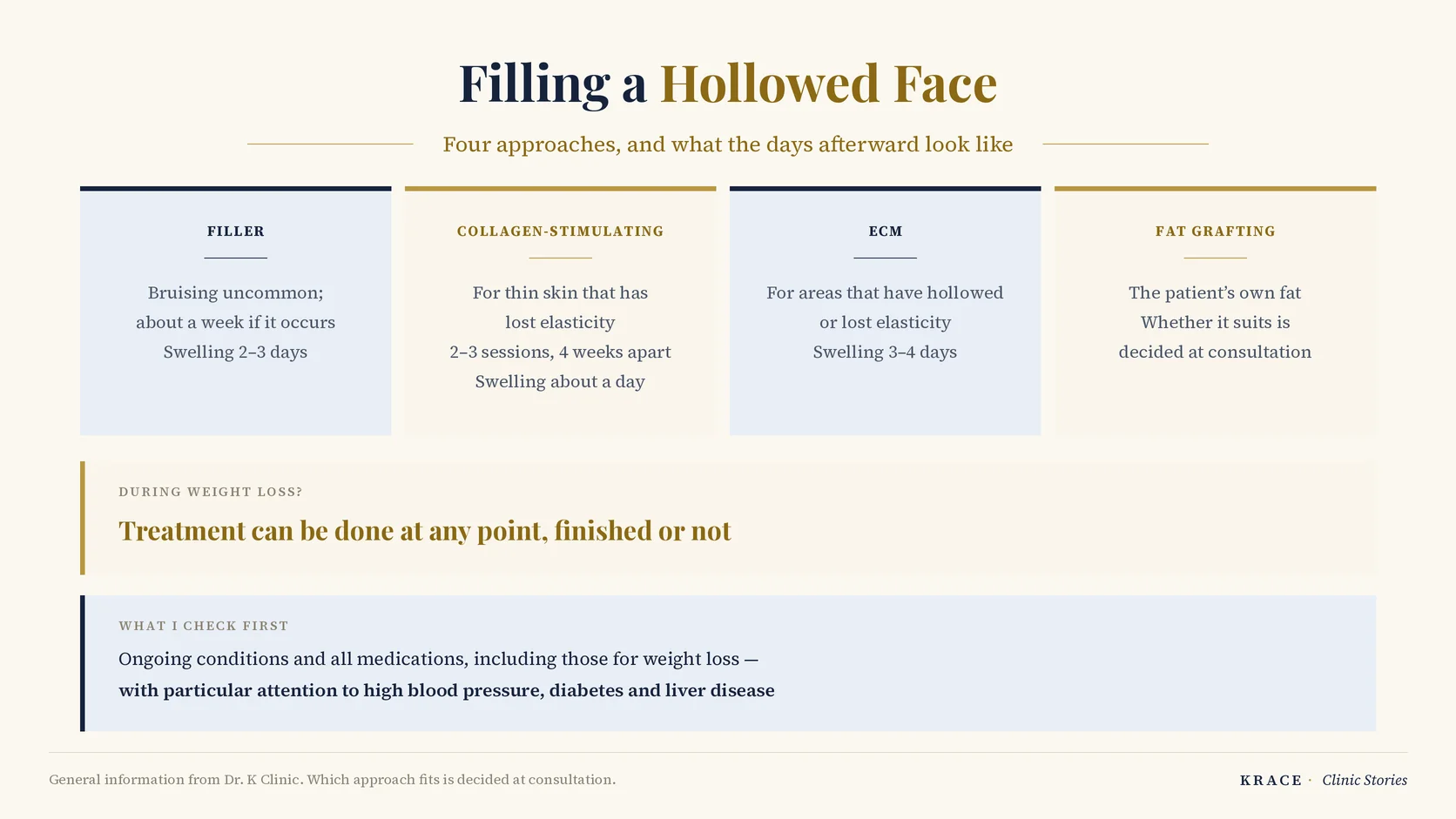
To fill a hollowed face I use four approaches: fat grafting, filler, an ECM injectable, and a collagen-stimulating injectable. Which one fits depends on where the volume has gone and on the condition of the skin around it.
Filler. Bruising is uncommon; when it does occur, it takes about a week to fade. The area usually feels swollen for two to three days, counting the day of treatment.
A collagen-stimulating injectable. I use it where the skin has become thin and lost elasticity. It is usually given in two to three sessions about four weeks apart, and swelling settles in about a day.
An ECM injectable. I use it where an area has hollowed or lost elasticity. Swelling usually settles in three to four days.
Fat grafting. Using the patient’s own fat is another way I restore volume, and whether it suits is decided at consultation.
Is there a need to wait until the weight loss is finished?
No. In my practice, treatment for the face can be done at any point, whether the weight loss is finished or still under way.
What I check before treatment
Before any treatment, I ask about ongoing conditions and about every medication a patient takes, including anything being used for weight loss. I pay particular attention to high blood pressure, diabetes and liver disease.
Risks to review before deciding
Every medical procedure carries risk, and those risks differ by treatment and by patient. Outcomes vary between individuals, and no result can be guaranteed in advance.
How the choice is made
At the first consultation I start with what is bothering the patient and the current state of the face. I then ask what has been done before, and check whether general health makes a procedure appropriate. I prefer to have that conversation in person, before anything is scheduled.
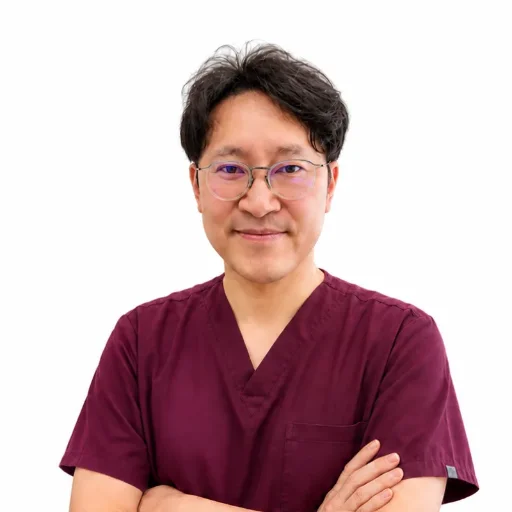
Dr. Wooin Kim, Medical Director, Dr. K Clinic
Seongnam, just outside Seoul, South Korea
This article is general information and is not a substitute for individual medical consultation.