

Gangnam is one of Seoul’s most popular areas for foreign visitors planning clinic visits, dermatology treatments, health checkups, dental care, or other medical travel services. With clinics clustered around Gangnam Station, Sinnonhyeon, Apgujeong, Sinsa, and Cheongdam, the area is convenient—but choosing the right clinic can feel overwhelming from abroad.
This guide breaks down Gangnam, Apgujeong, Sinsa, and nearby clinic zones in plain English: what each area is known for, how to plan appointments, what prices can look like, and how to avoid common visitor mistakes. This article expands from the uploaded Gangnam clinic outline, which focused on neighborhood differences, English-friendly care, transportation, lodging, recovery spots, and a 3-day treatment itinerary.
Why Gangnam Became a Clinic Hub
Gangnam is not just one neighborhood. For international visitors, “Gangnam clinics” usually means a wider south-of-the-river medical and beauty corridor that includes Gangnam Station, Sinnonhyeon, Apgujeong, Sinsa, Cheongdam, and sometimes Seocho.
South Korea’s medical travel market has grown quickly. In 2025, Korea recorded about 2.01 million foreign patients, passing 2 million for the first time since official tracking began in 2009, according to Ministry of Health and Welfare figures reported by Korea.net and Korean media.
That growth is visible in Gangnam. Reuters reported in May 2026 that dermatology, laser, Botox, red light therapy, ultrasound lifting, and other non-invasive treatments are helping drive Korea’s newer “K-glow” medical travel trend.
On the Ground: Many first-time visitors assume Gangnam means “the best clinic.” In reality, Gangnam means “many choices.” The real task is not finding a clinic. It is narrowing choices by treatment type, doctor involvement, language support, price transparency, recovery time, and whether the clinic is used to international visitors.
Gangnam vs Apgujeong vs Sinsa: What’s the Difference?
Gangnam Station / Sinnonhyeon is practical for first-timers. It has easy subway access, many hotels, restaurants, cafés, and clinics clustered close together. If your trip is short and you want fewer transportation headaches, this area is often the most convenient.
Apgujeong and Sinsa feel more lifestyle-focused. Visitors often associate these areas with dermatology, skincare, facial aesthetics, beauty clinics, boutique cafés, and Garosu-gil. The vibe is less “one-stop station area” and more curated.
Cheongdam is usually more premium and private. It can be attractive for visitors who value discretion, quieter lobbies, and higher-touch coordination, but pricing can also be less budget-friendly.
Seocho / Gangnam border areas may be useful for health checkups, dental care, eye care, and hospital-linked services. They are not always as social-media famous, but they can be easier for practical medical planning.
What Treatments Visitors Commonly Research in Gangnam
Gangnam is most searched for dermatology, skincare, non-surgical lifting, injectables, hair removal, pigmentation lasers, cosmetic surgery consultations, dental whitening, eye care, and health screening add-ons.
For KRACE readers, the safest starting categories are usually:
Visitor goal | Common clinic category | Good for short trips? | Planning note |
|---|---|---|---|
Skin tone, pigmentation, pores | Dermatology / laser clinic | Yes | Ask about downtime and sun exposure |
Preventive health | Health checkup center | Yes | Fasting and result timing matter |
Dental whitening / cleaning | Dental clinic | Yes | Confirm whether consultation and treatment fit one visit |
Eye exam / glasses | Eye clinic / optical shop | Yes | Easy to combine with travel |
Surgery consultation | Plastic surgery clinic | Maybe | Recovery and follow-up need more planning |
Korea’s official tourism and medical information sources also highlight systems such as KAHF, the Korean Accreditation Program Hospitals for serving Foreign Patients, which evaluates institutions on foreign-patient service and patient-safety standards.
Price Reality: What Can Gangnam Clinics Cost?
Prices vary by clinic, device, doctor involvement, anesthesia, medication, translator support, and whether a package is being bundled. Request a direct quote before booking.
The clearest verified price signals available now are for dermatology and some publicly listed health screening programs. All figures below are approximate USD conversions or USD ranges from recent sources; exchange rates change.
Prices below are only general reference ranges. Final prices can vary depending on the clinic, doctor consultation, device type, number of shots or sessions, medication, anesthesia, translation support, and package structure. Always request a written quote before booking.
Service type | Budget range | Mid-range | Premium / complex |
|---|---|---|---|
Brightening / Genesis-style laser | $80–$150 | $150–$300 | Higher if bundled |
Pico / pigmentation laser | $100–$180 | $180–$400 | Higher for multi-laser plans |
Ultherapy / lifting | $700–$1,200 | $1,200–$2,000 | Higher by shot count/device |
Skin booster | $400–$800 | $800–$1,200 | Higher for packages |
Basic overseas Korean | $400–$1,000+ | varies by program | varies by program |
These are estimated planning ranges for foreign visitors researching clinics in Seoul. Actual prices vary by clinic, device, treatment area, shot count, product type, package structure, and whether English support, interpretation, aftercare, or concierge coordination is included. Lower promotional prices may be available at some clinics, while premium or complex cases may cost more.
Are Gangnam Clinics English-Friendly?
Some Gangnam clinics offer English support, but the level of support can vary. A clinic may have English-speaking staff for booking, but not always for medical consultation, pricing explanation, aftercare, or follow-up messages. Before booking, foreign visitors should confirm whether English support is available before, during, and after the appointment.
How to Choose a Gangnam Clinic Without Getting Lost

Start with the treatment goal, not the neighborhood. “I want a Gangnam clinic” is too broad. “I want pigmentation treatment with minimal downtime before a 5-day Seoul trip” is much easier to match.
Ask these questions before booking:
Will a licensed doctor perform the consultation?
Who performs the procedure?
Is English support available before and after the visit?
Are local and international visitor prices the same?
What is included in the quote?
What side effects or downtime should I plan around?
What happens if I have a concern after leaving Korea?
A concierge or coordinator can be helpful when you are combining multiple appointments. Allure’s 2026 Seoul beauty guide notes that concierge support can help visitors organize scheduling, language, post-care, and treatment order around a travel itinerary.
Transportation: Getting Around Without Stress
Seoul’s subway is usually the easiest way to reach Gangnam clinics. Visit Seoul notes that subway lines are color-coded and station signs are displayed in Korean, English, and Chinese.
For mapping, many visitors use a mix of Naver Map, Kakao Map, and Google Maps. Google Maps can be helpful for general orientation, but Naver Map often performs better for local routing, exits, building names, and walking directions in Korea.
A practical setup:
Need | Best option |
|---|---|
Clinic routing | Naver Map or Kakao Map |
Subway planning | Naver Map, Kakao Map, or Seoul transit apps |
Backup internet | eSIM, SIM, or pocket Wi-Fi |
Airport pickup connectivity | SIM/eSIM or Wi-Fi rental counter |
Address sharing | Save Korean address + building name |
If you do not want to change your phone SIM, pocket Wi-Fi can be rented and picked up at major airports such as Incheon, Gimpo, and Gimhae through telecom providers.
Where to Stay for Clinic Convenience

For clinic-heavy trips, convenience matters more than sightseeing romance. A hotel near Gangnam Station, Sinnonhyeon, Sinsa, or Apgujeong can reduce stress, especially after laser treatment, dental care, or a health checkup that requires fasting.
Best stay zones:
Stay area | Best for | Watch out for |
|---|---|---|
Gangnam Station | First-timers, subway access, many clinics | Busy streets, traffic |
Sinnonhyeon | Easy access to Gangnam + Nonhyeon | Some hills and busy roads |
Sinsa / Garosu-gil | Skincare + cafés + calmer recovery | Fewer direct subway options depending on clinic |
Apgujeong | Dermatology, beauty, premium clinics | Higher hotel/taxi costs |
COEX / Samseong | Business travelers, shopping, conference trips | Farther from some Sinsa/Apgujeong clinics |
Visit Seoul’s official Gangnam area guide positions Gangnam as a district for trends, shopping, restaurants, and entertainment, which makes it useful for visitors who want medical appointments without feeling isolated from the city.
Post-Treatment Planning: Cafés, Pharmacies, and Downtime
After a light skin treatment, many visitors can walk to a café, pharmacy, or hotel. After stronger lasers, lifting procedures, dental work, or anything involving swelling or sensitivity, plan less.
Avoid building your itinerary around saunas, full-day outdoor tours, heavy drinking, or long sun exposure right after skin procedures. For lasers, visitors should ask the clinic about sunscreen, heat, exercise, makeup, and when they can resume active sightseeing.
A conservative post-treatment day looks like this:
Time | Plan |
|---|---|
Morning | Clinic visit |
Lunch | Soft/easy meal nearby |
Afternoon | Hotel rest or quiet café |
Evening | Light walk, no major photoshoot |
Next day | Follow-up message or check-in if needed |
A 3-Day Gangnam Clinic Itinerary

Day 1: Arrival + consultation
Arrive in Seoul, check into a Gangnam or Sinsa hotel, and attend a consultation only. Keep the evening light. This is the right day to confirm the final quote, treatment plan, risks, and aftercare.
Day 2: Treatment day
Schedule the main appointment earlier in the day. Leave open time afterward. Do not stack too many procedures unless the clinic confirms the order is appropriate.
Day 3: Recovery + follow-up
Use the morning for a follow-up check, pharmacy stop, or coordinator message. Choose low-effort plans such as COEX, a quiet café, or a short indoor activity.
For health checkups, reverse the order: avoid alcohol the night before, follow fasting instructions, do the checkup early, then plan light meals afterward.
Common Mistakes to Avoid
The biggest mistake is booking based only on social media before checking whether the clinic fits your actual needs.
Other common mistakes:
Comparing prices without checking what is included
Assuming English support is available at every step
Booking outdoor tours right after laser treatment
Planning multiple clinics on the same day without buffer time
Not asking who performs the procedure
Forgetting to save the Korean address
Not confirming how aftercare works once you leave Korea
How KRACE Helps
KRACE does not diagnose, treat, or provide medical care. Medical services are provided by independent licensed clinics and hospitals.
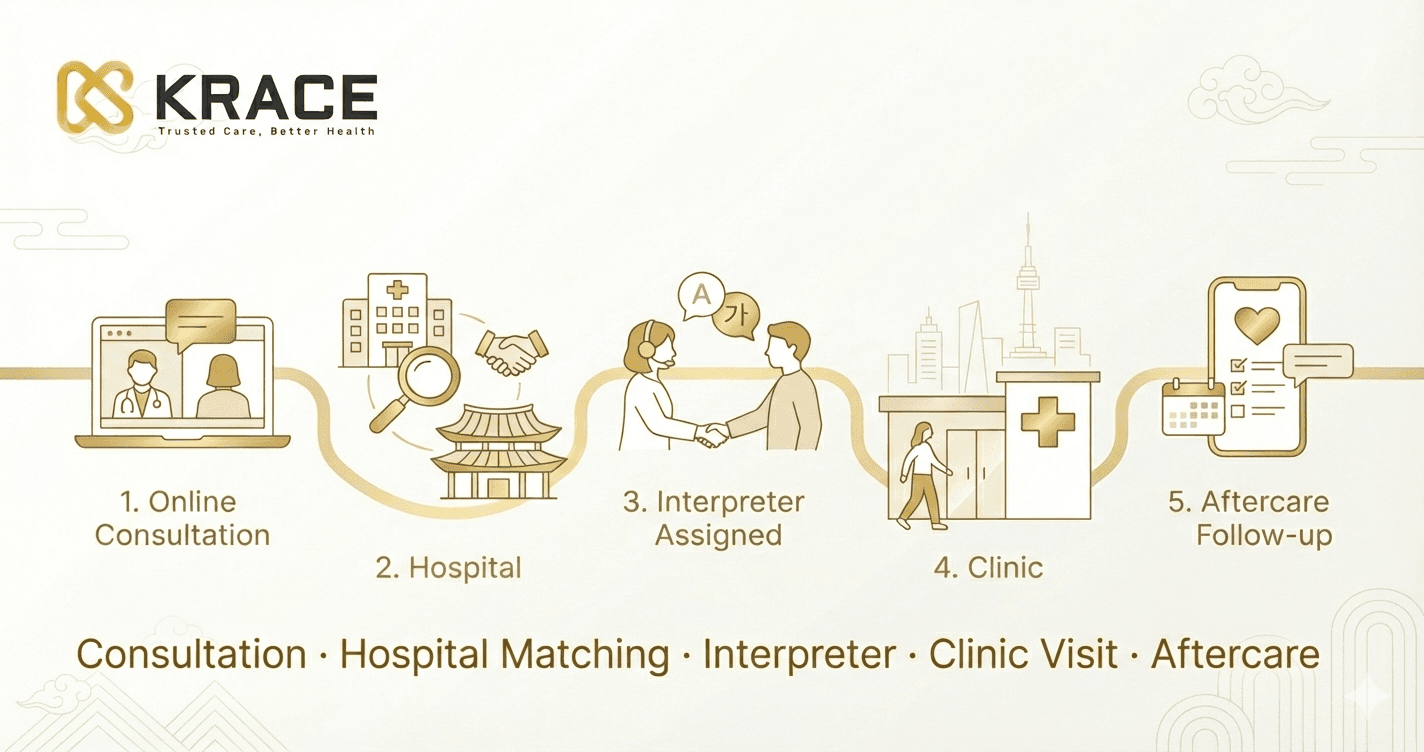
KRACE helps international visitors organize the non-clinical parts that often become stressful: clinic matching, booking, communication, quote clarification, interpretation support, appointment reminders, and post-visit coordination.
You Might Also Like

Korean Skin Treatment Guide: What Foreign Visitors Should Know Before Booking in Korea
If you have ever looked at before-and-after photos from Seoul and wondered whether glass skin Korea is just marketing, here is the honest answer: the glow is usually not coming from a 10-step bathroom shelf alone. In Korea, skincare is often a mix of daily habits, clinic-based maintenance, and fast access to dermatology-led treatments that many visitors find easier to book, faster to receive, and more affordable than back home. Korea’s medical-wellness ecosystem has also scaled quickly: in 2024,
blog.kracecare.com

How to Choose the Right Korean Clinic: A Practical Guide
Imagine this: back home, you wait weeks—sometimes months—for a specialist appointment, only to spend 10 minutes in the consultation room. Now imagine landing in Seoul and getting a full consultation, diagnostics, and a treatment plan within 24–48 hours. That’s not an exception. It’s the norm in Korea. But here’s the reality most guides skip: while Korea is fast and affordable, choosing the right clinic as a foreigner can feel overwhelming. Different systems, unclear pricing, and language gaps ca
blog.kracecare.com

How to Book a Clinic in Korea as a Foreigner
Imagine this: back home, you wait two to six weeks just to see a doctor—longer for anything specialized. Now picture landing in Seoul and getting a consultation, diagnosis, and treatment plan within a single day. That’s not a travel hack. It’s how the Korean medical system works. But here’s the catch: while care is fast and accessible, figuring out how to actually book a clinic in Korea as a foreigner isn’t always straightforward. Different systems, language gaps, and unclear pricing can make it
blog.kracecare.com
Frequently Asked Questions
These answers cover common questions about Gangnam clinics for medical travel, including location, pricing, English support, and appointment planning.