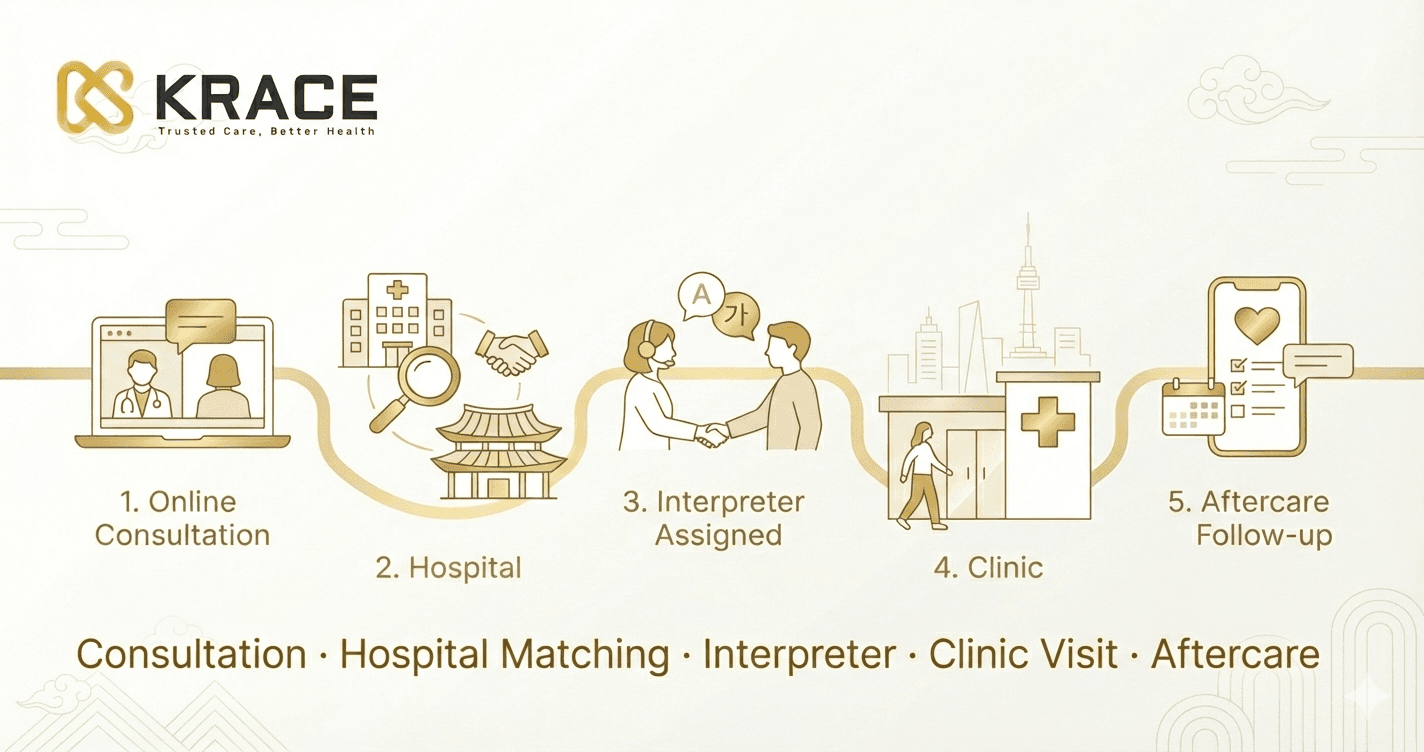


Getting treatment in Korea may fit into a one- or two-week trip, but follow-up can continue long after your flight home. Planning follow-up care after treatment in Korea means knowing who will answer questions, when records and results will arrive, whether another in-person visit may be needed, and what to do if concerns come up back home. Those questions are worth asking before you book—not at the airport.
Korea’s Ministry of Health and Welfare reported about 2.01 million international patients in 2025, up from 1.17 million in 2024. About 173,000 patients were from the United States, a 70.4% increase from 2024. As more international visitors use Korean healthcare, the practical question of what happens after departure matters more than ever.
Follow-Up Should Be Planned Before You Arrive in Korea
The most useful follow-up conversation happens before treatment begins. Ask the clinic what usually happens after the consultation, test, procedure, or treatment you are considering and whether your travel dates allow enough time for any required in-person review.
Different services can have different follow-up needs. One visit may require little more than receiving records, while another may involve testing or another appointment. The treating clinician—not your flight schedule—determines what is medically appropriate.
CDC medical-tourism guidance recommends planning local follow-up before travel and arranging continuity of care after returning home. It also highlights the importance of medical-record transfer and accounting for follow-up care when planning medical travel.
On the Ground
Before your last clinic visit in Korea, confirm three things: Do I need another in-person visit? What documents will I receive before departure? Who should I contact after I return home? Do not assume every clinic includes the same follow-up, English documentation, or communication channel.
If you are still comparing providers, read our guide on how to choose a Korean clinic.
What Should You Receive Before Flying Home?
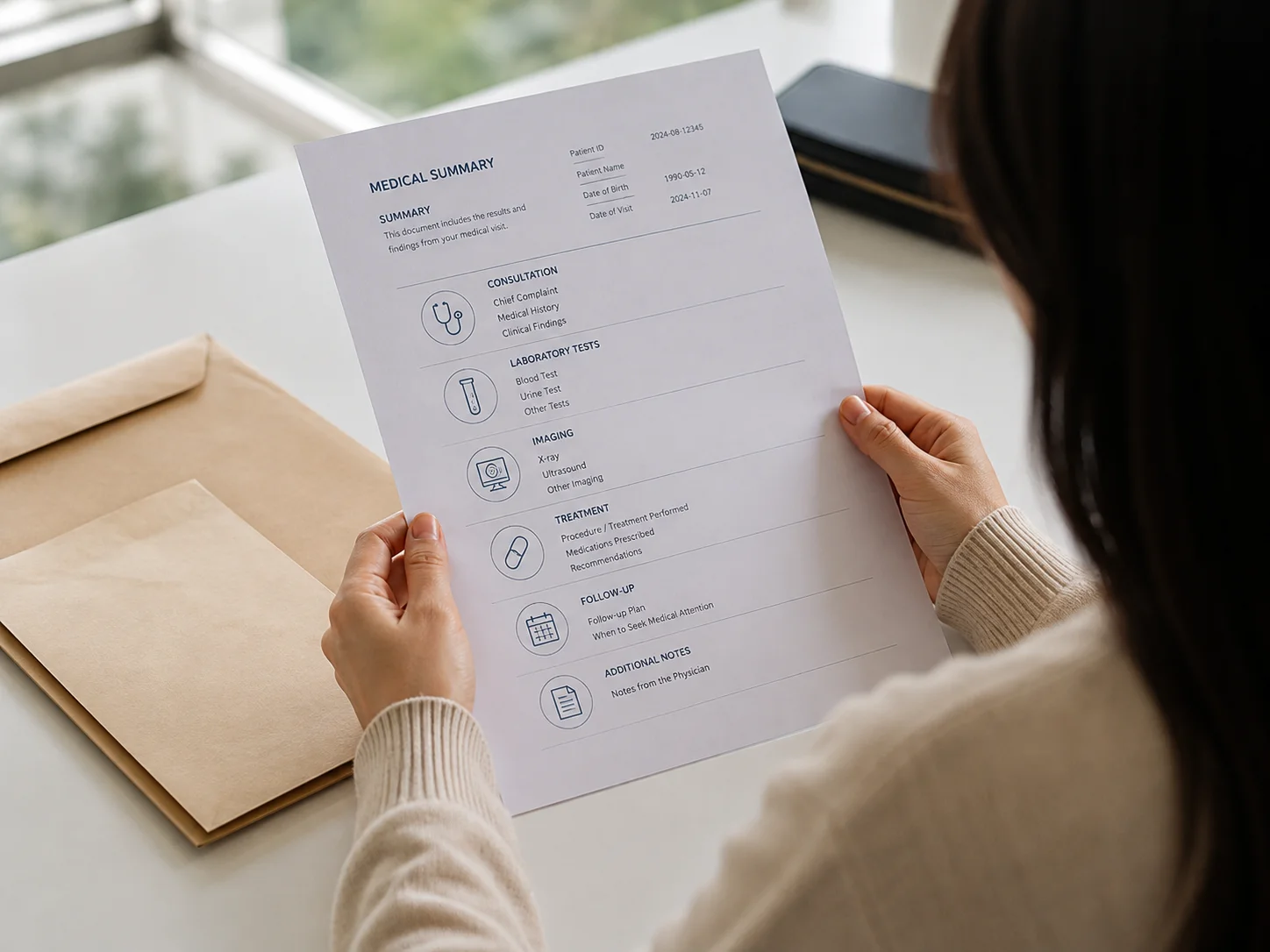
A good follow-up plan starts with records that you can keep and, when necessary, share with another healthcare professional.
Depending on the care you received, ask the provider which documents are available, when they will be ready, and whether they can be provided in English. Relevant records may include:
visit or consultation summary
test or imaging reports
procedure or treatment record
medication names and instructions
pathology or laboratory reports, when applicable
follow-up instructions
recommended timing for another examination
contact information for the treating clinic
Confirm whether documents can be issued in English, the file format, delivery timing, and any associated fee.
CDC guidance advises travelers to request documentation of care received abroad, including medications, and to share that information with healthcare professionals who provide subsequent care back home.
KRACE can help coordinate the collection and transfer of clinic-provided information with the patient’s authorization and when available. KRACE does not interpret reports, determine whether findings are normal or abnormal, or explain what a medical result means; those questions must be addressed by the treating provider or another qualified healthcare professional.
Who Provides Follow-Up After You Return Home?
There is no universal arrangement. Follow-up may involve the Korean provider, a healthcare professional back home, or both.
The setup depends on the service, the clinic’s policies, and whether an in-person examination is needed. Confirm the pathway before booking.
Communication With the Korean Clinic
Some clinics may continue post-visit communication about appointments, clinic-issued records, provider instructions, or logistics. Ask who responds, which channel is used, and whether additional consultations have separate fees.
Importantly, administrative post-care communication is not automatically the same as remote medical care.
As of August 2026, Korea has enacted a new legal framework for certain forms of remote care for foreign patients. The amendment was promulgated on May 26, 2026 and is scheduled to take effect on May 27, 2027.
Until then, travelers should not assume that a direct remote medical consultation will be available after returning home. Any clinical interaction must be handled by the licensed provider in accordance with applicable law and the provider’s policies. Rules in the patient’s country or state may also affect what can be provided remotely.
Questions worth asking include:
Who responds after I leave Korea?
Is the contact channel intended for administration, clinical questions, or both?
Is follow-up included in the original fee?
Could another in-person examination still be required?
If an additional consultation is available, is it charged separately?
Fees for additional consultations or follow-up services vary by provider. Confirm any additional charges directly with the clinic before booking.

Follow-Up With a Healthcare Professional Back Home
A local healthcare professional may become part of your follow-up after you return. This is one reason complete records are important.
Your clinician back home may need to know what care was provided, what tests were performed, which medications were prescribed, and what the Korean provider recommended. CDC advises returning travelers to share documentation of overseas care with healthcare professionals who provide ongoing care.
Before traveling, ask whether local follow-up may be expected and what documents another clinician would need. Do not assume a regular doctor or dentist will automatically take over care performed abroad.
What If Your Test Results Are Not Ready Before You Leave Korea?
This is especially relevant for health screenings, pathology, laboratory work, and other tests whose final reports may not be available on the same day.
Before departure, confirm:
when the remaining results are expected;
how they will be delivered;
who will provide the medical explanation;
whether a separate consultation is required; and
what happens if the treating provider recommends additional evaluation.
A common planning scenario: You complete a screening on Friday, but one final report will not be ready until after your flight home. The important questions are not just “Will the PDF arrive?” but “Who will explain it, how do I contact that provider, and what happens if another examination is recommended?”
A report arriving by email is not the same as clinical interpretation.
KRACE may help coordinate delivery of clinic-issued reports or communication with the provider, but KRACE does not diagnose a condition, interpret a result, or recommend the next treatment.
For more screening logistics, see our Korean health checkup guide and step-by-step Korea health checkup guide.
What Happens If You Have a Problem After Returning Home?
Distance makes an escalation plan useful. Ask which concerns should prompt clinic contact, which situations should be assessed locally, and what records another healthcare professional may need.
Not every new symptom after a procedure is a complication, and an appropriate healthcare professional must assess what is happening. If you develop urgent or severe symptoms, seek appropriate medical care where you are rather than relying only on international messaging.
CDC medical-tourism guidance emphasizes continuity of care and notes that complications can occur after care abroad. The practical takeaway is not to expect problems, but to know in advance how you would reach the provider, obtain records, and access local care if needed.
Useful questions include:
What is the clinic’s contact method after departure?
Is there an after-hours process?
What information should I show another healthcare professional?
How can another provider request relevant records?
What situations could require a return visit to Korea?

Does Travel Insurance Cover Follow-Up Care?
Sometimes, but coverage should never be assumed.
Travel insurance, travel health insurance, and planned-medical-travel coverage are not necessarily the same. CDC guidance notes that insurance arrangements can vary and that follow-up costs should be considered as part of medical-travel planning.
Ask your insurer directly about:
planned treatment abroad
complications related to elective procedures
follow-up after returning home
emergency hospitalization
medical evacuation
pre-existing condition exclusions
documentation required for claims
Do not rely on the clinic or a coordinator to determine your insurance benefits. When possible, request written confirmation from the insurer describing what is and is not covered.
How Different Types of Care Can Affect Follow-Up
Follow-up requirements depend on the service and treating provider. These are planning questions, not predictions about individual care.
Health Checkups
The key issue may be timing: when will the final report be available, how will you receive it, and who will explain the findings?
Ask whether a separate clinician consultation is included if results are completed after departure.
Dermatology and Aesthetic Procedures
Ask about the clinic’s expected review process, how post-visit questions are handled, and whether the provider expects any in-person assessment before or after departure.
If you are researching skin-related care, our Korean skin treatment guide covers additional planning considerations.
Dental Care
Some dental treatment is staged across several appointments, which can make trip length especially important.
Before buying flights around dental care, ask how many visits the provider expects and whether later care must occur in Korea or may be coordinated with a dentist back home.
Care Requiring Repeated Visits
Be cautious about forcing a multi-visit plan into a short itinerary.
It is better to learn before booking that another appointment may be required than to discover it after you have already left Korea.
Five Questions to Ask Before Booking
These five questions can quickly show whether you understand the follow-up plan.
1. What follow-up is normally expected after this service?
Ask the provider to explain the typical process for the care being considered.
2. Could I need to remain in Korea for another visit?
Do not build your flight schedule around a marketing itinerary alone. Confirm timing with the treating provider.
3. What records will I receive before or after I return home?
Confirm the document type, language, format, expected delivery date, and any fee.
4. Who should I contact after I leave Korea?
Get a specific communication method and understand whether it is for administrative coordination, provider communication, or both.
5. What should I do if I need care back home?
Ask what information a local healthcare professional may need and how the Korean clinic can provide relevant records.
These questions are useful whether you book directly with a clinic or use a coordination service.
What KRACE Can—and Cannot—Do After Your Visit
KRACE’s role is coordination.
For international visitors using participating independent providers, KRACE can support appointment communication, clinic-provided document coordination, logistics, and post-care coordination based on the provider’s instructions and available services.
KRACE does not become your healthcare provider after you return home.
KRACE does not:
diagnose new symptoms
interpret test results
decide whether recovery is medically normal
recommend treatment
prescribe medication
replace emergency or local medical care
The goal is to reduce the administrative gap between you, the Korean provider, your records, and the next appropriate step.
[IMAGE 6: CTA]
Plan the Return Home Before You Book the Appointment
Good medical travel planning includes the trip home.
Before receiving care in Korea, know when results may arrive, what records you can take or receive later, who will answer follow-up questions, whether another in-person visit could be needed, and how you would access appropriate care back home.
That preparation is less visible than choosing a clinic or booking a flight, but it can make the transition home much clearer.
Start with a free consultation →
You Might Also Like

How to Choose the Right Korean Clinic: A Practical Guide
Imagine this: back home, you wait weeks—sometimes months—for a specialist appointment, only to spend 10 minutes in the consultation room. Now imagine landing in Seoul and getting a full consultation, diagnostics, and a treatment plan within 24–48 hours. That’s not an exception. It’s the norm in Korea. But here’s the reality most guides skip: while Korea is fast and affordable, choosing the right clinic as a foreigner can feel overwhelming. Different systems, unclear pricing, and language gaps ca
blog.kracecare.com

Korean Health Checkups: Why Travelers Are Booking Screenings in Seoul
Imagine booking a full medical checkup and getting the results the same day—not after weeks of waiting. For many travelers visiting Korea, that’s exactly what happens. Health screenings in Seoul combine fast diagnostics, transparent pricing, and English-friendly clinics. Compared with long wait times and high costs in many countries, a Korean health checkup often feels less like a medical ordeal and more like a well-organized part of your trip. Why More Travelers Are Choosing Korea for Preventiv
blog.kracecare.com

How to Book a Clinic in Korea as a Foreigner
Some outpatient clinics in Korea offer same-day or short-notice appointments, but availability, pricing, and language support vary. This guide explains how international visitors can compare clinics, confirm costs, and arrange an appointment with confidence.
blog.kracecare.com
- Will I need an in-person follow-up appointment?
- Could the provider recommend that I remain in Korea longer?
- When should all final results and reports be available?
- Can relevant records be provided in English?
- What documents should I take or receive after returning home?
- Who should I contact after leaving Korea?
- Is post-visit communication available, and what does it include?
- Could I need follow-up with a healthcare professional back home?
- What information might that healthcare professional need?
- What is the clinic's process if I need additional medical attention after departure?
Scope note: Answers depend on the medical service, treating provider, and applicable rules. These questions support planning and coordination; they do not determine what medical care is appropriate.
Start with a free consultation →
Can a Korean clinic follow up with me after I return home?
Some clinics may provide post-visit communication after you return home, but what they can offer varies by provider and current law. As of August 2026, Korea's new foreign-patient telemedicine framework has been enacted but is not yet in force. Confirm whether the clinic offers administrative communication, a clinical consultation, or both, and whether an in-person examination could still be required.
What medical records should I get before leaving Korea?
Ask the provider which documentation is relevant to the care you received. Depending on the service, this may include visit summaries, test or imaging reports, procedure records, medication information and follow-up instructions. Also confirm whether records can be issued in English, when they will be ready, how they will be delivered, and whether any translation or document fee applies.
What if my test results are not ready before I fly home?
Confirm before departure when the results are expected, how they will be delivered and who will provide the medical explanation. Some results may require a later provider consultation or additional evaluation. Receiving a report electronically is not the same as clinical interpretation, so make sure you understand the clinic's process before leaving Korea.
Will travel insurance cover follow-up care after treatment in Korea?
Coverage depends on the policy. Planned overseas treatment, complications, emergency treatment, medical evacuation and follow-up may all be handled differently. Review exclusions and claim requirements directly with the insurer before traveling and, when possible, request written confirmation. A clinic or coordination service should not be treated as the authority on what your insurance policy covers.
Can KRACE tell me whether my recovery or test result is normal?
No. KRACE can support booking, communication, clinic-provided document coordination and post-care logistics, but it does not diagnose symptoms, interpret test results, determine whether recovery is medically normal, prescribe medication or recommend treatment. Those questions need to be addressed by the treating provider or another appropriately qualified healthcare professional.