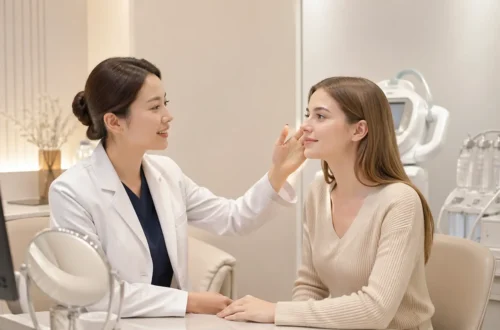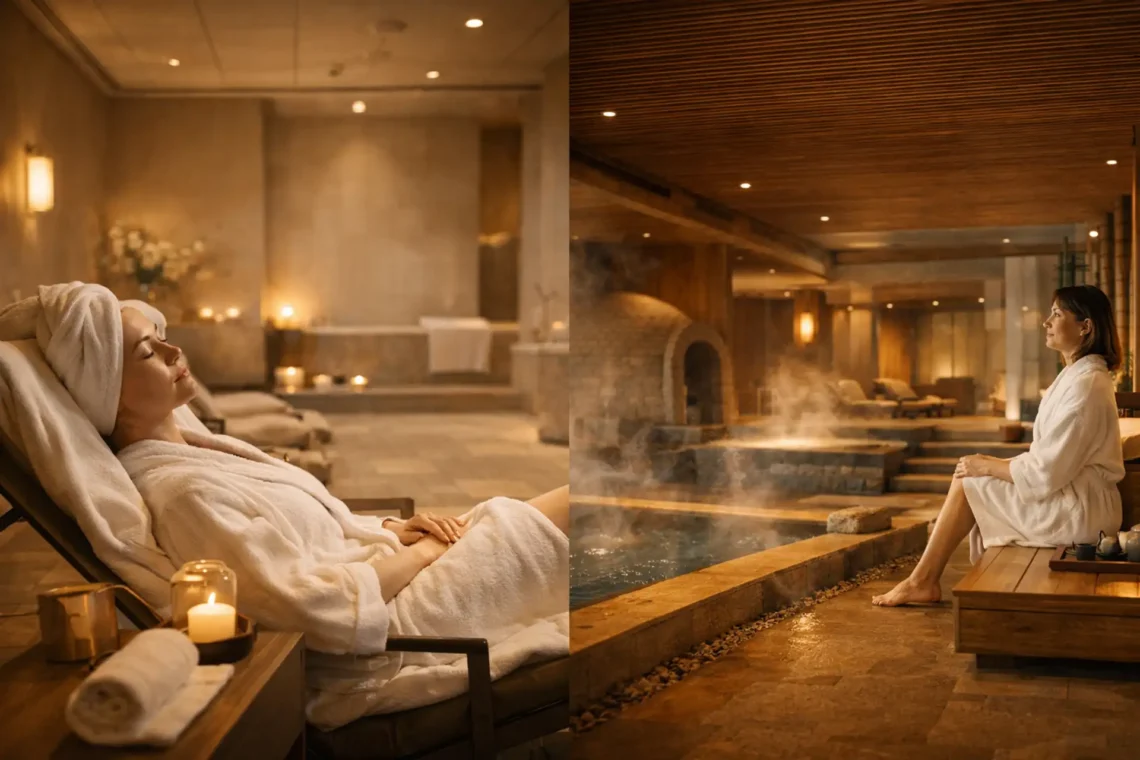
This is where Korea becomes very different from back home —
many visitors realize they can access clinic-level treatments immediately, without long wait times or high costs.
If you’ve ever paid $250+ for a rushed spa session back home, Korea feels like a different world. Here, you can spend hours — even a full day — moving between saunas, scrubs, and relaxation areas for less than the cost of a single treatment in the US.
But the real surprise?
Most visitors don’t stop at the spa.
Why Korean Spas Feel Different (And Why That Matters)
Korean spas — especially jjimjilbangs and urban wellness centers — are built around time and routine, not quick appointments.
- Sauna → scrub → rest → repeat
- Layered wellness (circulation + skin + recovery)
- Transparent pricing (no surprise add-ons)
This isn’t a “treat yourself” moment.
It’s closer to a full-body reset system.
On the Ground: What It’s Actually Like
Most spas — especially in Gangnam — are near subway stations (about $1–2 per ride). You check in, store your belongings, change into spa clothes, and move freely between hot rooms, baths, and rest areas.
English support varies, but navigation is simple.
👉 Use Naver Map — it’s far more accurate than Google Maps in Korea.
How Much Do Korean Spas Actually Cost?
Short answer:
Yes — Korean spa experiences are significantly cheaper, but more importantly, they last longer and include more.
Spa Cost Comparison (2026)
You’re typically paying less while getting more time and access.
| Category | Korea (approx.) | Back Home (approx.) |
|---|---|---|
| Basic spa entry | $8–15 | $25–70 |
| Body scrub + sauna | $50–120 | $120–300 |
| Spa + facial combo | $80–200 | $200–500+ |
| Premium spa day | $150–300 | $400–800+ |
Prices vary by location and tier. Request a direct quote for accuracy.
👉 Key insight:
The value isn’t just price — it’s time + access + system flow.
What You Actually Get (Not Just “Spa”)
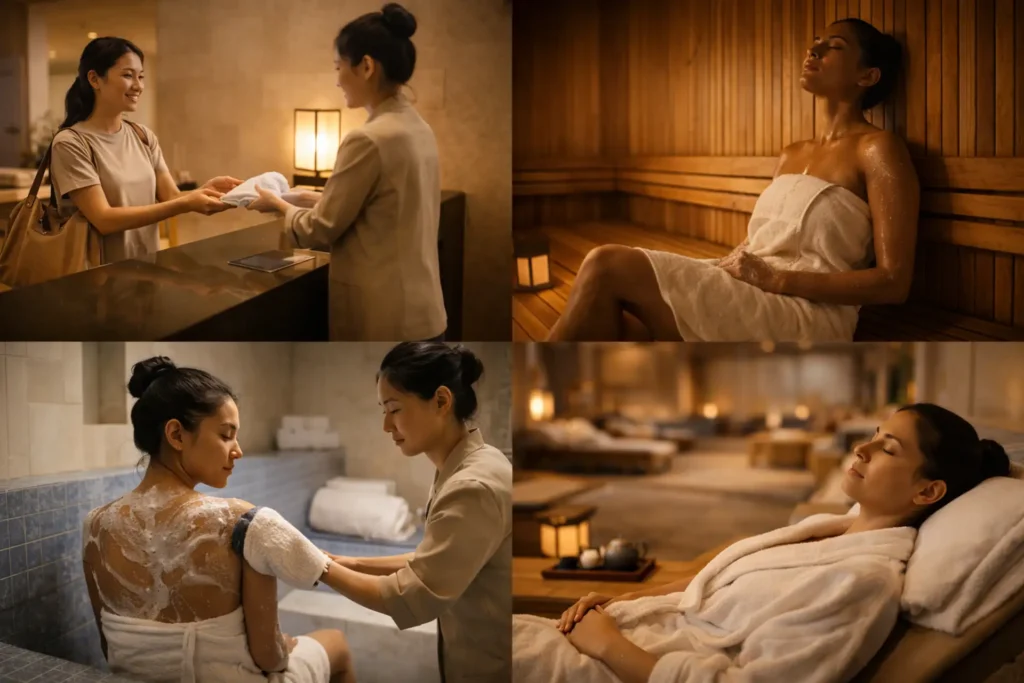
1. Korean Body Scrub (Signature Experience)
This is what most first-time visitors remember.
- Visible exfoliation (yes — you’ll see it)
- Improves circulation
- Leaves skin noticeably smoother
2. Heat Therapy Cycles
Different sauna rooms target different effects:
- Salt rooms → detox support
- Clay rooms → skin softening
- Charcoal rooms → relaxation
3. The Real Upgrade: Clinical Skin Treatments
This is where Korea becomes different from back home.
Most international visitors start with a spa —
then realize they can easily add dermatology-level treatments.
👉 Common upgrades:
- Laser toning (pigmentation, brightening)
- Hydration facials (clinic-grade)
- Skin boosters (Rejuran, Juvelook, exosome-based)
👉 Full guide:
https://blog.kracecare.com/korean-skin-treatment-guide/
What Most Visitors Actually Upgrade To
Here’s the reality:
Most people don’t choose between spa or dermatology —
they combine both.
Direct answer:
A combined spa + clinic day often delivers better results at a lower cost than a single premium treatment back home.
Spa vs K-Beauty Treatment Cost Comparison
| Category | Korea (approx.) | Back Home (approx.) |
|---|---|---|
| Spa-only experience | $10–120 | $50–300 |
| Clinic facial | $80–200 | $200–500 |
| Laser treatment | $100–400 | $300–800 |
| Combined day (spa + clinic) | $150–400 | $500–1,200 |
👉 Why this works:
K-beauty isn’t about one treatment — it’s about layering:
- exfoliation (scrub)
- hydration (facial)
- correction (laser)
- maintenance (routine care)
Step-by-Step: How to Plan Your Experience
Step 1 — Choose your type
- Budget: jjimjilbang (cultural, affordable)
- Mid-tier: urban spa + treatments
- Premium: dermatology + wellness combo
Step 2 — Book (or walk in)
- Budget: walk-in OK
- Clinics: reservation recommended
👉 Booking guide:
https://blog.kracecare.com/book-clinic-korea-foreigner/
Step 3 — Plan your time
- Minimum: 2–3 hours
- Ideal: 4–6 hours
Step 4 — Combine treatments
Most effective combo:
- scrub + facial
- sauna + laser
Safety & Cleanliness: What You Should Know
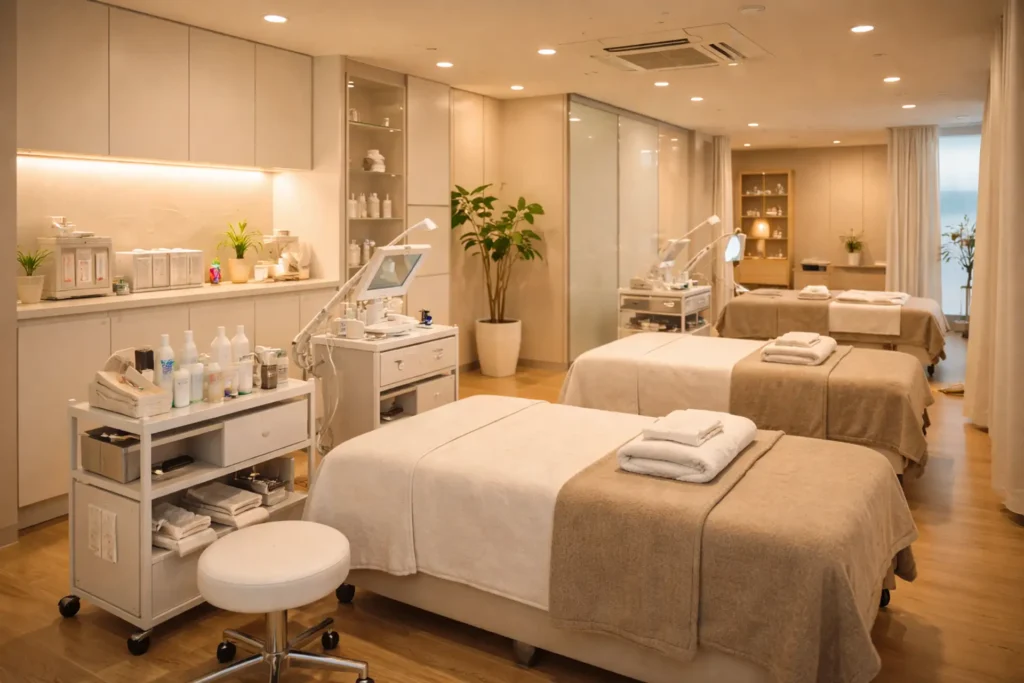
Korea is considered one of the safest countries globally, and spa hygiene standards are strict.
Look for:
- Government-certified institutions
- Licensed dermatology clinics
- Transparent pricing systems
In 2024, over 1.17 million foreign patients visited Korea for medical care — the highest ever recorded.
Where to Go: Best Areas

Gangnam (Seoul)
- Most foreigner-friendly
- Premium clinics
- Easy booking
Hongdae / Itaewon
- Trendy, younger crowd
- Mix of budget and boutique spas
Busan
- Scenic coastal spas
- Slower pace
👉 Travel context:
https://blog.kracecare.com/why-visit-seoul-2026/
Common Mistakes First-Time Visitors Make
❌ Expecting a private luxury spa
→ Many Korean spas are communal — that’s normal
❌ Booking only one treatment
→ Value comes from combining
❌ Ignoring dermatology options
→ This is Korea’s biggest advantage
Is It Worth Flying for This?
Not for spa alone.
But when combined with:
- health checkups
- dermatology
- travel
…it becomes a high-value trip.
👉 Example:
https://blog.kracecare.com/korean-health-checkups-guide/
You Might Also Like
- https://blog.kracecare.com/korean-health-checkups-guide/
- https://blog.kracecare.com/korean-skin-treatment-guide/
- https://blog.kracecare.com/book-clinic-korea-foreigner/
Frequently Asked Questions About Korean Spas
How much does a Korean spa cost in Korea?
Basic jjimjilbang entry in Korea often starts around USD 8 to 15, while a spa day with services such as a body scrub or facial can cost more depending on the city, facility level, and treatment menu. Premium wellness or clinic-based spa packages in Seoul are usually priced higher, so it is best to request a direct quote before booking.
Are Korean spas safe for international visitors?
Yes, Korean spas are generally safe for international visitors, especially well-known facilities in cities such as Seoul and Busan. It is still wise to review hygiene standards, check recent customer feedback, and confirm what treatments are included before your visit, particularly if you plan to add skincare or clinic-based services.
Do I need to book a Korean spa in advance?
Many traditional jjimjilbang locations accept walk-ins, but premium spas, private rooms, and clinic-based skincare services often require advance booking. Reserving ahead is especially helpful if you want English support, need a certain appointment time, or plan to visit during weekends or busy travel seasons.
What is the difference between a jjimjilbang and a premium Korean spa?
A jjimjilbang is usually a large Korean bathhouse and sauna complex focused on public bathing, heat rooms, relaxation spaces, and affordable entry. A premium Korean spa is more likely to offer a quieter setting, upgraded amenities, and add-on services such as facials, body treatments, or wellness programs for visitors seeking a more curated experience.
Can international visitors combine a Korean spa visit with skincare treatments?
Yes, many international visitors combine a Korean spa experience with skincare or dermatology treatments while in Korea. This is especially common in Seoul, where visitors often schedule spa time alongside facials, consultations, or skin-focused treatments to make the trip more efficient and worthwhile.

Medical Tourism · Korea
Planning a visit to Korea?
- ✓ Trusted Korean clinics
- ✓ English consultation support
- ✓ Guidance for international patients